127 posters, 10 topics, 20 sessions, 127 authors
ePostersLive by SciGen Technologies S.A. All rights reserved.
UCSF 2024 Inquiry Symposium
Conference ePosters

P048
The yield of genetic testing in management of nephrolithiasis
Poster Presenter
Authors
Part of Topic
Clinical & Translational Sciences
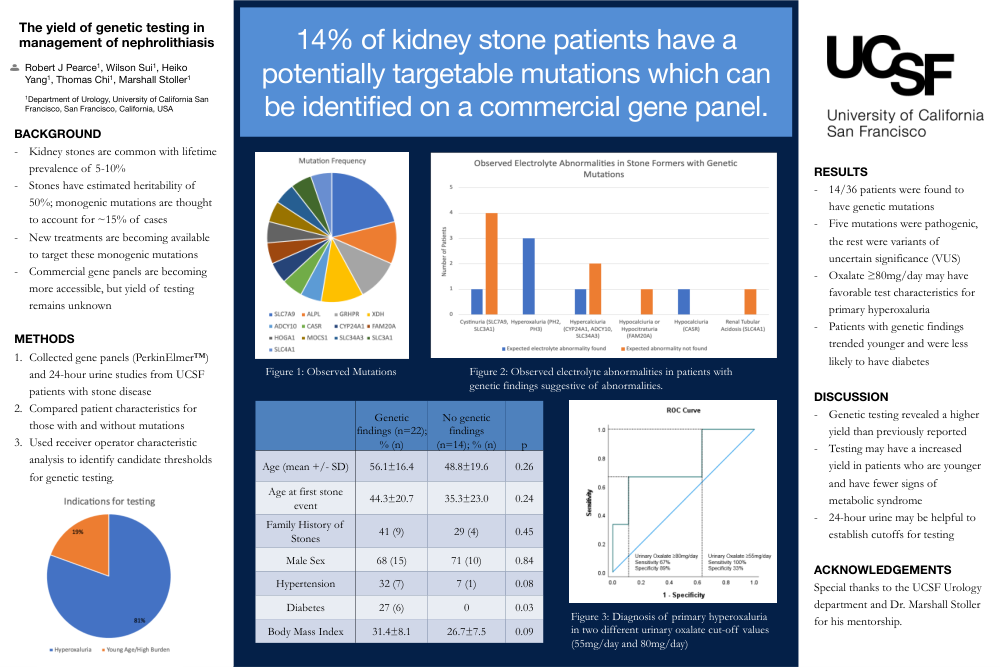
Abstract Background: Genetic testing for nephrolithiasis is becoming more accessible and rapid due to technologic advances; however, few data exist to describe the yield of these tests and the indications for performing them in adults with nephrolithiasis. This study aimed to determine the diagnostic yield of genetic testing in a cohort of high-risk stone formers and to identify 24-hour urine characteristics to prompt genetic screening.
Materials and Methods: We retrospectively identified patients who underwent genetic testing for nephrolithiasis from 2020-22 at a single institution using a custom PerkinElmer™ genomics panel for nephrolithiasis. We compared characteristics of patients with and without genetic abnormalities. We used receiver operator characteristic (ROC) analysis to identify candidate thresholds for genetic testing.
Results: Fourteen of 36 patients (39%) who underwent genetic testing had identifiable mutations. Five patients (14%) had known pathogenic mutations, including genes for primary hyperoxaluria (PH2 and PH3), cystinuria, and enamel renal syndrome. The remaining mutations were variants of uncertain significance. Of the 14 patients with identified mutations, only 6 had concordant 24- hour urine abnormalities, including 3/5 with known pathogenic mutations. In patients with urine oxalate ≥40mg/day, 3/29 (10.3%) had PH2 or PH3. ROC analysis showed that an oxalate threshold of ≥80mg/day may have promising screening characteristics.
Conclusions: Genetic testing for nephrolithiasis remains controversial due to unknown yield and the time and energy required to discuss results with patients. This preliminary report describes the yield and identifies clinical factors and a potential cut-off that may assist clinicians in deciding when genetic profiling should be pursued.