127 posters, 10 topics, 20 sessions, 127 authors
ePostersLive by SciGen Technologies S.A. All rights reserved.
UCSF 2024 Inquiry Symposium
Conference ePosters

P017
Exploring Cancer Patients' Perceptions of Palliative Care: A Narrative Medicine Approach
Poster Presenter
Authors
Part of Topic
Social & Behavioral Sciences
Medical Humanities Reflection
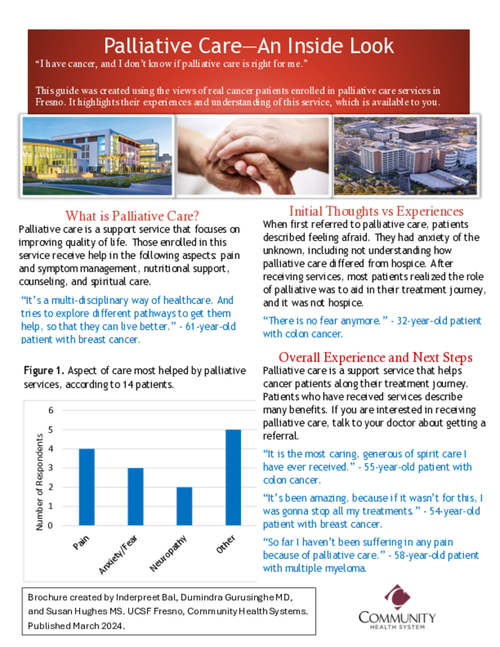
For my Deep Explore research experience, I participated in a project titled “Exploring Cancer Patients' Perceptions of Palliative Care: A Narrative Medicine Approach.” This project was developed in collaboration with Dumindra Gurusinghe, MD, from the University of California, San Francisco-Fresno Department of Palliative Medicine. The aim of this project was two-fold. The first goal was to utilize a narrative medicine approach to interview cancer patients so that we could better understand their perception of palliative care. The second aim of this study was to qualitatively analyze this data to extrapolate shared themes and quotes. These themes and quotes were to be then utilized to create an information sheet for cancer patients interested in learning more about palliative care.
The first aim was successfully met through the completion and transcription of fourteen patient interviews. These interviews were conducted using a set of questions to elicit patient thoughts on their experiences while enrolled in palliative care. The Delvetool software was then used to organize these responses into codes, each code representing a different theme or idea. For example, pain control was a code. Eight out of fourteen cancer patients mentioned receiving assistance in therapy for pain, while four of these patients stated it was the aspect with which they received the most help. Another theme noted was fear when approached about enrolling in palliative care. Patients mentioned initially not knowing the difference between palliative care and hospice. After receiving palliative care, patients expressed understanding that palliative care was not hospice care. Such themes were then used to create an information sheet conveying insights, as well as direct quotations from interviewees. This information sheet is now ready for distribution at the Clovis Community Cancer Institute.
Overall, this project taught me the importance of listening to patient experiences. As providers, we tend to make assumptions based on patterns or observed behaviors, but the story remains incomplete. Without spending time to understand patient experiences, many phenomena in medicine cannot be explained, including patient hesitance when approached about palliative care. I am now more familiar with cancer patient sentiments when they initially hear the words “palliative care.” I hope to utilize this to make myself a better physician when it comes to having conversations about services available in the setting of serious illnesses. By elevating perceptions and voices of real cancer patients, there is now a new tool available for patients deciding whether palliative care is a fit for them or not. This tool may be especially meaningful because it is based on the words and experiences of real patients. I am in the early phases of learning how to engage patients in shared decision making, and this experience has taught me the power of utilizing narratives.