145 posters, 12 topics, 25 sessions, 145 authors
ePostersLive by SciGen Technologies S.A. All rights reserved.
UCSF 2023 Inquiry Symposium
10 May | University of San Francisco

P083
Beneficiary-paid Healthcare Costs by Type of Insurance and Income: a tool for single payer financing design
Poster Presenter
Authors
Part of Topic
Epidemiology & Population Sciences
Introduction: Single-payer health insurance is projected to reduce overall health spending
while ensuring access to care. Understanding how proposed financing plans will affect individual and family healthcare spending is necessary for political viability.
Aims: Using a nationally representative sample, we estimate current premiums and out-of-pocket expenses across beneficiary groups defined by insurance and income level.
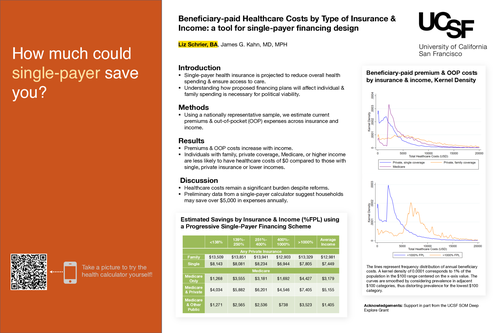
Project Design/Methods: We used population-based data from the Medical Expenditures Panel Survey from January 1, 2014, through December 31, 2019 to estimate annual beneficiary-paid premiums and out-of-pocket (OOP) expenses for stakeholder groups defined by insurance type and income. We inflated expenses to 2022 $USD using relevant databases.Our analysis included 148,367 adults and 45,553 families. Size per group ranged from 3,331(representing 7,318,568 individuals in the US population) with Exchange coverage to 81,240(representing 204,261,242) with any private insurance.
Results: For nonelderly adults with private insurance (primarily employer-sponsored), mean annual beneficiary-paid premiums were $5,046 for families and $2,117 for individuals. Mean OOP costs were $2,588 and $948, respectively. For individuals on Medicare, premiums were $1,990, private premiums when relevant were $2,746, and OOP costs were $1,715. For Medicaid participants, OOP costs were $221. For uninsured individuals, OOP expenses were $535. Those with private, single coverage had the largest proportion (3.9%) with $0 total premiums plus OOP. Few respondents (20.3%) from the highest income group (>$182,000 for a family of two) had premium plus OOP costs of less than $5000. Discussion/Conclusion: Beneficiary-paid premiums and out-of-pocket costs constitute a significant burden for most Americans across insurance types and income levels. These costs increase with income level, suggesting that progressive taxation to finance single-payer may permit net savings for a large proportion of Americans.