145 posters, 12 topics, 25 sessions, 145 authors
ePostersLive by SciGen Technologies S.A. All rights reserved.
UCSF 2023 Inquiry Symposium
10 May | University of San Francisco

P027
Leptomeningeal metastatic disease at UCSF: treatment options, disease course, and decision-making
Poster Presenter
Authors
Part of Topic
Clinical & Translational Sciences
Introduction: Leptomeningeal metastatic disease (LMD) involves the metastatic spread of
tumor cells to the cerebrospinal fluid. LMD is often a late-stage complication in several types of
advanced cancers and is characterized by high symptom burden and poor prognosis. Patients
are faced with severe and often disabling symptoms that can have devastating implications for
functional status, quality of life, and relations with loved ones. In recent years, improvements in
diagnostic imaging and CNS penetrant drugs have improved outcomes for patients with
parenchymal brain metastases. However, the impact on clinical characteristics and outcomes in
the LMD population remains unclear. We conducted a retrospective study to define the LMD
patient population in the age of precision medicine and their experience at UCSF.
Question: What is the disease and treatment course(s) for LMD at UCSF? What are outcomes
for these patients?
Aims: To better understand the UCSF patient population and their experience with LMD by
gathering information about demographics, symptom characteristics, treatment regimens, and
prognosis.
Methods: We conducted a retrospective chart review based on a convenience sample of 104
patients diagnosed and treated with LMD with dates of diagnosis between January 1, 2016-
October 1, 2022. Data were pulled from physician notes in the EMR, and variables were
generated based on patient demographics and reported symptoms. Data were analyzed using
Stata 16, with chi-square, t-test, and ANOVA.
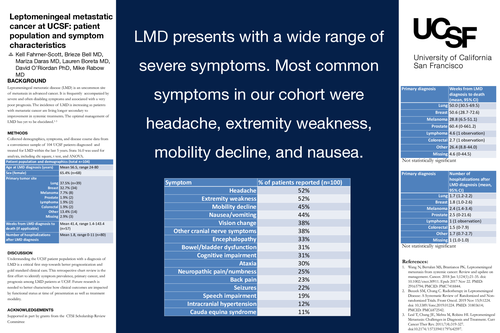
Results: Of 104 patients in the analysis, mean age was 56.5 (range 24-80), and 65.4% were
female. The most common primary tumor site was lung (37.5%) followed by breast (32.7%) and
melanoma (7.7%). The most common symptoms reported were headache and extremity
weakness (52% of patients reported each), followed by mobility decline (45%), nausea/vomiting
(44%), vision change (38%), and other cranial nerve symptoms (38%). In terms of prognosis
after LMD diagnosis, the mean number of weeks between LMD diagnosis and date of death was
41.4, with a range of 1.4-143.4 weeks. The mean number of hospitalizations after LMD
diagnosis was 1.8, with a range of 0-11.
Discussion: These preliminary findings are a key first step towards better characterizing the
symptom burden, demographics, and prognosis of patients with LMD at UCSF. Our findings
suggest that LMD is highly symptomatic for affected patients regardless of primary tumor type,
but also highlight that prognosis may be longer than what is typically quoted in the literature or
shared with patients (median survival 3 months vs. 41.4 weeks in our population). Further study
is needed to characterize what variables accurately predict prognosis in this population, as well
as gold standard treatment regimens for this increasingly common condition in late-stage
cancers.