145 posters, 12 topics, 25 sessions, 145 authors
ePostersLive by SciGen Technologies S.A. All rights reserved.
UCSF 2023 Inquiry Symposium
10 May | University of San Francisco

P138
The Sensory Assessment after FTM gender-affirming mastectomy (SAFTY) Study
Poster Presenter
Authors
Part of Topic
Clinical & Translational
Introduction: Gender-affirming mastectomies (GAM) are increasing in demand. One concern of the double-incision mastectomy with free-nipple graft (DI-FNG) is loss of sensation to the chest and nipple areolar complex (NAC). The extent of sensation loss is poorly understood in GAM.
Hypothesis: We hypothesize that chest and NAC sensation will return back to preoperative levels by 12 months postoperatively.
Aims: (1) To quantify the extent and timing of sensation return to the chest and NAC and (2) investigate NAC sensation and the impact of DI-FNG on sexual health
Methods: Participants are enrolled at surgical consultations and post-GAM follow-up appointments. Light touch and pressure are assessed via Semmes-Weinstein Monofilaments, ranging from 1.65-6.50 mm, at standardized locations. The smallest monofilament size patients could sense were recorded. Temperature sensibility is assessed with warm and cool test tubes on the chest. Patients also completed Qualtrics surveys (Qualtrics Inc., Seattle, Washington) that evaluated perceptions of chest sensation and sexual health.
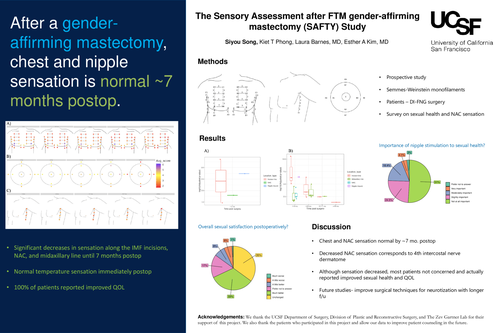
Results: The sensory filament tests were performed on 45 preoperative and 63 postoperative patients. Sensory exams were performed on 23 patients both preoperatively and postoperatively. All preoperative and 93% of all postoperative patients were able to identify hot and cool stimuli on their chests.
There is normal sensation in the upper chest postoperatively (G2-H3). On average, patients have significantly decreased bilateral sensation on the inframammary scar (A, B, C) until seven months postoperatively (p<0.01). Sensation on the NAC and midaxillary line is significantly decreased until fourth months postoperatively (p<0.01).
Follow-up for patients examined preoperatively was 11 months. For these patients, there was significantly decreased sensation on the inframammary scar, midaxillary line near the lateral incisions (D3-4), and NAC until three months postoperatively (p<0.01) with return back to normal sensation by four months postoperatively.
According to survey data, 65% of preoperative patients were not concerned about potential nipple sensation loss after surgery. Over 75% of preoperative patients reported that nipple and chest stimulation is slightly or not important to their sexual activities. Most postoperative patients (65%) reported sensing decreased light touch and sensation within the first three months postoperatively.
All postoperative patients agreed that top surgery changed their lives for the better and the majority (76%) reported their sexual satisfaction was unchanged or better than before surgery.
Conclusion: In general, our findings suggest sensation is normal after DI-FNG except on the NAC, IMF incisions, and midaxillary line. The temporary diminished sensation along the IMF corresponds to the native NAC location within the dermatomal distribution of the 4th intercostal nerve that is resected in DI-FNGs.
Although NAC sensation decreased, the majority of patients were not concerned about the sensation loss and reported improved sexual health and satisfaction postoperatively. Furthermore, chest and NAC sensation mostly return back to normal by seven months postoperatively. These results will aid preoperative patient counseling and better align patient expectations with outcomes.