145 posters, 12 topics, 25 sessions, 145 authors
ePostersLive by SciGen Technologies S.A. All rights reserved.
UCSF 2023 Inquiry Symposium
10 May | University of San Francisco

P123
Immunomodulatory effects of serotonergic psychedelics: a systematic review and meta-analysis
Poster Presenter
Authors
Part of Topic
Clinical & Translational
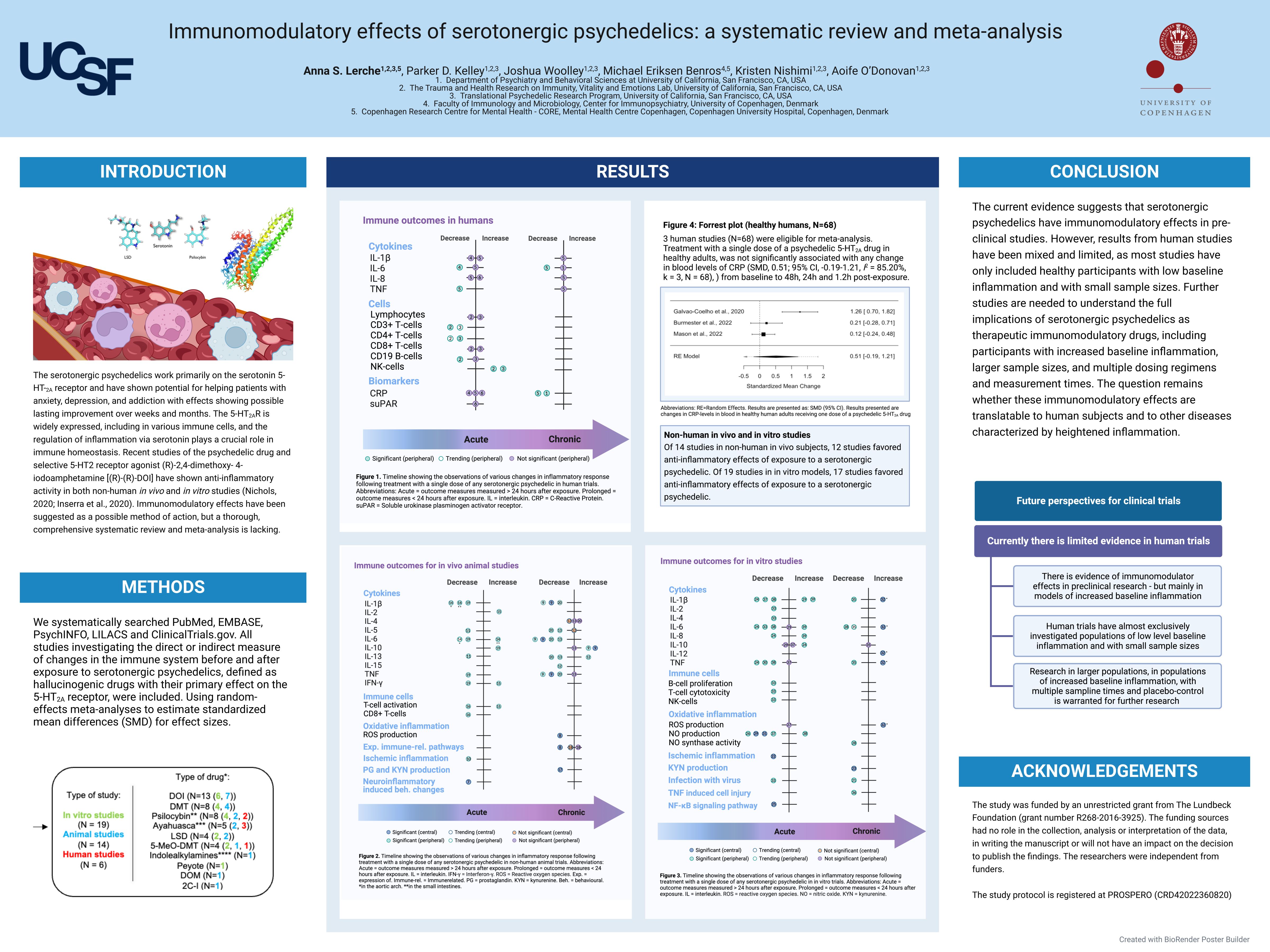
Objective: Classic serotonergic psychedelics work primarily on the serotonin 5-HT-2A receptor and have potential as treatments for anxiety, depression, and addiction, with effects persisting over weeks and months. Immunomodulatory effects of serotonergic psychedelics have been suggested as a possible method of action, but a thorough, comprehensive systematic review and meta-analysis is lacking.
Methods: We systematically searched PubMed, EMBASE, PsychINFO, LILACS and ClinicalTrials.gov on October 30th, 2022, for studies examining changes in the immune system before and after exposure to serotonergic psychedelics, defined as hallucinogenic drugs exerting primary effects on the 5-HT2A receptor. We included all papers published in English from database inception. Where applicable, we performed random-effects meta-analyses estimating standardized mean differences (SMD) for effect sizes.
Results: Of 6680 articles screened, 39 met the eligibility criteria for systematic review, including six human in vivo studies. Of 14 in vivo studies in non-human subjects, 12 studies favored anti-inflammatory effects of exposure to a serotonergic psychedelic. Of 19 studies in in vitro models, 17 studies favored anti-inflammatory effects of exposure to a serotonergic psychedelic. In a meta-analysis of three in vivo studies examining effects of a psychedelic drug on the inflammatory marker C-reac
C-reactive protein (CRP) in humans (N=68), there was no significant acute change in CRP (SMD, 0.59; 95% CI, -0.02-1.21, I2 = 85.20%).
Conclusion: The current evidence suggests that serotonergic psychedelics have immunomodulatory effects in pre-clinical studies. However, results from human studies have been mixed and limited, as most studies have only included healthy participants with low baseline inflammation, with small sample sizes, and only one or two post exposure sampling times. Further studies are needed to understand the full implications of serotonergic psychedelics as therapeutic immunomodulatory drugs, including recincluding recruiting participants with increased baseline inflammation, engaging larger sample sizes, and using multiple dosing regimens with multiple measures of inflammatory activity over time. The question remains whether these immunomodulatory effects are translatable to human subjects and to other diseases characterized by heightened inflammation.