334 posters, 125 sessions, 831 authors, 236 institutions
ePostersLive by SciGen Technologies S.A. All rights reserved.
78th Annual PostGraduate Assembly in Anesthesiology (PGA78) 2024
December 6 - 9, 2024 | New York City

3090
Perioperative Considerations in a Patient with Hereditary Hemorrhagic Telangiectasia
Poster Presenter
Authors
Affiliations
Part of Topic
Perioperative Considerations in a Patient with Hereditary Hemorrhagic Telangiectasia Undergoing Oocyte Retrieval
Introduction
Case Description
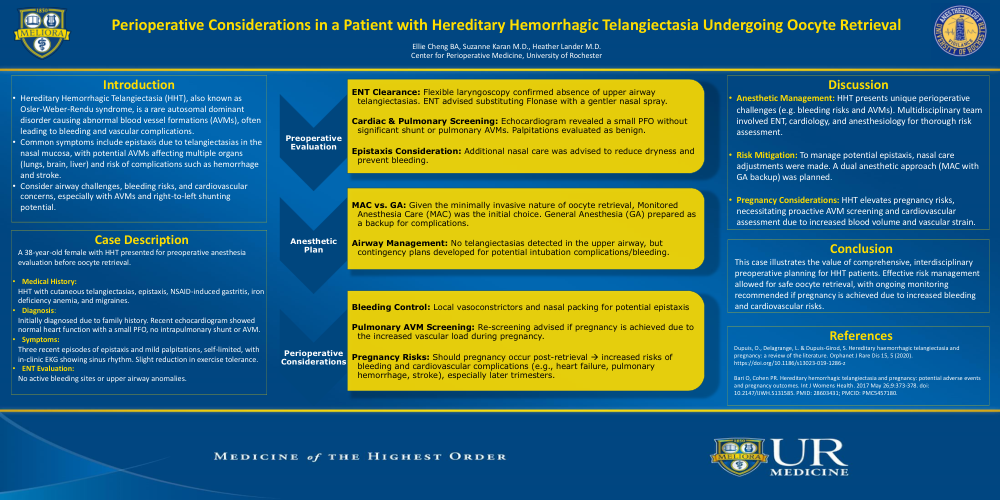
A 38-year-old female with HHT presented for preoperative anesthesia evaluation before oocyte retrieval.
HHT with cutaneous telangiectasias, epistaxis, NSAID-induced gastritis, iron deficiency anemia, and migraines.
Initially diagnosed due to family history. Recent echocardiogram showed normal heart function with a small PFO, no intrapulmonary shunt or AVM.
Three recent episodes of epistaxis and mild palpitations, self-limited, with in-clinic EKG showing sinus rhythm. Slight reduction in exercise tolerance.
No active bleeding sites or upper airway anomalies.
ENT Clearance: Flexible laryngoscopy confirmed absence of upper airway telangiectasias. ENT advised substituting Flonase with a gentler nasal spray.
Cardiac & Pulmonary Screening: Echocardiogram revealed a small PFO without significant shunt or pulmonary AVMs. Palpitations evaluated as benign.
Epistaxis Consideration: Additional nasal care was advised to reduce dryness and prevent bleeding.
MAC vs. GA: Given the minimally invasive nature of oocyte retrieval, Monitored Anesthesia Care (MAC) was the initial choice. General Anesthesia (GA) prepared as a backup for complications.
Airway Management: No telangiectasias detected in the upper airway, but contingency plans developed for potential intubation complications/bleeding.
Bleeding Control: Local vasoconstrictors and nasal packing for potential epistaxis
Pulmonary AVM Screening: Re-screening advised if pregnancy is achieved due to the increased vascular load during pregnancy.
Pregnancy Risks: Should pregnancy occur post-retrieval à increased risks of bleeding and cardiovascular complications (e.g., heart failure, pulmonary hemorrhage, stroke), especially later trimesters.
Discussion
Conclusion
This case illustrates the value of comprehensive, interdisciplinary preoperative planning for HHT patients. Effective risk management allowed for safe oocyte retrieval, with ongoing monitoring recommended if pregnancy is achieved due to increased bleeding and cardiovascular risks.