334 posters, 125 sessions, 831 authors, 236 institutions
ePostersLive by SciGen Technologies S.A. All rights reserved.
78th Annual PostGraduate Assembly in Anesthesiology (PGA78) 2024
December 6 - 9, 2024 | New York City

3080
Don’t Be Conned by Primary Hyperaldosteronism: Anesthetic Considerations for Conn Syndrome
Poster Presenter
Authors
Affiliations
Part of Topic
Introduction
Conn Syndrome, or primary hyperaldosteronism, results in excessive aldosterone secretion independent of renin regulation. It is the most common cause of secondary hypertension and is present in up to 10 to 20% of patients with hypertension and 40% of patients with resistant hypertension.
Hyperaldosteronism leads to sodium retention and potassium excretion, causing hypertension, hypokalemia, and metabolic alkalosis. Patients often present with resistant hypertension despite multiple antihypertensive medications, hypokalemia-related symptoms such as weakness or muscle cramps, and occasionally with incidental findings of adrenal masses on imaging.
Perioperatively, hyperaldosteronism can cause profound potassium depletion, increasing risk of arrhythmias. Hypertension can also occur with manipulation of the mass, increasing risk of hypertensive crisis and intraoperative complications.
Case Description
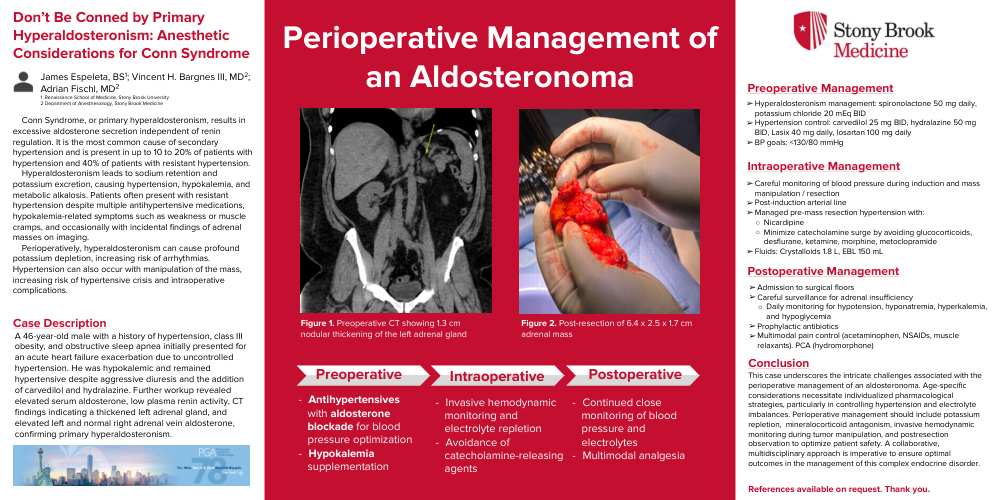
A 46-year-old male with a history of hypertension, class III obesity, and obstructive sleep apnea initially presented for an acute heart failure exacerbation due to uncontrolled hypertension. He was hypokalemic and remained hypertensive despite aggressive diuresis and the addition of carvedilol and hydralazine. Further workup revealed elevated serum aldosterone, low plasma renin activity, CT findings indicating a thickened left adrenal gland, and elevated left and normal right adrenal vein aldosterone, confirming primary hyperaldosteronism.
Preoperative Management
➢ Hyperaldosteronism management: spironolactone 50 mg daily, potassium chloride 20 mEq BID
➢ Hypertension control: carvedilol 25 mg BID, hydralazine 50 mg BID, Lasix 40 mg daily, losartan 100 mg daily
➢ BP goals: <130/80 mmHg
Intraoperative Management
➢ Careful monitoring of blood pressure during induction and mass manipulation / resection
➢ Post-induction arterial line
➢ Managed pre-mass resection hypertension with nicardipine
➢ Minimized catecholamine surge by avoiding glucocorticoids, desflurane, ketamine, morphine, metoclopramide ➢ Fluids: Crystalloids 1.8 L, EBL 150 mL
Postoperative Management
➢ Admission to surgical floors
➢ Careful surveillance for adrenal insufficiency
➢ Daily monitoring for hypotension, hyponatremia, hyperkalemia, and hypoglycemia
➢ Prophylactic antibiotics
➢ Multimodal pain control (acetaminophen, NSAIDs, muscle relaxants). PCA (hydromorphone)
Conclusion
This case underscores the intricate challenges associated with the perioperative management of an aldosteronoma. Age-specific considerations necessitate individualized pharmacological strategies, particularly in controlling hypertension and electrolyte imbalances. Perioperative management should include potassium repletion, mineralocorticoid antagonism, invasive hemodynamic monitoring during tumor manipulation, and postresection observation to optimize patient safety. A collaborative, multidisciplinary approach is imperative to ensure optimal outcomes in the management of this complex endocrine disorder.