334 posters, 125 sessions, 831 authors, 236 institutions
ePostersLive by SciGen Technologies S.A. All rights reserved.
78th Annual PostGraduate Assembly in Anesthesiology (PGA78) 2024
December 6 - 9, 2024 | New York City

3075
Management of Intractable Intraoperative Emesis during Awake Craniotomy
Poster Presenter
Authors
Affiliations
Part of Topic
Management of Intractable Intraoperative Emesis during Awake Craniotomy
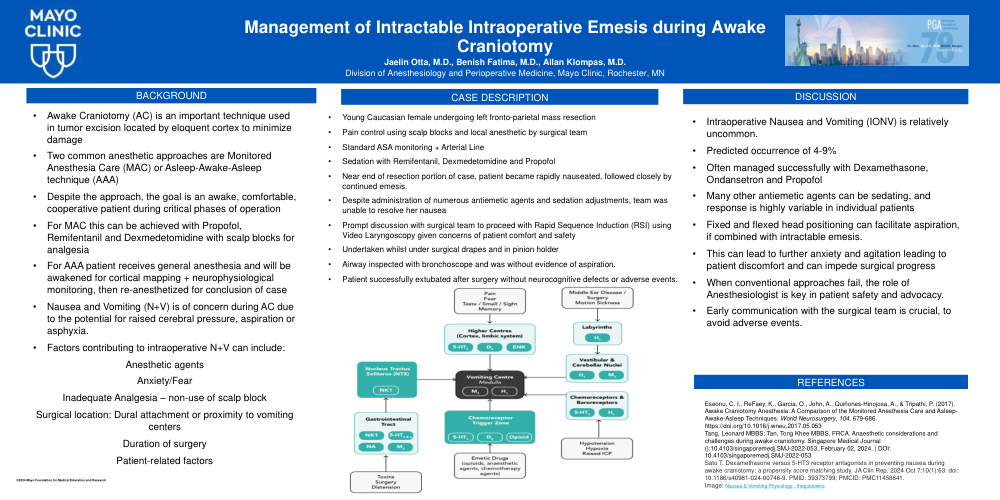
Among the potential challenges to awake craniotomy, Intraoperative Nausea and Vomiting (IONV) is relatively uncommon. IONV is predicted to occur between 4-9% of the time and is often successfully managed with ondansetron, dexamethasone, and propofol. In highlighting when conventional strategies fail, we hope to emphasize the Anesthesiologist's role in patient safety and advocacy. Prompt communication with the surgical team is crucial when management strategies place patients at increased preventable risk. In the case of this patient, despite appropriate anti-emetic management, as well as haloperidol, promethazine, and prochlorperazine, the patient continued to have IONV. Due to fixed and flexed head positioning, the patient had difficulty clearing emesis from her airway. Additionally, the compounding sedation from each additional anti-emetic, in conjunction with the planned anesthetic, caused concern for aspiration. Despite the removal of sedation, IONV persisted. Increasing patient anxiety and agitation began to hamper surgical progression. After discussion with the patient and surgical team, the decision was made to proceed with RSI to protect the patient's airway and facilitate the completion of surgery. The airway was subsequently inspected using a flexible bronchoscope without evidence of aspiration. The patient was successfully extubated after surgery without neurocognitive deficits or adverse events.