334 posters, 125 sessions, 831 authors, 236 institutions
ePostersLive by SciGen Technologies S.A. All rights reserved.
78th Annual PostGraduate Assembly in Anesthesiology (PGA78) 2024
December 6 - 9, 2024 | New York City

3063
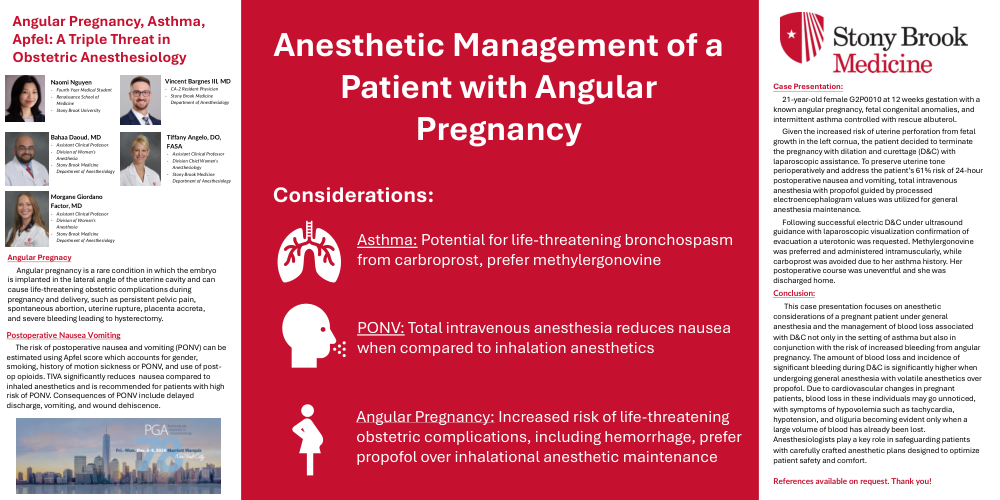
Angular pregnancy, Asthma, and Apfel: A Triple-A in Obstetric Anesthesiology: Anesthetic Management of a Patient with Angular Pregnancy
Poster Presenter
Part of Topic
Angular Pregnacy
Angular pregnancy is a rare condition in which the embryo is implanted in the lateral angle of the uterine cavity and can cause life-threatening obstetric complications during pregnancy and delivery, such as persistent pelvic pain, spontaneous abortion, uterine rupture, placenta accreta, and severe bleeding leading to hysterectomy.
Postoperative Nausea Vomiting
The risk of postoperative nausea and vomiting (PONV) can be estimated using Apfel score which accounts for gender, smoking, history of motion sickness or PONV, and use of post-op opioids. TIVA significantly reduces nausea compared to inhaled anesthetics and is recommended for patients with high risk of PONV. Consequences of PONV include delayed discharge, vomiting, and wound dehiscence.
Case Presentation:
21-year-old female G2P0010 at 12 weeks gestation with a known angular pregnancy, fetal congenital anomalies, and intermittent asthma controlled with rescue albuterol.
Given the increased risk of uterine perforation from fetal growth in the left cornua, the patient decided to terminate the pregnancy with dilation and curettage (D&C) with laparoscopic assistance. To preserve uterine tone perioperatively and address the patient’s 61% risk of 24-hour postoperative nausea and vomiting, total intravenous anesthesia with propofol guided by processed electroencephalogram values was utilized for general anesthesia maintenance.
Following successful electric D&C under ultrasound guidance with laparoscopic visualization confirmation of evacuation a uterotonic was requested. Methylergonovine was preferred and administered intramuscularly, while carboprost was avoided due to her asthma history. Her postoperative course was uneventful and she was discharged home.
Conclusion:
This case presentation focuses on anesthetic considerations of a pregnant patient under general anesthesia and the management of blood loss associated with D&C not only in the setting of asthma but also in conjunction with the risk of increased bleeding from angular pregnancy. The amount of blood loss and incidence of significant bleeding during D&C is significantly higher when undergoing general anesthesia with volatile anesthetics over propofol. Due to cardiovascular changes in pregnant patients, blood loss in these individuals may go unnoticed, with symptoms of hypovolemia such as tachycardia, hypotension, and oliguria becoming evident only when a large volume of blood has already been lost. Anesthesiologists play a key role in safeguarding patients with carefully crafted anesthetic plans designed to optimize patient safety and comfort.
Considerations:
Asthma: Potential for life-threatening bronchospasm from carbroprost, prefer methylergonovine
PONV: Total intravenous anesthesia reduces nausea when compared to inhalation anesthetics
Angular Pregnancy: Increased risk of life-threatening obstetric complications, including hemorrhage, prefer propofol over inhalational anesthetic maintenance