334 posters, 125 sessions, 831 authors, 236 institutions
ePostersLive by SciGen Technologies S.A. All rights reserved.
78th Annual PostGraduate Assembly in Anesthesiology (PGA78) 2024
December 6 - 9, 2024 | New York City

5031
Optimizing Anemia with Limited Time: Assessing the Impact of IV Iron Infusions on Perioperative Outcomes
Poster Presenter
Part of Topic
Introduction
Anemia affects 24.3% of the global population,
with iron deficiency anemia (IDA) as the leading
cause[1]. IDA is a treatable perioperative risk
factor, and if uncorrected, can increase
perioperative morbidity[2]. A previous analysis at
our Center of Perioperative Medicine (CPM)
showed that two preoperative IV ferumoxytol
infusions significantly reduced pneumonia rates,
surgical site infections, ICU stay, and costs in
elective cardiac surgery patients.[3]
This retrospective pilot study expands the
intervention to all elective surgeries, assessing
whether different frequencies of IV iron infusions
in patients with new IDA diagnoses reduce
postoperative morbidity in a dose-dependent
manner.
Description of Intervention + Methods
We retrospectively reviewed 77 patients with
newly diagnosed IDA identified at preoperative
assessment during a visit at the CPM from
August 2023 to February 2024. All patients were
prescribed two IV ferumoxytol infusions, but due
to logistical issues, not all completed both. For
the purposes of this comparison, patients were
divided into three groups: zero infusions (n=30,
control), one infusion (n=26), and two infusions
(n=21). We assessed all groups for intraoperative
and postoperative outcomes, including pRBC
transfusion rate, hospital LOS, SSI rate, Hgb
change, ICU admission rate, and 30-day
readmission rate.
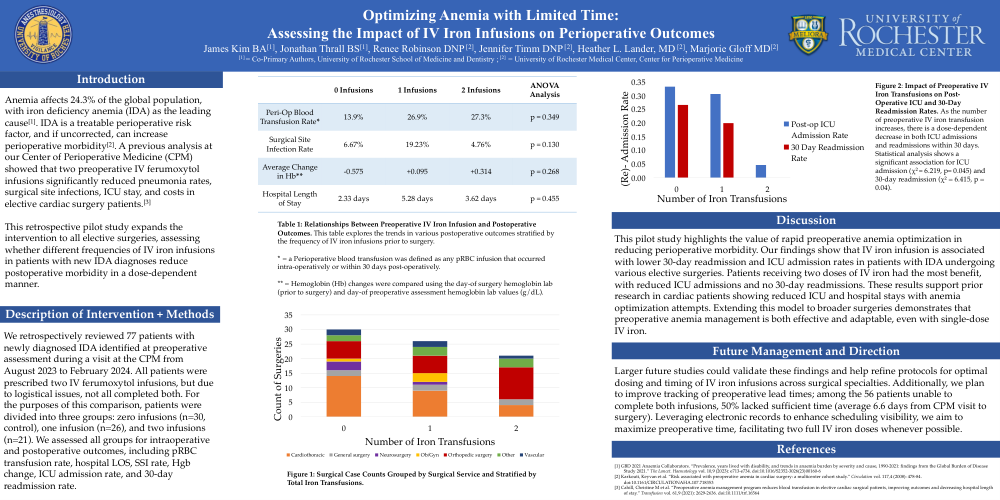
Table 1: Relationships Between Preoperative IV Iron Infusion and Postoperative
Outcomes. This table explores the trends in various postoperative outcomes stratified by
the frequency of IV iron infusions prior to surgery.
* = a Perioperative blood transfusion was defined as any pRBC infusion that occurred
intra-operatively or within 30 days post-operatively.
** = Hemoglobin (Hb) changes were compared using the day-of surgery hemoglobin lab
(prior to surgery) and day-of preoperative assessment hemoglobin lab values (g/dL).
Figure 1: Surgical Case Counts Grouped by Surgical Service and Stratified by
Total Iron Transfusions.
Discussion
This pilot study highlights the value of rapid preoperative anemia optimization in
reducing perioperative morbidity. Our findings show that IV iron infusion is associated
with lower 30-day readmission and ICU admission rates in patients with IDA undergoing
various elective surgeries. Patients receiving two doses of IV iron had the most benefit,
with reduced ICU admissions and no 30-day readmissions. These results support prior
research in cardiac patients showing reduced ICU and hospital stays with anemia
optimization attempts. Extending this model to broader surgeries demonstrates that
preoperative anemia management is both effective and adaptable, even with single-dose
IV iron.
Future Management and Direction
Larger future studies could validate these findings and help refine protocols for optimal
dosing and timing of IV iron infusions across surgical specialties. Additionally, we plan
to improve tracking of preoperative lead times; among the 56 patients unable to
complete both infusions, 50% lacked sufficient time (average 6.6 days from CPM visit to
surgery). Leveraging electronic records to enhance scheduling visibility, we aim to
maximize preoperative time, facilitating two full IV iron doses whenever possible.
References
[1] GBD 2021 Anaemia Collaborators. “Prevalence, years lived with disability, and trends in anaemia burden by severity and cause, 1990-2021: findings from the Global Burden of Disease
Study 2021.” The Lancet. Haematology vol. 10,9 (2023): e713-e734. doi:10.1016/S2352-3026(23)00160-6
[2] Karkouti, Keyvan et al. “Risk associated with preoperative anemia in cardiac surgery: a multicenter cohort study.” Circulation vol. 117,4 (2008): 478-84.
doi:10.1161/CIRCULATIONAHA.107.718353
[3] Cahill, Christine M et al. “Preoperative anemia management program reduces blood transfusion in elective cardiac surgical patients, improving outcomes and decreasing hospital length
of stay.” Transfusion vol. 61,9 (2021): 2629-2636. doi:10.1111/trf.16564