334 posters, 125 sessions, 831 authors, 236 institutions
ePostersLive by SciGen Technologies S.A. All rights reserved.
78th Annual PostGraduate Assembly in Anesthesiology (PGA78) 2024
December 6 - 9, 2024 | New York City

5017
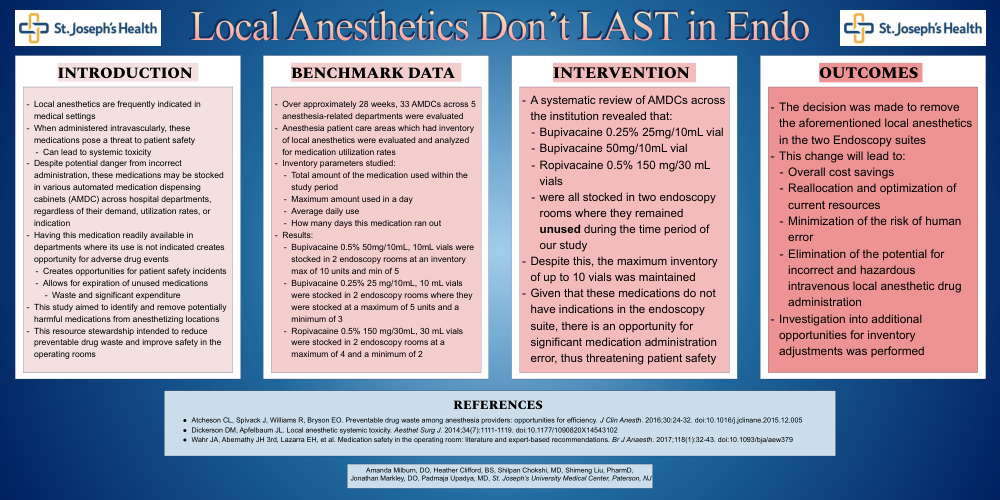
Local Anesthetics Don’t LAST in Endo
Part of Topic
Local Anesthetics Don't LAST in Endo
Introduction:
-
Local anesthetics are frequently indicated in medical settings
-
When administered intravascularly, these medications pose a threat to patient safety
-
Can lead to systemic toxicity
-
Despite potential danger from incorrect administration, these medications may be stocked in various automated medication dispensing cabinets (AMDC) across hospital departments, regardless of their demand, utilization rates, or indication
-
Having this medication readily available in departments where its use is not indicated creates opportunity for adverse drug events
-
Creates opportunities for patient safety incidents
-
Allows for expiration of unused medications
-
Waste and significant expenditure
-
This study aimed to identify and remove potentially harmful medications from anesthetizing locations
-
This resource stewardship intended to reduce preventable drug waste and improve safety in the operating rooms
-
Over approximately 28 weeks, 33 AMDCs across 5 anesthesia-related departments were evaluated
-
Anesthesia patient care areas which had inventory of local anesthetics were evaluated and analyzed for medication utilization rates
-
Inventory parameters studied:
-
Total amount of the medication used within the study period
-
Maximum amount used in a day
-
Average daily use
-
How many days this medication ran out
-
Results:
-
Bupivacaine 0.5% 50mg/10mL, 10mL vials were stocked in 2 endoscopy rooms at an inventory max of 10 units and min of 5
-
Bupivacaine 0.25% 25 mg/10mL, 10 mL vials were stocked in 2 endoscopy rooms where they were stocked at a maximum of 5 units and a minimum of 3
-
Ropivacaine 0.5% 150 mg/30mL, 30 mL vials were stocked in 2 endoscopy rooms at a maximum of 4 and a minimum of 2
Intervention:
-
A systematic review of AMDCs across the institution revealed that:
-
Bupivacaine 0.25% 25mg/10mL vial
-
Bupivacaine 50mg/10mL vial
-
Ropivacaine 0.5% 150 mg/30 mL vials
-
were all stocked in two endoscopy rooms where they remained unused during the time period of our study
-
Despite this, the maximum inventory of up to 10 vials was maintained
-
Given that these medications do not have indications in the endoscopy suite, there is an opportunity for significant medication administration error, thus threatening patient safety
-
A systematic review of AMDCs across the institution revealed that:
-
Bupivacaine 0.25% 25mg/10mL vial
-
Bupivacaine 50mg/10mL vial
-
Ropivacaine 0.5% 150 mg/30 mL vials
-
were all stocked in two endoscopy rooms where they remained unused during the time period of our study
-
Despite this, the maximum inventory of up to 10 vials was maintained
-
Given that these medications do not have indications in the endoscopy suite, there is an opportunity for significant medication administration error, thus threatening patient safety