334 posters, 125 sessions, 831 authors, 236 institutions
ePostersLive by SciGen Technologies S.A. All rights reserved.
78th Annual PostGraduate Assembly in Anesthesiology (PGA78) 2024
December 6 - 9, 2024 | New York City

5015
Analgesic Prescribing Trends at UVMMC Vermont Campus vs New York Satellite Clinic 2019-2023
Poster Presenter
Authors
Affiliations
Part of Topic
Opioid and adjuvant analgesic trends in patients visiting the University of Vermont Medical Center Vermont Campus versus New York Satellite Clinic
for Interventional Pain from January 1st 2019 through December 31st 2023
analgesic trends at UVMMC Vermont campus vs new York satellite clinic 2019-2023
INTRODUCTION
In response to the opioid crisis, in 2016 the CDC published guidelines for the prescription of opioids. Individual states, including Vermont and New York, implemented prescribing recommendations or restrictions to tackle the opioid crisis. Education has included familiarization with multimodal non-opioid analgesics. The University of Vermont Medical Center's catchment area includes parts of New York. Interventional Pain physicians from the Vermont campus travel to a satellite clinic in New York. This study analyses opioid and non-opioid analgesic medication trends in each clinic. Prescribing patterns can vary among sites due to a variety of factors.
AIM STATEMENT
This study highlights differences in prescribing patterns within a single health system but in geographically distinct locations, which provides insight into areas of potential improvement in multimodal pain management.
INTERVENTION DESCRIPTION
This study was exempt from IRB review requirements as per UVM/LCOM policy. Electronic medical records were retrospectively searched. The population was sorted by patients seen in Vermont versus New York State. Medication classes reviewed were acetaminophen; non-steroidal anti-inflammatories; gabapentinoids; pain antidepressants including tricyclic antidepressants, norepinephrine and serotonin-norepinephrine reuptake inhibitors; benzodiazepines; tramadol; and opioids. Prescribing rates were categorized yearly starting in 2019, the first year when medications were reliably reconciled in the medical record at each appointment.
BENCHMARK DATA
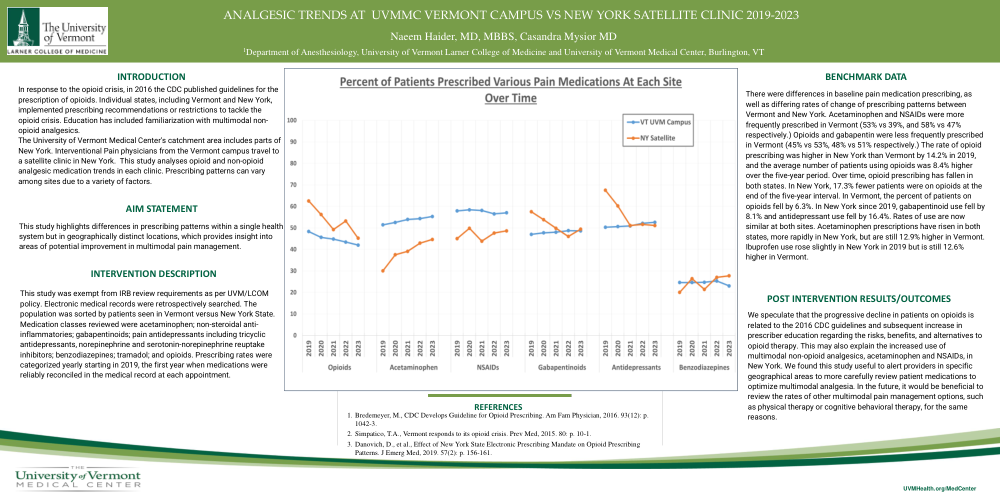
There were differences in baseline pain medication prescribing, as well as differing rates of change of prescribing patterns between Vermont and New York. Acetaminophen and NSAIDs were more frequently prescribed in Vermont (53% vs 39%, and 58% vs 47% respectively.) Opioids and gabapentin were less frequently prescribed in Vermont (45% vs 53%, 48% vs 51% respectively.) The rate of opioid prescribing was higher in New York than Vermont by 14.2% in 2019, and the average number of patients using opioids was 8.4% higher over the five-year period. Over time, opioid prescribing has fallen in both states. In New York, 17.3% fewer patients were on opioids at the end of the five-year interval. In Vermont, the percent of patients on opioids fell by 6.3%. In New York since 2019, gabapentinoid use fell by 8.1% and antidepressant use fell by 16.4%. Rates of use are now similar at both sites. Acetaminophen prescriptions have risen in both states, more rapidly in New York, but are still 12.9% higher in Vermont. Ibuprofen use rose slightly in New York in 2019 but is still 12.6% higher in Vermont.
POST INTERVENTION RESULTS/OUTCOMES
We speculate that the progressive decline in patients on opioids is related to the 2016 CDC guidelines and subsequent increase in prescriber education regarding the risks, benefits, and alternatives to opioid therapy. This may also explain the increased use of multimodal non-opioid analgesics, acetaminophen and NSAIDs, in New York. We found this study useful to alert providers in specific geographical areas to more carefully review patient medications to optimize multimodal analgesia. In the future, it would be beneficial to review the rates of other multimodal pain management options, such as physical therapy or cognitive behavioral therapy, for the same reasons.