334 posters, 125 sessions, 831 authors, 236 institutions
ePostersLive by SciGen Technologies S.A. All rights reserved.
78th Annual PostGraduate Assembly in Anesthesiology (PGA78) 2024
December 6 - 9, 2024 | New York City

4140
Profile of Pediatric Chronic Pain Patients: A survey of caregivers in the United States
Part of Topic
Profile of Pediatric Chronic Pain Patients: A Survey of Caregivers in the United States
Priya Mandava1, Lauren Major2, Casey Cashman3, Nichole Hemmenway3, Jennifer Gewandter, PhD, MPH1, Anjana Kundu MD, ABOIM, FAAP1
1Department of Anesthesiology and Perioperative Medicine, University of Rochester Medical Center 2The State University of New York Upstate Medical Universityc 3US Pain Foundation Pediatric Pain Warrior Program
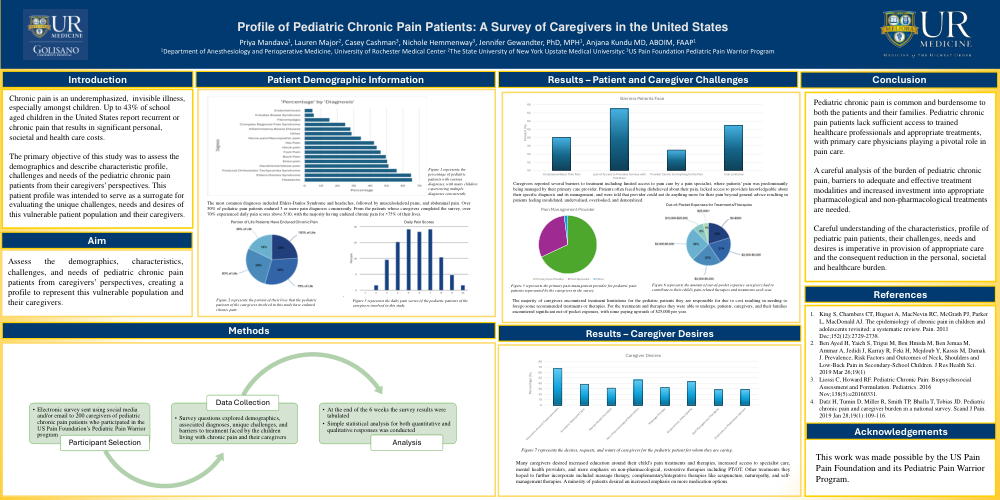
Chronic pain is an underemphasized, invisible illness, especially amongst children. Up to 43% of school aged children in the United States report recurrent or chronic pain that results in significant personal, societal and health care costs. The primary objective of this study was to assess the demographics and describe characteristic profile, challenges and needs of the pediatric chronic pain patients from their caregivers’ perspectives. This patient profile was intended to serve as a surrogate for evaluating the unique challenges, needs and desires of this vulnerable patient population and their caregivers.
Pediatric chronic pain is common and burdensome to both the patients and their families. Pediatric chronic pain patients lack sufficient access to trained healthcare professionals and appropriate treatments, with primary care physicians playing a pivotal role in pain care. A careful analysis of the burden of pediatric chronic pain, barriers to adequate and effective treatment modalities and increased investment into appropriate pharmacological and non-pharmacological treatments are needed. Careful understanding of the characteristics, profile of pediatric pain patients, their challenges, needs and desires is imperative in provision of appropriate care and the consequent reduction in the personal, societal and healthcare burden.
This work was made possible by the US Pain Pain Foundation and its Pediatric Pain Warrior Program.