334 posters, 125 sessions, 831 authors, 236 institutions
ePostersLive by SciGen Technologies S.A. All rights reserved.
78th Annual PostGraduate Assembly in Anesthesiology (PGA78) 2024
December 6 - 9, 2024 | New York City

4135
Periprocedural Management of DNR Orders in Cancer Patients: A Descriptive Analysis of Patient-Centered Outcomes
Poster Presenter
Authors
Affiliations
Part of Topic
Periprocedural DNR Management Following Policy Revision
Zafar Syed, Justin KimMD, Joanna Snead, Patrick McCormick MD, Anoushka Afonso MD
Memorial Sloan Kettering Cancer Center, New York, NY, 10065
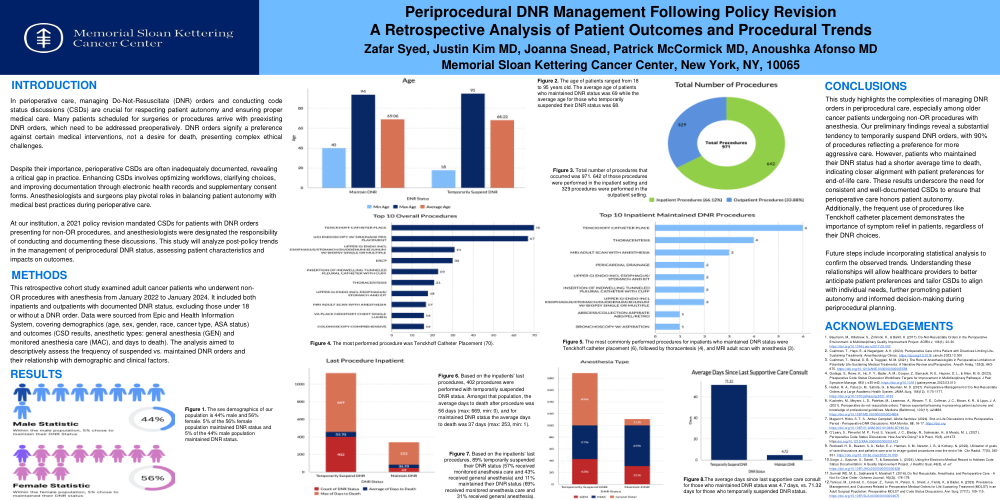
A Retrospective Analysis of Patient Outcomes and Procedural TrendsIn perioperative care, managing Do-Not-Resuscitate (DNR) orders and conducting code status discussions (CSDs) are crucial for respecting patient autonomy and ensuring proper medical care. Many patients scheduled for surgeries or procedures arrive with preexisting DNR orders, which need to be addressed preoperatively. DNR orders signify a preference against certain medical interventions, not a desire for death, presenting complex ethical challenges.
Despite their importance, perioperative CSDs are often inadequately documented, revealing a critical gap in practice. Enhancing CSDs involves optimizing workflows, clarifying choices, and improving documentation through electronic health records and supplementary consent forms. Anesthesiologists and surgeons play pivotal roles in balancing patient autonomy with medical best practices during perioperative care.
At our institution, a 2021 policy revision mandated CSDs for patients with DNR orders presenting for non-OR procedures, and anesthesiologists were designated the responsibility of conducting and documenting these discussions. This study will analyze post-policy trends in the management of periprocedural DNR status, assessing patient characteristics and impacts on outcomes.
This retrospective cohort study examined adult cancer patients who underwent non-OR procedures with anesthesia from January 2022 to January 2024. It included both inpatients and outpatients with documented DNR status, excluding those under 18 or without a DNR order. Data were sourced from Epic and Health Information System, covering demographics (age, sex, gender, race, cancer type, ASA status) and outcomes (CSD results, anesthetic types: general anesthesia (GEN) and monitored anesthesia care (MAC), and days to death). The analysis aimed to descriptively assess the frequency of suspended vs. maintained DNR orders and their relationship with demographic and clinical factors.
This study highlights the complexities of managing DNR orders in periprocedural care, especially among older cancer patients undergoing non-OR procedures with anesthesia. Our preliminary findings reveal a substantial tendency to temporarily suspend DNR orders, with 90% of procedures reflecting a preference for more aggressive care. However, patients who maintained their DNR status had a shorter average time to death, indicating closer alignment with patient preferences for end-of-life care. These results underscore the need for consistent and well-documented CSDs to ensure that perioperative care honors patient autonomy. Additionally, the frequent use of procedures like Tenckhoff catheter placement demonstrates the importance of symptom relief in patients, regardless of their DNR choices.
Future steps include incorporating statistical analysis to confirm the observed trends. Understanding these relationships will allow healthcare providers to better anticipate patient preferences and tailor CSDs to align with individual needs, further promoting patient autonomy and informed decision-making during periprocedural planning.