334 posters, 125 sessions, 831 authors, 236 institutions
ePostersLive by SciGen Technologies S.A. All rights reserved.
78th Annual PostGraduate Assembly in Anesthesiology (PGA78) 2024
December 6 - 9, 2024 | New York City

3045
Management of Fetal Sustained Supraventricular Tachycardia (SVT) and Complications in Pregnancy: A Case Report
Poster Presenter
Authors
Affiliations
Montefiore Medical Center/Albert Einstein College of Medicine
Part of Topic
§Increasing maternal mortality and incidence of arrhythmias observed in the US over the past 2 decades.
§Pregnancy is associated with a higher risk of arrhythmias.
§Patients with a history of arrhythmias are at significant risk of recurrence during pregnancy.
§Multidisciplinary approach is required for pregnant women with significant arrhythmias during labor and delivery.
§Close monitoring is essential for successful maternal and fetal outcomes in high-risk patients.
§27-year-old G2P1 diagnosed with fetal SVT at 20 weeks of pregnancy (FHR 240), initiating complex treatment involving digoxin, flecainide, and sotalol.
§Admitted for digoxin initiation, developed signs of digoxin toxicity (ST changes, abdominal pain, nausea), leading to discontinuation of digoxin and introduction of flecainide
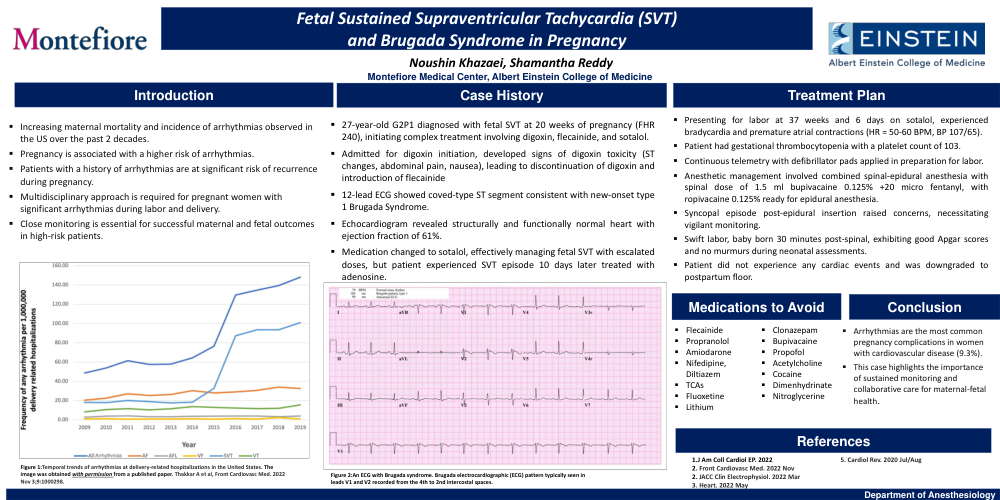
§12-lead ECG showed coved-type ST segment consistent with new-onset type 1 Brugada Syndrome.
§Echocardiogram revealed structurally and functionally normal heart with ejection fraction of 61%.
§Medication changed to sotalol, effectively managing fetal SVT with escalated doses, but patient experienced SVT episode 10 days later treated with adenosine.
§Presenting for labor at 37 weeks and 6 days on sotalol, experienced bradycardia and premature atrial contractions (HR = 50-60 BPM, BP 107/65).
§Patient had gestational thrombocytopenia with a platelet count of 103.
§Continuous telemetry with defibrillator pads applied in preparation for labor.
§Anesthetic management involved combined spinal-epidural anesthesia with spinal dose of 1.5 ml bupivacaine 0.125% +20 micro fentanyl, with ropivacaine 0.125% ready for epidural anesthesia.
§Syncopal episode post-epidural insertion raised concerns, necessitating vigilant monitoring.
§Swift labor, baby born 30 minutes post-spinal, exhibiting good Apgar scores and no murmurs during neonatal assessments.
§Patient did not experience any cardiac events and was downgraded to postpartum floor.