334 posters, 125 sessions, 831 authors, 236 institutions
ePostersLive by SciGen Technologies S.A. All rights reserved.
78th Annual PostGraduate Assembly in Anesthesiology (PGA78) 2024
December 6 - 9, 2024 | New York City

3042
Patient with Heparin-Induced Thrombocytopenia having Adverse Reactions to Heparin having Mitral Clip Placement for Severe Mitral Regurgitation
Part of Topic
Heparin-Induced Thrombocytopenia:
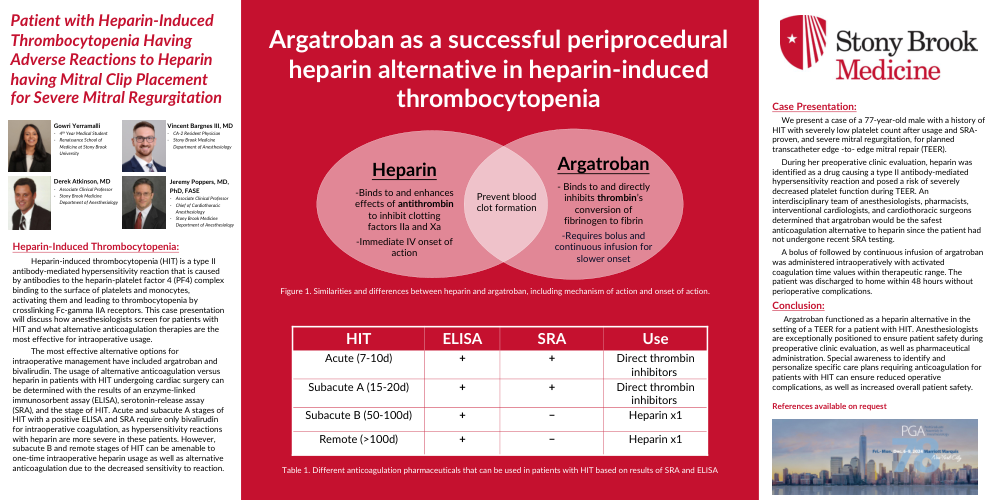
Heparin-induced thrombocytopenia (HIT) is a type II antibody-mediated hypersensitivity reaction that is caused by antibodies to the heparin-platelet factor 4 (PF4) complex binding to the surface of platelets and monocytes, activating them and leading to thrombocytopenia by crosslinking Fc-gamma IIA receptors. This case presentation will discuss how anesthesiologists screen for patients with HIT and what alternative anticoagulation therapies are the most effective for intraoperative usage.
The most effective alternative options for intraoperative management have included argatroban and bivalirudin. The usage of alternative anticoagulation versus heparin in patients with HIT undergoing cardiac surgery can be determined with the results of an enzyme-linked immunosorbent assay (ELISA), serotonin-release assay (SRA), and the stage of HIT. Acute and subacute A stages of HIT with a positive ELISA and SRA require only bivalirudin for intraoperative coagulation, as hypersensitivity reactions with heparin are more severe in these patients. However, subacute B and remote stages of HIT can be amenable to one-time intraoperative heparin usage as well as alternative anticoagulation due to the decreased sensitivity to reaction.
Case Presentation:
We present a case of a 77-year-old male with a history of HIT with severely low platelet count after usage and SRA-proven, and severe mitral regurgitation, for planned transcatheter edge -to- edge mitral repair (TEER).
During her preoperative clinic evaluation, heparin was identified as a drug causing a type II antibody-mediated hypersensitivity reaction and posed a risk of severely decreased platelet function during TEER. An interdisciplinary team of anesthesiologists, pharmacists, interventional cardiologists, and cardiothoracic surgeons determined that argatroban would be the safest anticoagulation alternative to heparin since the patient had not undergone recent SRA testing.
A bolus of followed by continuous infusion of argatroban was administered intraoperatively with activated coagulation time values within therapeutic range. The patient was discharged to home within 48 hours without perioperative complications.
Conclusion:
Argatroban functioned as a heparin alternative in the setting of a TEER for a patient with HIT. Anesthesiologists are exceptionally positioned to ensure patient safety during preoperative clinic evaluation, as well as pharmaceutical administration. Special awareness to identify and personalize specific care plans requiring anticoagulation for patients with HIT can ensure reduced operative complications, as well as increased overall patient safety.
References available on request