334 posters, 125 sessions, 831 authors, 236 institutions
ePostersLive by SciGen Technologies S.A. All rights reserved.
78th Annual PostGraduate Assembly in Anesthesiology (PGA78) 2024
December 6 - 9, 2024 | New York City

4079
Individualized Perioperative Pain Management of High-Dose Opioid Dependent Chronic Pain Patients Undergoing Elective Orthopedic Surgery: A Retrospective Cohort Study
Poster Presenter
Part of Topic
| Individualized Perioperative Pain Management of High-Dose Opioid Dependent Chronic Pain Patients Undergoing Elective Orthopedic Surgery: A Retrospective Cohort Study | |
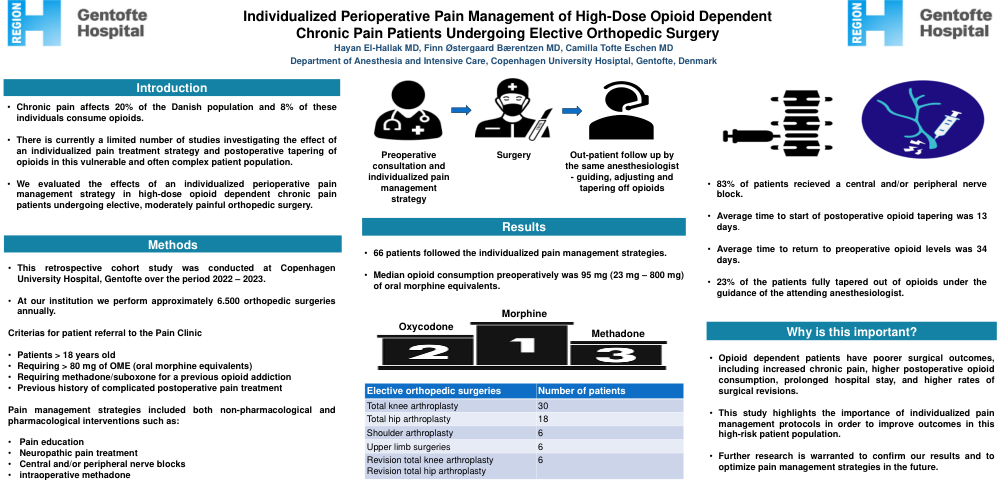
| Chronic pain as defined by the WHO affects approximately 20% of the Danish population and roughly 8% of these individuals require opioids(1). Since the recognition of the opioid epidemic more research has been focused on surgical patients with a preoperative opioid dependance. Previous studies have shown that patients with preoperative opioid dependence experience poorer outcomes, including increased chronic pain, higher postoperative opioid consumption, prolonged hospital stay, and higher rates of surgical revisions(2). There is currently a limited number of studies investigating the effect of an individualized pain treatment strategy and postoperative tapering of opioids in this vulnerable and often complex patient population. This study is aimed at evaluating the effectiveness of an individualized perioperative pain management strategy in high-dose opioid dependent chronic pain patients undergoing elective, moderately painful orthopedic surgeries at a Danish University Hospital over a one-year period. | |
| This retrospective cohort study was conducted at a University Hospital in Copenhagen, Denmark which performs approximately 6.500 elective orthopedic surgeries per year. Patients enrolled in this study were over the age of 18 years with nondescript chronic pain requiring more than 80 milligrams of oral morphine equivalents per day or requiring methadone/suboxone for a previous opioid addiction or patients with a previous history of complicated postoperative pain management. The patients had a preoperative consultation with an anesthesiologist from the Acute Pain Clinic in which a pain assessment and drug history were obtained. The individualized perioperative pain management strategy was designed based on the patients’ previous experiences, type of pain, types of opioids used by the patients preoperatively, and the type of orthopedic surgery. Plans included pain education and entailed treatments such as central and nerve blocks, neuropathic pain treatment and intraoperative methadone. Postoperatively the patients were followed up by the same anesthesiologist on a weekly basis adjusting the postoperative plan. This continued until the patients had tapered off the postoperative opioids. Data on opioid use, postoperative NRS scores, length of hospital stay, time until tapering off and whether the patients could be fully tapered out of opioids were collected. | |
| In total, 66 patients followed the individualized pain management strategies and were postoperatively adjusted in pain medications while being tapered off opioids. The median opioid consumption preoperatively was 95 mg of oral morphine equivalents (23mg-800mg). The most common opioids were slow-release morphine, oxycodon, and methadone. Furthermore, 83% of the patients received nerve blocks. Average time to start of postoperative opioid tapering was 13 days and patients returned to preoperative levels on an average of 34 days. Eventually, 23% of patients fully tapered out of opioids under the guidance of the attending anesthesiologist although this was not the goal. | |
| Patients enrolled in this study had high NRS scores preoperatively despite their high opioid consumption which is a predictive factor for higher postoperative pain scores and complicated, prolonged postoperative hospital stays(3). However, this was not the case in our patient cohort. Indeed, follow-up by the same anesthesiologist from the pain clinic seems to have the effect that several yearlong opioid dependent patients managed to have good postoperative outcomes with stable pain scores and postoperative treatment courses comparable to opioid naïve patients. Finally, we also managed to taper off opioids completely in a significant fraction of the patients enrolled in this study. These findings highlight the importance of tailored pain management protocols in order to improve outcomes in this high-risk patient population. Further research is warranted to confirm our results and to optimize pain management strategies in the future. | |
| 1. Danish Health Data Authority. 2. Hah, Jennifer M. MD, MS*; Bateman, Brian T. MD, MSc†; Ratliff, John MD‡§; Curtin, Catherine MD?; Sun, Eric MD, PhD¶#. Chronic Opioid Use After Surgery: Implications for Perioperative Management in the Face of the Opioid Epidemic. Anesthesia & Analgesia 125(5):p 1733-1740, November 2017. | DOI: 10.1213/ANE.0000000000002458 3. Kehlet H, Jensen TS, Woolf CJ. Persistent postsurgical pain: risk factors and prevention. Lancet. 2006 May 13;367(9522):1618-25. doi: 10.1016/S0140-6736(06)68700-X. PMID: 16698416. |