334 posters, 125 sessions, 831 authors, 236 institutions
ePostersLive by SciGen Technologies S.A. All rights reserved.
78th Annual PostGraduate Assembly in Anesthesiology (PGA78) 2024
December 6 - 9, 2024 | New York City

4069
A Retrospective Analysis of Prescribing Trends for Medications of Opioid Use Disorder
Poster Presenter
Part of Topic
A Retrospective Analysis of Prescribing Trends for Medications of Opioid Use Disorder
INTRODUCTION
Both methadone and buprenorphine are effective in managing opioid use disorder (OUD), though methadone was used more frequently due to its earlier invention and approval. Buprenorphine has been accepted as an alternative medication for opioid use disorder (MOUD) treatment since 2002 due to its more flexible prescribing options and unique pharmacological profile. This retrospective exploratory study investigates how prescribing practices of methadone vs. buprenorphine have changed between 2014-2023.
METHODS AND RESULTS
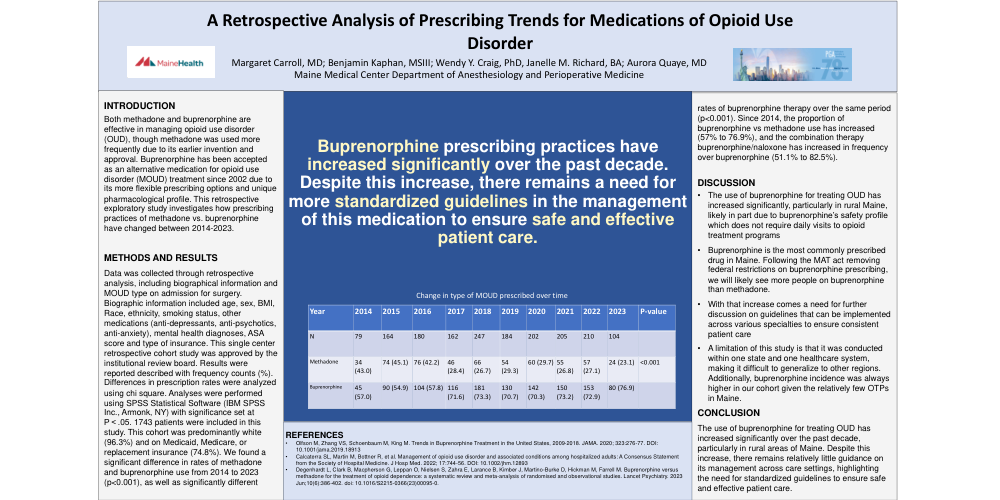
Data was collected through retrospective analysis, including biographical information and MOUD type on admission for surgery. Biographic information included age, sex, BMI, Race, ethnicity, smoking status, other medications (anti-depressants, anti-psychotics, anti-anxiety), mental health diagnoses, ASA score and type of insurance. This single center retrospective cohort study was approved by the institutional review board. Results were reported described with frequency counts (%). Differences in prescription rates were analyzed using chi square. Analyses were performed using SPSS Statistical Software (IBM SPSS Inc., Armonk, NY) with significance set at P < .05. 1743 patients were included in this study. This cohort was predominantly white (96.3%) and on Medicaid, Medicare, or replacement insurance (74.8%). We found a significant difference in rates of methadone and buprenorphine use from 2014 to 2023 (p<0.001), as well as significantly different rates of buprenorphine therapy over the same period (p<0.001). Since 2014, the proportion of buprenorphine vs methadone use has increased (57% to 76.9%), and the combination therapy buprenorphine/naloxone has increased in frequency over buprenorphine (51.1% to 82.5%).
DISCUSSION
CONCLUSION
The use of buprenorphine for treating OUD has increased significantly over the past decade, particularly in rural areas of Maine. Despite this increase, there remains relatively little guidance on its management across care settings, highlighting the need for standardized guidelines to ensure safe and effective patient care.