334 posters, 125 sessions, 831 authors, 236 institutions
ePostersLive by SciGen Technologies S.A. All rights reserved.
78th Annual PostGraduate Assembly in Anesthesiology (PGA78) 2024
December 6 - 9, 2024 | New York City

4061
The effect of cannabinoid consumption on propofol dosage for procedural sedation – a systematic review and meta-analysis
Poster Presenter
Part of Topic
The effect of cannabinoid consumption on propofol dosage for procedural sedation – a systematic review and meta-analysis
Introduction
The interaction of cannabinoids and the opioid system are well described. In recent years, the role of cannabinoids in anesthesia and critical care medicine has garnered significant attention. These compounds, known for their analgesic, antiemetic, and sedative properties, are believed to interact with the central nervous system and could potentially modulate the response to anesthetics, specifically propofol.The relationship between cannabinoids and propofol is still in the nascent stages of understanding. While some studies suggest a potentiation of propofol's hypnotic effects by cannabinoids, thereby decreasing the requisite dosage, others have found no significant interaction. Animal studies have yielded inconsistent results when examining the effects of cannabinoids on anesthesia induction and recovery. Nonetheless, they suggest that the impact of cannabinoids on anesthesia induction and recovery varies with dose. To bridge this knowledge gap, a comprehensive investigation of the impact of cannabinoids on propofol dosing for procedural sedation in humans is warranted.
Methods
The methodology employed in this research constituted a systematic review and meta-analysis of studies comparing propofol doses in patients with cannabinoid consumption versus controls. The population of interest was patients who had used cannabinoids, receiving propofol for any procedural anesthesia undergoing endoscopy or teeth extraction. The intervention was the use of cannabinoids, which was defined as any form of intake e.g.recreational or therapeutic, of cannabinoid, including pharmaceutical or plant-based preparations, assessed by self-reporting of the patients. The comparison group was patients who had not used cannabinoids. The outcome was the dose of propofol required for induction or maintenance of anesthesia, procedural sedation, or intensive care medicine. The literature search was conducted using multiple electronic databases, including PubMed, Embase, Cinhal, and the Cochrane Library. Study selection was carried out in two stages. In the first stage, two independent reviewers screened the titles and abstracts of the identified studies for relevance. In the second stage, the full texts of the potentially eligible studies were retrieved and assessed for inclusion based on the predefined inclusion and exclusion criteria. Extracted information included study/participant characteristics and propofol dosing. The primary outcome measure was the dose of propofol required for procedural sedation.
Results
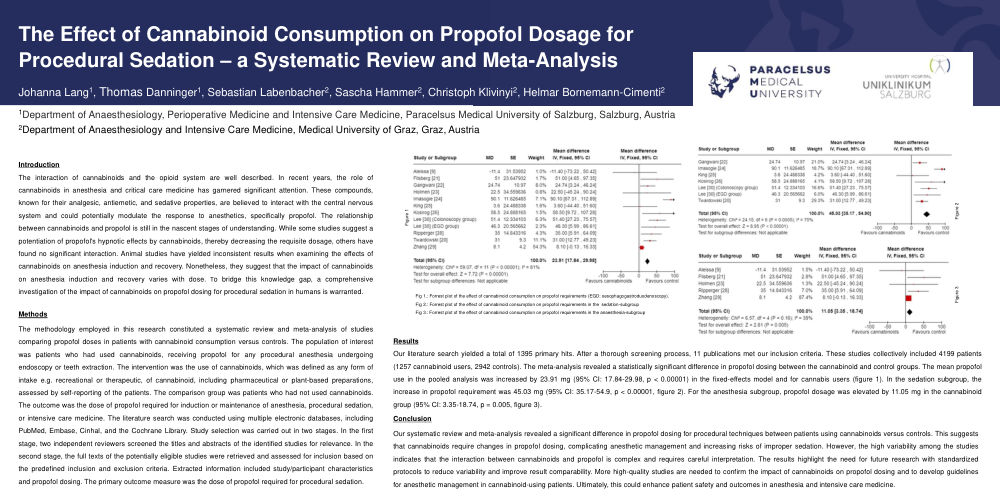
Our literature search yielded a total of 1395 primary hits. After a thorough screening process, 11 publications met our inclusion criteria. These studies collectively included 4199 patients (1257 cannabinoid users, 2942 controls). The meta-analysis revealed a statistically significant difference in propofol dosing between the cannabinoid and control groups. The mean propofol use in the pooled analysis was increased by 23.91 mg (95% CI: 17.84-29.98, p < 0.00001) in the fixed-effects model and for cannabis users (figure 1). In the sedation subgroup, the increase in propofol requirement was 45.03 mg (95% CI: 35.17-54.9, p < 0.00001, figure 2). For the anesthesiasubgroup, propofol dosage was elevated by 11.05 mg in the cannabinoid group (95% CI: 3.35-18.74, p = 0.005, figure 3).
Conclusion
Our systematic review and meta-analysis revealed a significant difference in propofol dosing for procedural techniques between patients using cannabinoids versus controls. This suggests that cannabinoids require changes in propofol dosing, complicating anesthetic management and increasing risks of improper sedation. However, the high variability among the studies indicates that the interaction between cannabinoids and propofol is complex and requires careful interpretation. The results highlight the need for future research with standardized protocols to reduce variability and improve result comparability. More high-quality studies are needed to confirm the impact of cannabinoids on propofol dosing and to develop guidelines for anesthetic management in cannabinoid-using patients. Ultimately, this could enhance patient safety and outcomes in anesthesia and intensive care medicine.