334 posters, 125 sessions, 831 authors, 236 institutions
ePostersLive by SciGen Technologies S.A. All rights reserved.
78th Annual PostGraduate Assembly in Anesthesiology (PGA78) 2024
December 6 - 9, 2024 | New York City

4036
Exploring Traditional and Innovative Approaches for Treating Postoperative Respiratory Depression
Poster Presenter
Part of Topic
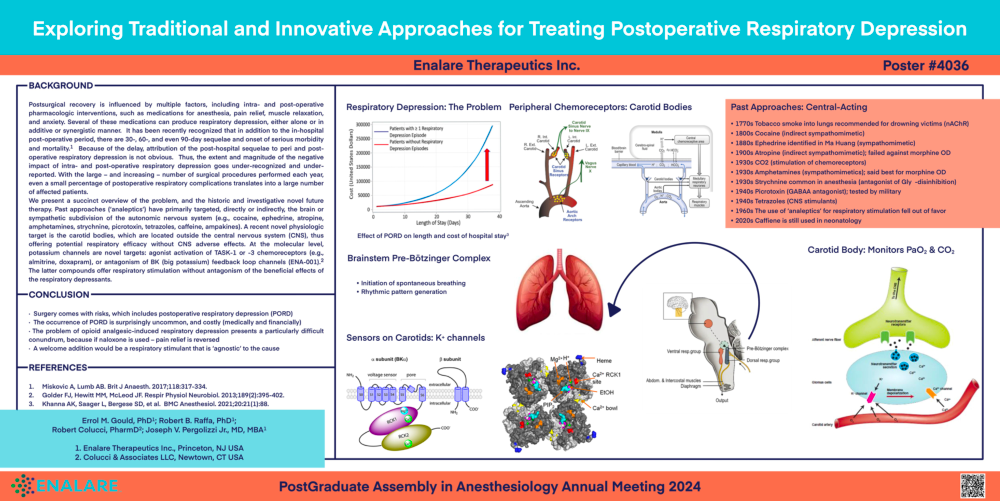
Postsurgical recovery is influenced by multiple factors, including intra- and post-operative pharmacologic interventions, such as medications for anesthesia, pain relief, muscle relaxation, and anxiety. Several of these medications can produce respiratory depression, either alone or in additive or synergistic manner. It has been recently recognized that in addition to the in-hospital post-operative period, there are 30-, 60-, and even 90-day sequelae and onset of serious morbidity and mortality.1 Because of the delay, attribution of the post-hospital sequelae to peri and post-operative respiratory depression is not obvious. Thus, the extent and magnitude of the negative impact of intra- and post-operative respiratory depression goes under-recognized and under-reported. With the large – and increasing – number of surgical procedures performed each year, even a small percentage of postoperative respiratory complications translates into a large number of affected patients.
We present a succinct overview of the problem, and the historic and investigative novel future therapy. Past approaches (‘analeptics’) have primarily targeted, directly or indirectly, the brain or sympathetic subdivision of the autonomic nervous system (e.g., cocaine, ephedrine, atropine, amphetamines, strychnine, picrotoxin, tetrazoles, caffeine, ampakines). A recent novel physiologic target is the carotid bodies, which are located outside the central nervous system (CNS), thus offering potential respiratory efficacy without CNS adverse effects. At the molecular level, potassium channels are novel targets: agonist activation of TASK-1 or -3 chemoreceptors (e.g., almitrine, doxapram), or antagonism of BK (big potassium) feedback loop channels (ENA-001).2 The latter compounds offer respiratory stimulation without antagonism of the beneficial effects of the respiratory depressants.
- Surgery comes with risks, which includes postoperative respiratory depression (PORD)
- The occurrence of PORD is surprisingly uncommon, and costly (medically and financially)
- The problem of opioid analgesic-induced respiratory depression presents a particularly difficult conundrum, because if naloxone is used – pain relief is reversed
- A welcome addition would be a respiratory stimulant that is ‘agnostic’ to the cause