334 posters, 125 sessions, 831 authors, 236 institutions
ePostersLive by SciGen Technologies S.A. All rights reserved.
78th Annual PostGraduate Assembly in Anesthesiology (PGA78) 2024
December 6 - 9, 2024 | New York City

4026
Deep Sedation Technique For Outpatient Brachytherapy: A Single Center Experience
Poster Presenter
Part of Topic
Deep sedation technique for outpatient brachytherapy: A single center experience
Katherine Herrera, MD; Irene Osborn, MD
Background
-
Cervical cancer has moved up to become the 3rd most common cancer death among young women in the U.S.
-
Providing anesthetic care for GYN brachytherapy is beneficial for optimal treatment & patient comfort since it requires immobility & analgesia for a prolonged period of time.
-
Current guidelines from the ABS & ASA do not specify a preferred anesthesia approach nor type of anesthesia modality for GYN brachytherapy applicator placement.
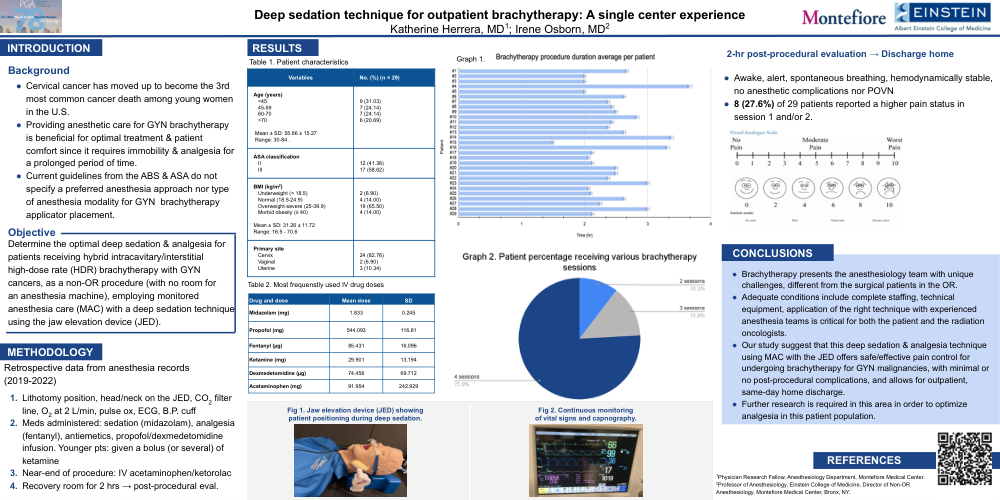
Objective: Determine the optimal deep sedation & analgesia for patients receiving hybrid intracavitary/interstitial high-dose rate (HDR) brachytherapy with GYN cancers, as a non-OR procedure (with no room for an anesthesia machine), employing monitored anesthesia care (MAC) with a deep sedation technique using the jaw elevation device (JED).
Methodology
Retrospective data from anesthesia records (2019-2022)
-
Lithotomy position, head/neck on the JED, CO2 filter line, O2 at 2 L/min, pulse ox, ECG, B.P. cuff
-
Meds administered: sedation (midazolam), analgesia (fentanyl), antiemetics, propofol/dexmedetomidine infusion. Younger pts: given a bolus (or several) of ketamine
-
Near-end of procedure: IV acetaminophen/ketorolac
-
Recovery room for 2 hrs → post-procedural eval.
-
Awake, alert, spontaneous breathing, hemodynamically stable, no anesthetic complications nor POVN
-
8 (27.6%) of 29 patients reported a higher pain status in session 1 and/or 2
-
Brachytherapy presents the anesthesiology team with unique challenges, different from the surgical patients in the OR.
-
Adequate conditions include complete staffing, technical equipment, application of the right technique with experienced anesthesia teams is critical for both the patient and the radiation oncologists.
-
Our study suggest that this deep sedation & analgesia technique using MAC with the JED offers safe/effective pain control for undergoing brachytherapy for GYN malignancies, with minimal or no post-procedural complications, and allows for outpatient, same-day home discharge.
-
Further research is required in this area in order to optimize analgesia in this patient population.