334 posters, 125 sessions, 831 authors, 236 institutions
ePostersLive by SciGen Technologies S.A. All rights reserved.
78th Annual PostGraduate Assembly in Anesthesiology (PGA78) 2024
December 6 - 9, 2024 | New York City

3250
Acute Inability to Ventilate a Patient with a Mediastinal Mass
Part of Topic
Acute Loss of Airway in a Patient with a Mediastinal Mass
Juan Mauri, M.D., Nathalie Rivas, B.A., and Judith Aronsohn, M.D.
Department of Anesthesiology, Zucker School of Medicine at Hofstra-Northwell, New Hyde Park, NY
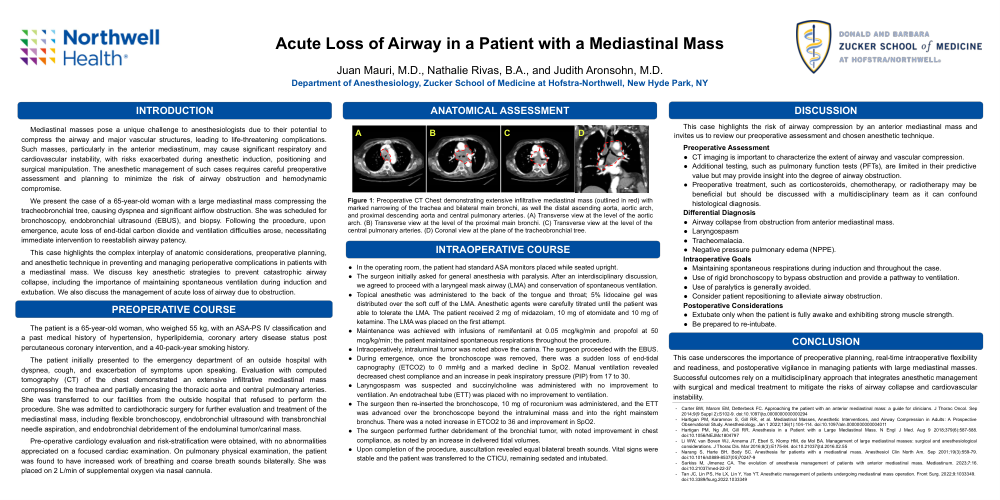
Mediastinal masses pose a unique challenge to anesthesiologists due to their potential to compress the airway and major vascular structures, leading to life-threatening complications. Such masses, particularly in the anterior mediastinum, may cause significant respiratory and cardiovascular instability, with risks exacerbated during anesthetic induction, positioning and surgical manipulation. The anesthetic management of such cases requires careful preoperative assessment and planning to minimize the risk of airway obstruction and hemodynamic compromise. We present the case of a 65-year-old woman with a large mediastinal mass compressing the tracheobronchial tree, causing dyspnea and significant airflow obstruction. She was scheduled for bronchoscopy, endobronchial ultrasound (EBUS), and biopsy. Following the procedure, upon emergence, acute loss of end-tidal carbon dioxide and ventilation difficulties arose, necessitating immediate intervention to reestablish airway patency. This case highlights the complex interplay of anatomic considerations, preoperative planning, and anesthetic technique in preventing and managing perioperative complications in patients with a mediastinal mass. We discuss key anesthetic strategies to prevent catastrophic airway collapse, including the importance of maintaining spontaneous ventilation during induction and extubation. We also discuss the management of acute loss of airway due to obstruction.