334 posters, 125 sessions, 831 authors, 236 institutions
ePostersLive by SciGen Technologies S.A. All rights reserved.
78th Annual PostGraduate Assembly in Anesthesiology (PGA78) 2024
December 6 - 9, 2024 | New York City

3232
Management of Central Neuropathic Pain in Intracranial Masses
Poster Presenter
Authors
Affiliations
Part of Topic
INTRODUCTION:
-Central neuropathic pain (CNP) is caused by an insult to the central nervous system (vascular, traumatic, neoplastic,etc.) [1]
-Many patients who undergo resection of intracranial masses can suffer from chronic pain and it is crucial that CNP be considered in these patients
-Symptoms include abnormal temperature/pain perception, evoked pain, constant pain with pain paroxysms and allodynia
-Treatment includes addressing the causative process, symptomatic relief of the pain with medications (first line being antidepressants and anticonvulsants) and addressing other sources of pain that may worsen CP (such as spasticity) [1]
CASE PRESENTATION:
HPI: 50 y/o female presented to an outpatient chronic pain clinic with symptoms of neuropathic pain in her right lower extremity, further described to be a “burning and tingling sensation” since meningioma resection
Past Medical Hx: Diabetes, Questionable TIA, Meningioma s/p resection
Physical Exam: Decreased sensation to light touch in right lower extremity circumferentially distally from the mid thigh.
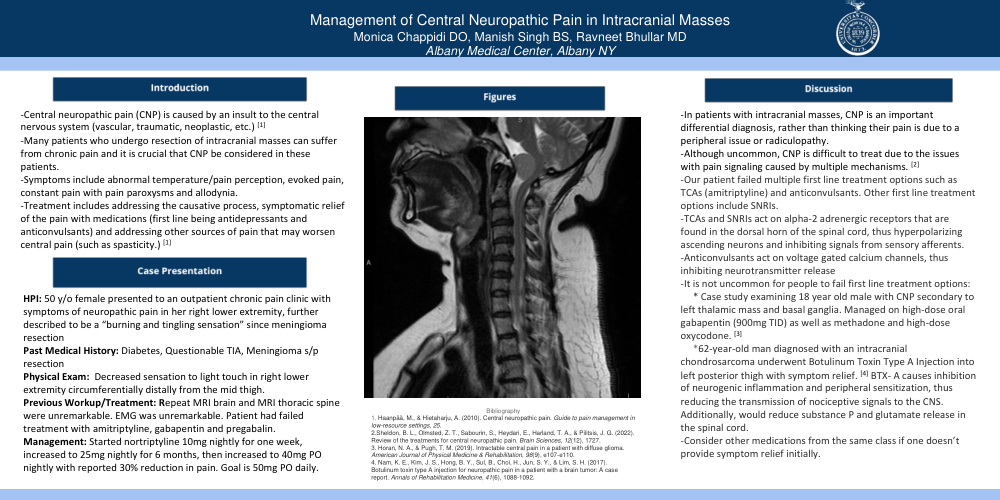
Previous Workup/Treatment: Unremarkable repeat MRI brain and thoracic spine. EMG was unremarkable. Patientfailed amitriptyline, gabapentin and pregabalin
Management: Started nortriptyline 10mg nightly for one week, increased to 20mg nightly with 60% decrease in neuropathic pain. Currently on nortriptyline 25mg PO nightly and planned to follow up in 4 months.
DISCUSSION:
-In patients with intracranial masses, CNP is an important differential diagnosis, rather than thinking their pain is due to a peripheral issue or radiculopathy
-Although uncommon, CNP is difficult to treat due to the issues with pain signaling caused by multiple mechanisms. [2]
-Our patient failed multiple first line treatment options such as TCAs (amitriptyline) and anticonvulsants. Other first line treatment options include SNRIs.
-TCAs and SNRIs act on alpha-2 adrenergic receptors that are found in the dorsal horn of the spinal cord, thus hyperpolarizing ascending neurons and inhibiting signals from sensory afferents
-Anticonvulsants act on voltage gated calcium channels, thus inhibiting neurotransmitter release
-It is not uncommon for people to fail first line treatment options:
* Case study examining 18 year old male with CNP secondary to left thalamic mass and basal ganglia. Managed on high-dose oral gabapentin (900mg TID) as well as methadone and high-dose oxycodone. [3]
*62-year-old man diagnosed with an intracranial chondrosarcoma underwent Botulinum Toxin Type A Injection into left posterior thigh with symptom relief.[4] BTX- A causes inhibition of neurogenic inflammation and peripheral sensitization, thus reducing the transmission of nociceptive signals to the CNS. Additionally, would reduce substance P and glutamate release in the spinal cord.
-Consider medications from the same class if one doesn’t work initially