334 posters, 125 sessions, 831 authors, 236 institutions
ePostersLive by SciGen Technologies S.A. All rights reserved.
78th Annual PostGraduate Assembly in Anesthesiology (PGA78) 2024
December 6 - 9, 2024 | New York City

3218
From Impact to Intubation: Airway Management in Complete Tracheal Transection
Poster Presenter
Part of Topic
From Impact to Intubation: Airway Management in Complete Tracheal Transection
Shweta Mohapatra, MA1; Pallavi Muraleedharan, BS1; Blake Fairchild2; Sally Raty, MD3
1McGovern Medical School at UTHealth Houston, Houston, TX 2Texas A&M University, College Station, TX 3University of Texas MD Anderson Cancer Center, Houston, TX
Introduction
Complete tracheal transection usually occurs due to a significant force that disrupts the trachea's structural integrity, leading to potential respiratory distress, subcutaneous emphysema, aphonia, stridor, visible neck bruising, and the loss of palpable landmarks.1
Case Description
-
Middle-aged male sustained complete tracheal transection upon impact with his steering wheel
-
Neck bruising, desaturation without respiratory distress, subcutaneous emphysema and inability to phonate
-
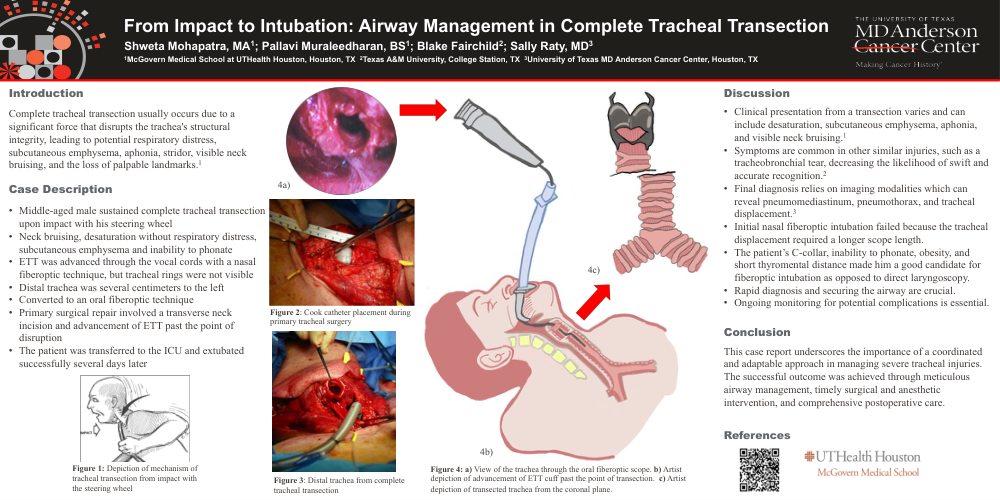
ETT was advanced through the vocal cords with a nasal fiberoptic technique, but tracheal rings were not visible
-
Distal trachea was several centimeters to the left
-
Converted to an oral fiberoptic technique
-
Primary surgical repair involved a transverse neck incision and advancement of ETT past the point of disruption
-
The patient was transferred to the ICU and extubated successfully several days later
Discussion
-
Clinical presentation from a transection varies and can include desaturation, subcutaneous emphysema, aphonia, and visible neck bruising.1
-
Symptoms are common in other similar injuries, such as a tracheobronchial tear, decreasing the likelihood of swift and accurate recognition.2
-
Final diagnosis relies on imaging modalities which can reveal pneumomediastinum, pneumothorax, and tracheal displacement.3
-
Initial nasal fiberoptic intubation failed because the tracheal displacement required a longer scope length.
-
The patient’s C-collar, inability to phonate, obesity, and short thyromental distance made him a good candidate for fiberoptic intubation as opposed to direct laryngoscopy.
-
Rapid diagnosis and securing the airway are crucial.
-
Ongoing monitoring for potential complications is essential.
Conclusion
This case report underscores the importance of a coordinated and adaptable approach in managing severe tracheal injuries. The successful outcome was achieved through meticulous airway management, timely surgical and anesthetic intervention, and comprehensive postoperative care.