334 posters, 125 sessions, 831 authors, 236 institutions
ePostersLive by SciGen Technologies S.A. All rights reserved.
78th Annual PostGraduate Assembly in Anesthesiology (PGA78) 2024
December 6 - 9, 2024 | New York City

3144
Anesthesia and Kratom Use
Poster Presenter
Authors
Affiliations
Part of Topic
Anesthesia and Kratom Use
Annabella Deziel BS, Maria Santa Cruz DO, Ravneet Bhullar MD, FASA
Albany Medical College, Albany Medical Center Department of Anesthesiology
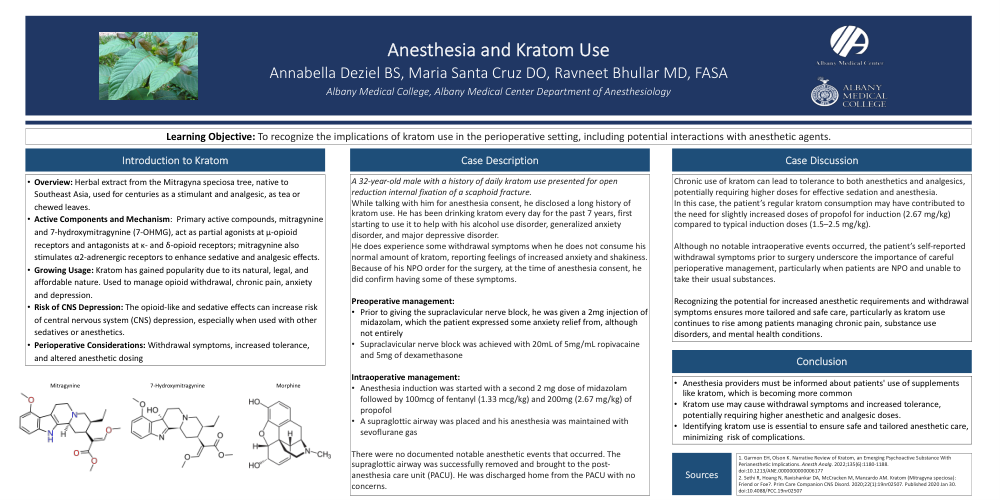
Learning Objective: To recognize the implications of kratom use in the perioperative setting, including potential interactions with anesthetic agents.
Introduction to Kratom
Case Description
A 32-year-old male with a history of daily kratom use presented for open reduction internal fixation of a scaphoid fracture.
While talking with him for anesthesia consent, he disclosed a long history of kratom use. He has been drinking kratom every day for the past 7 years, first starting to use it to help with his alcohol use disorder, generalized anxiety disorder, and major depressive disorder.
He does experience some withdrawal symptoms when he does not consume his normal amount of kratom, reporting feelings of increased anxiety and shakiness. Because of his NPO order for the surgery, at the time of anesthesia consent, he did confirm having some of these symptoms.
Preoperative management:
Intraoperative management:
There were no documented notable anesthetic events that occurred. The supraglottic airway was successfully removed and brought to the post-anesthesia care unit (PACU). He was discharged home from the PACU with no concerns.
Case Discussion
Chronic use of kratom can lead to tolerance to both anesthetics and analgesics, potentially requiring higher doses for effective sedation and anesthesia.
In this case, the patient’s regular kratom consumption may have contributed to the need for slightly increased doses of propofol for induction (2.67 mg/kg) compared to typical induction doses (1.5–2.5 mg/kg).
Although no notable intraoperative events occurred, the patient’s self-reported withdrawal symptoms prior to surgery underscore the importance of careful perioperative management, particularly when patients are NPO and unable to take their usual substances.
Recognizing the potential for increased anesthetic requirements and withdrawal symptoms ensures more tailored and safe care, particularly as kratom use continues to rise among patients managing chronic pain, substance use disorders, and mental health conditions.
Conclusion
Sources