334 posters, 125 sessions, 831 authors, 236 institutions
ePostersLive by SciGen Technologies S.A. All rights reserved.
78th Annual PostGraduate Assembly in Anesthesiology (PGA78) 2024
December 6 - 9, 2024 | New York City

3140
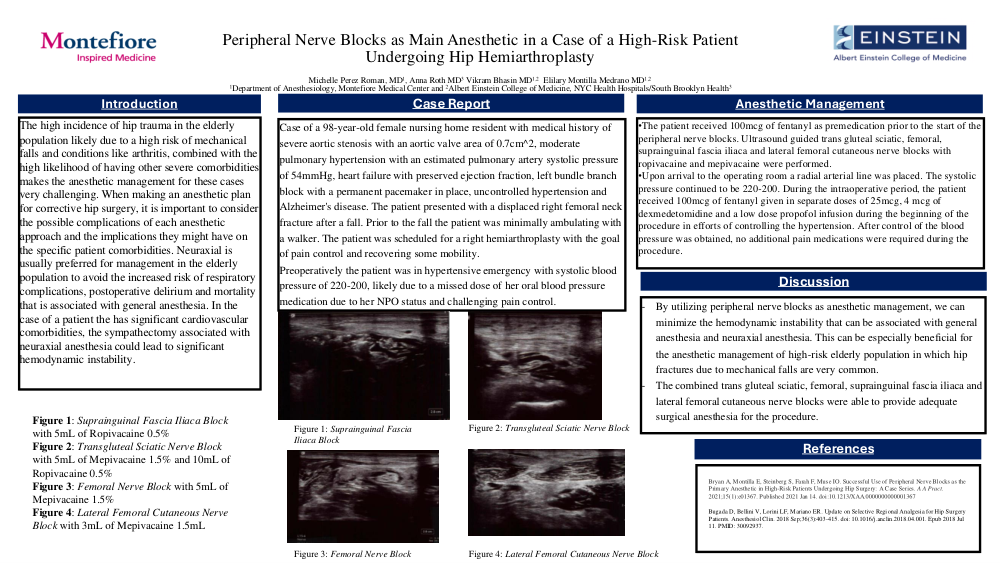
Peripheral Nerve Blocks as Anesthetic Management in a Case of a High-Risk Patient Undergoing Hip Hemiarthroplasty
Poster Presenter
Part of Topic
Peripheral Nerve Blocks as Main Anesthetic in a Case of a High-Risk Patient Undergoing Hip Hemiarthroplasty
Michelle Perez Roman, MD1, Anna Roth MD3 Vikram Bhasin MD1,2Elilary Montilla Medrano MD1,2
1Department of Anesthesiology, Montefiore Medical Center and 2Albert Einstein College of Medicine, NYC Health Hospitals/South Brooklyn Health3
Introduction
The high incidence of hip trauma in the elderly population likely due to a high risk of mechanical falls and conditions like arthritis, combined with the high likelihood of having other severe comorbidities makes the anesthetic management for these cases very challenging. When making an anesthetic plan for corrective hip surgery, it is important to consider the possible complications of each anesthetic approach and the implications they might have on the specific patient comorbidities. Neuraxial is usually preferred for management in the elderly population to avoid the increased risk of respiratory complications, postoperative delirium and mortality that is associated with general anesthesia. In the case of a patient the has significant cardiovascular comorbidities, the sympathectomy associated with neuraxial anesthesia could lead to significant hemodynamic instability.
Case Report
Case of a 98-year-old female nursing home resident with medical history of severe aortic stenosis with an aortic valve area of 0.7cm^2, moderate pulmonary hypertension with an estimated pulmonary artery systolic pressure of 54mmHg, heart failure with preserved ejection fraction, left bundle branch block with a permanent pacemaker in place, uncontrolled hypertension and Alzheimer's disease. The patient presented with a displaced right femoral neck fracture after a fall. Prior to the fall the patient was minimally ambulating with a walker. The patient was scheduled for a right hemiarthroplasty with the goal of pain control and recovering some mobility.
Preoperatively the patient was in hypertensive emergency with systolic blood pressure of 220-200, likely due to a missed dose of her oral blood pressure medication due to her NPO status and challenging pain control.