334 posters, 125 sessions, 831 authors, 236 institutions
ePostersLive by SciGen Technologies S.A. All rights reserved.
78th Annual PostGraduate Assembly in Anesthesiology (PGA78) 2024
December 6 - 9, 2024 | New York City

3139
An Urgent CABG Complicated by Coronary Artery Intramural Hematoma from Percutaneous Intervention with Corresponding Electrocardiogram and Echocardiogram Changes in the Setting of Renal Transplantation
Poster Presenter
Authors
Yusef Shibly, Vincent Bargnes, Igor Izrailtyan, Henry Tannous
Affiliations
Part of Topic
An Urgent CABG Complicated by Coronary Artery Intramural Hematoma from Percutaneous Intervention
with Corresponding Electrocardiogram and Echocardiogram Changes in the Setting of Renal Transplantation
Yusef Shibly, BS1; Vincent Bargnes, MD2; Henry Tannous, MD3; Igor Izrailtyan, MD, FACC2
Renaissance School of Medicine, Stony Brook University 1 Department of Anesthesiology, Stony Brook Medicine 2 Department of Surgery, Stony Brook Medicine 3
Introduction
• Coronary artery bypass grafting is the most commonly performed cardiac
surgery in adults
• The complexity of these procedures can vary by vessel involvement,
preexisting valvular disease, and other cardiac considerations
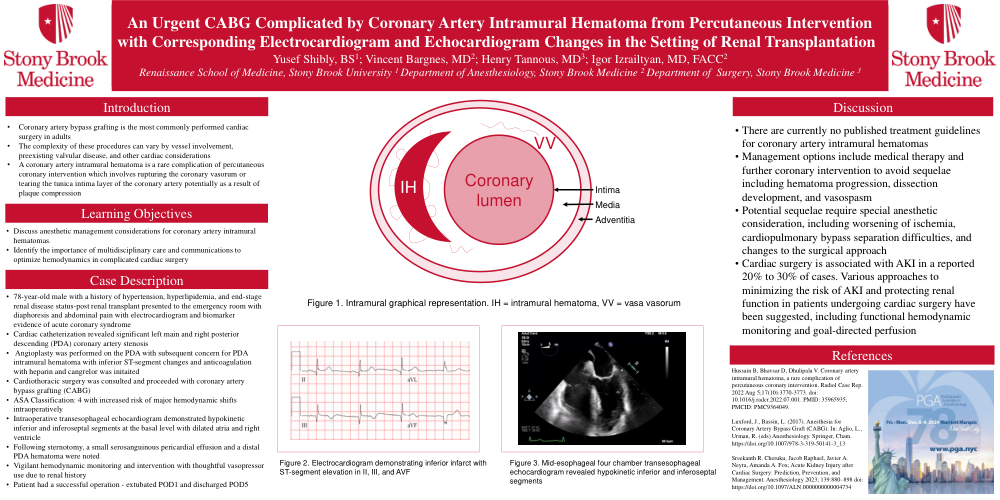
• A coronary artery intramural hematoma is a rare complication of percutaneous
coronary intervention which involves rupturing the coronary vasorum or
tearing the tunica intima layer of the coronary artery potentially as a result of
plaque compression
Case Description
78-year-old male with a history of hypertension, hyperlipidemia, and end-stage
renal disease status-post renal transplant presented to the emergency room with
diaphoresis and abdominal pain with electrocardiogram and biomarker
evidence of acute coronary syndrome
• Cardiac catheterization revealed significant left main and right posterior
descending (PDA) coronary artery stenosis
• Angioplasty was performed on the PDA with subsequent concern for PDA
intramural hematoma with inferior ST-segment changes and anticoagulation
with heparin and cangrelor was initaited
• Cardiothoracic surgery was consulted and proceeded with coronary artery
bypass grafting (CABG)
• ASA Classification: 4 with increased risk of major hemodynamic shifts
intraoperatively
• Intraoperative transesophageal echocardiogram demonstrated hypokinetic
inferior and inferoseptal segments at the basal level with dilated atria and right
ventricle
• Following sternotomy, a small serosanguinous pericardial effusion and a distal
PDA hematoma were noted
• Vigilant hemodynamic monitoring and intervention with thoughtful vasopressor
use due to renal history
• Patient had a successful operation - extubated POD1 and discharged POD5
Discussion
• There are currently no published treatment guidelines
for coronary artery intramural hematomas
• Management options include medical therapy and
further coronary intervention to avoid sequelae
including hematoma progression, dissection
development, and vasospasm
• Potential sequelae require special anesthetic
consideration, including worsening of ischemia,
cardiopulmonary bypass separation difficulties, and
changes to the surgical approach
• Cardiac surgery is associated with AKI in a reported
20% to 30% of cases. Various approaches to
minimizing the risk of AKI and protecting renal
function in patients undergoing cardiac surgery have
been suggested, including functional hemodynamic
monitoring and goal-directed perfusion