136 posters, 2 topics, 27 sessions, 339 authors, 88 institutions
ePostersLive by SciGen Technologies S.A. All rights reserved.
2024 ACP Annual Session
NOVEMBER 6-9, 2024 | MARCO ISLAND, FL JW MARRIOT

36
Integrating digital and analog techniques in designing a full arch hybrid prodthesis: A case report.
Poster Presenter
Authors
Affiliations
Part of Topic
Case Presentation
Introduction
There are several approaches to restoring a full arch with a hybrid prosthesis, each with unique considerations regrading surgical technique, materials, and costs 1,2.
Purpose/Aim
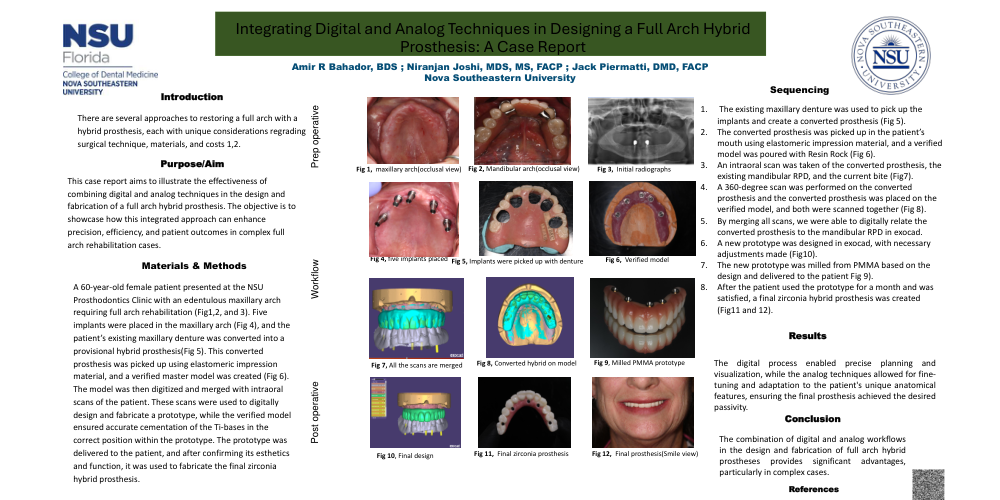
This case report aims to illustrate the effectiveness of combining digital and analog techniques in the design and fabrication of a full arch hybrid prosthesis. The objective is to showcase how this integrated approach can enhance precision, efficiency, and patient outcomes in complex full arch rehabilitation cases.
Materials & Methods
A 60-year-old female patient presented at the NSU Prosthodontics Clinic with an edentulous maxillary arch requiring full arch rehabilitation (Fig1,2, and 3). Five implants were placed in the maxillary arch (Fig 4), and the patient’s existing maxillary denture was converted into a provisional hybrid prosthesis(Fig 5). This converted prosthesis was picked up using elastomeric impression material, and a verified master model was created (Fig 6). The model was then digitized and merged with intraoral scans of the patient. These scans were used to digitally design and fabricate a prototype, while the verified model ensured accurate cementation of the Ti-bases in the correct position within the prototype. The prototype was delivered to the patient, and after confirming its esthetics and function, it was used to fabricate the final zirconia hybrid prosthesis.
Sequencing
Results
The digital process enabled precise planning and visualization, while the analog techniques allowed for fine-tuning and adaptation to the patient's unique anatomical features, ensuring the final prosthesis achieved the desired passivity.
Conclusion
The combination of digital and analog workflows in the design and fabrication of full arch hybrid prostheses provides significant advantages, particularly in complex cases.