145 posters, 12 topics, 25 sessions, 145 authors
ePostersLive by SciGen Technologies S.A. All rights reserved.
UCSF 2023 Inquiry Symposium
10 May | University of San Francisco

P143
Childhood Injury Prevention Needs Assessment for UCSF-SF Pediatric Emergency Medicine
Poster Presenter
Authors
Part of Topic
Population Science & Epidemiology
Introduction Unintentional injuries are the most common cause of childhood death in the United States. Many injuries are predictable and preventable. Childhood injury prevention programs have been shown to effectively reduce local injury burden. San Francisco does not have an existing injury prevention program. Although previous injury prevention programs emphasize the importance of collecting local injury data, this is the first study, to our knowledge, that also attempts to integrate a qualitative approach interpreted through a theory of behavior change to understand stakeholder perspectives and potential barriers to a future program.
Aims Aim 1 will analyze a database of pediatric patient injuries to describe childhood injuries presenting to emergency departments and primary care clinics in San Francisco over a 2-year period to lend insight into which groups are most vulnerable and what injuries are most common. We hypothesize that we will identify clear patterns of injury for specific groups based upon age, ethnicity, and geographic location.
Aim 2 involves a qualitative study consisting of interviews of caregivers and ED providers in our communities targeted at understanding their attitudes, perceptions, and beliefs of what injuries their children are most at risk for, how these injuries could be prevented, and what barriers exist to injury prevention.
Together, these data will serve as a holistic needs assessment to better understand how to develop a childhood injury prevention program for San Francisco that will address the most pressing needs of our children and families while considering unique constraints in our most vulnerable groups.
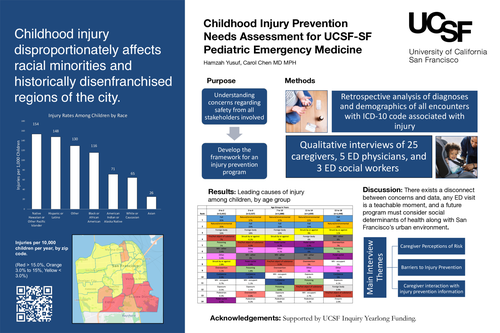
Methods We used a mixed-methods approach. We performed a retrospective cross-sectional analysis of children presenting to an academic hospital system between January 2019 and December 2020 with an injury-related primary diagnosis. The primary outcome was encounters with an injuryrelated ICD-10 code. We then conducted a thematic analysis by interviewing caregivers and ED providers.
Results There were 10,193 unique injury-related pediatric encounters. Most common injuries were natural/environmental (22.9%), falls (20.0%), and striking an object (5.1%). Highest rates of injury were seen in children who identified as Native Hawaiian or Pacific Islander (154 injuries per 10,000 children per year), followed by Hispanic or Latino (148). Three out of twenty zip code areas represented 43.4% of all injuries and correlated with lower household income. Twenty-five caregivers, six physicians, and three social workers participated in interviews that resulted in four major themes: perceptions of injury risk, caregiver receipt of injury prevention information, barriers, and provider counseling.
Conclusion Clear differences exist within the injury burden in San Francisco by demographics, geography, and type of injury. The findings from the study will guide the first steps in designing a strategic pediatric injury prevention center. The methods may guide future investigations into the dynamic needs of clinicians and caregivers regarding injury. A strategic program focused on the community’s unique needs and barriers may effectively reduce injury rates.