2,281 posters, 63 videos, 56 audios, 43 topics, 18 sessions, 6,174 authors, 2,323 institutions
ePostersLive by SciGen Technologies S.A. All rights reserved.
RCOG World Congress 2025
June 23 - 25, 2025 | ExCeL London, UK
EP.1757
Unveiling Menopausal Narratives Among Asian Women in the UK – A Qualitative Study
Poster Presenter
Authors
Arunima Basu, Rania Selim, Ailin Anto, Andreas Benedikt Eisengerich
Affiliations
Part of Topic
Menopause
Unveiling Menopausal Narratives Among Asian Women in the UK – A Qualitative Study
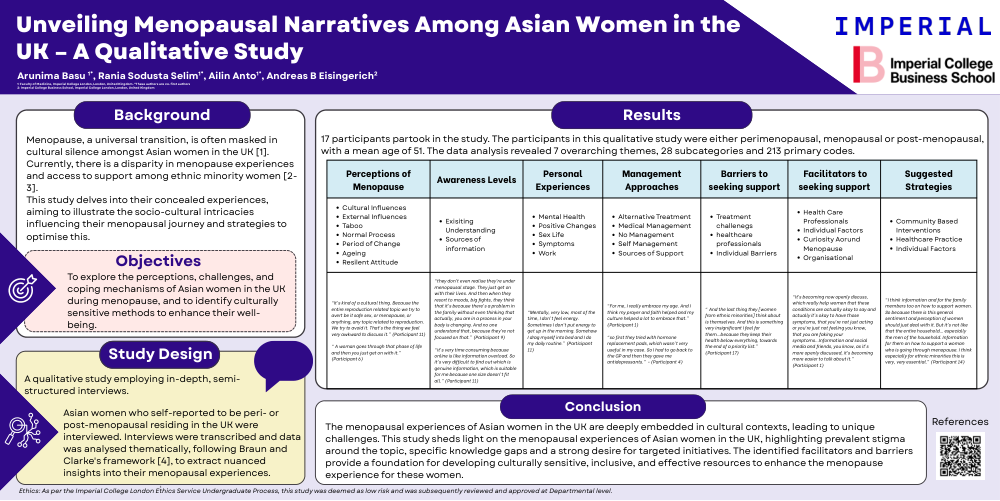
Background: Menopause, a universal transition, is often masked in cultural silence amongst Asian women in the UK. Currently, there is a disparity in menopause experiences and support access among ethnic minority women. This study delves into their concealed experiences, aiming to illustrate the socio-cultural intricacies influencing their menopausal journey and strategies to optimise this.
Objectives: To explore the perceptions, challenges, and coping mechanisms of Asian women in the UK during menopause, and to identify culturally sensitive methods to enhance their well-being.
Design: A qualitative study employing in-depth, semi-structured interviews.
Methods: Asian women who self-reported to be peri- or post-menopausalresiding in the UK were interviewed. Interviews were transcribed and data was analysed thematically, following Braun and Clarke's framework, to extract nuanced insights into their menopausal experiences.
Results: Seventeen Asian women were included in the study: comprising 12 Asian-Indian women and 5 women of other Asian ethnicities, with ages ranging from 42 to 61 years. Seven overarching themes emerged: (1) Perceptions of Menopause: Viewed as a natural yet stigmatised phase, often leading to internalized silence. (2) Awareness Levels: Limited knowledge, compounded by cultural taboos, hindered proactive health-seeking behaviours. (3) Personal Experiences: Symptoms were often endured privately, with emotional and physical challenges unvoiced. (4) Management Approaches: Predominantly relied on traditional remedies; minimal engagement with formal healthcare services. (5) Barriers to seeking support: Cultural stigma, language barriers, and perceived insensitivity within healthcare systems deterred support-seeking. (6) Facilitators to seeking support: Family support, personal health curiosity, and positive past healthcare interactions encouraged engagement. (7) Suggested Strategies to improve Menopausal Experiences: Desire for culturally tailored educational resources and inclusive community initiatives to foster open dialogue and support, such as pop-up shops and Intergration of menopausal education in other health-related interactions
Conclusions: The menopausal experiences of Asian women in the UK are deeply embedded in cultural contexts, leading to unique challenges. This study sheds light on the menopausal experiences of Asian women in the UK, highlighting prevalent stigma around the topic, specific knowledge gaps and a strong desire for targeted initiatives. The identified facilitators and barriers provide a foundation for developing culturally sensitive, inclusive, and effective resources to enhance the menopause experience for these women.