2,281 posters, 63 videos, 56 audios, 43 topics, 18 sessions, 6,174 authors, 2,323 institutions
ePostersLive by SciGen Technologies S.A. All rights reserved.
RCOG World Congress 2025
June 23 - 25, 2025 | ExCeL London, UK
EP.1752
Menopause in Black Women: Regional Experiences, Health Disparities, and Cultural Influences
Poster Presenter
Authors
Affiliations
Part of Topic
Menopause
Audio
Menopause in Black Women: Regional Experiences, Health Disparities, and Cultural Influences
Dr Itunu Johnson-Sogbetun | Dr Sylvia Kama-Kieghe
Introduction
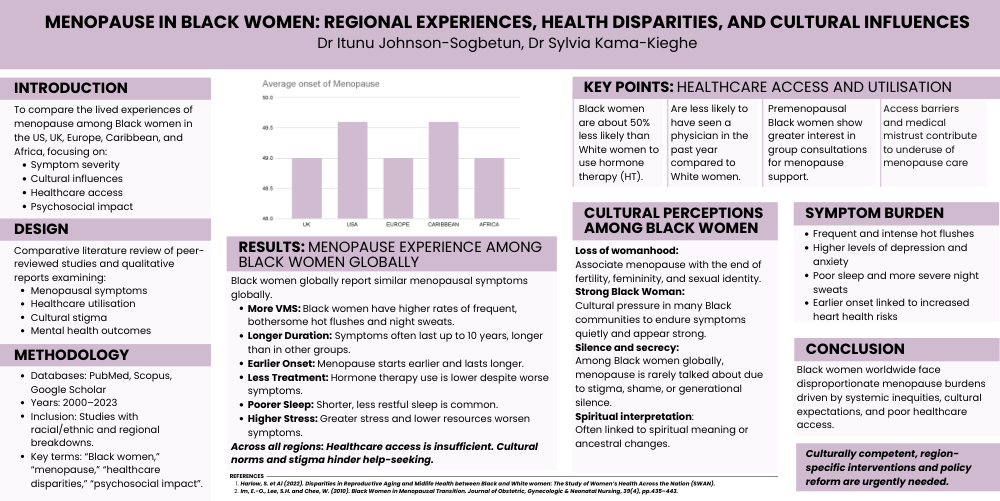
This project compares the lived experiences of menopause among Black women in the US, UK, Europe, the Caribbean, and Africa, focusing on:
•Symptom severity
•Cultural influences
•Healthcare access
•Psychosocial impact
Menopausal Experiences Among Black Women Globally
Black women globally report similar menopausal symptoms, with several key patterns:
•More vasomotor symptoms: Hot flushes and night sweats are more frequent and bothersome.
•Longer duration: Symptoms often last up to 10 years—longer than in other ethnic groups.
•Earlier onset: Menopause tends to begin earlier in Black women.
•Lower hormone therapy (HT) use: Despite higher symptom burden, HT usage is significantly lower.
•Poorer sleep quality: Shorter and less restful sleep is common.
•Higher stress: Structural and psychosocial stressors exacerbate symptoms.
Across all regions, access to menopause care remains inadequate. Cultural norms and stigma further limit help-seeking behaviours.
Cultural Perceptions
Menopause is shaped by deeply embedded cultural meanings:
•Loss of womanhood: Often associated with the end of fertility, femininity, and sexual identity.
•The “Strong Black Woman” narrative: Cultural pressure to silently endure symptoms and appear resilient.
•Silence and secrecy: Generational silence, stigma, and shame contribute to lack of open discussion.
•Spiritual interpretation: In some cultures, menopause is framed as a spiritual or ancestral transition.
Symptom Burden
•Frequent and intense hot flushes
•Poor sleep and more severe night sweats
•Higher levels of depression and anxiety
•Early menopause linked to increased cardiovascular risk
Methodology
Design
Comparative literature review of peer-reviewed studies and qualitative reports examining:
•Menopausal symptoms
•Healthcare utilisation
•Cultural stigma
•Mental health outcomes
Sources
•Databases: PubMed, Scopus, Google Scholar
•Timeframe: 2000–2023
•Search terms: “Black women,” “menopause,” “healthcare disparities,” “psychosocial impact”
•Inclusion criteria: Studies with racial/ethnic and regional breakdowns
Healthcare Access Disparities
•Black women are 50% less likely than White women to use hormone therapy.
•They are less likely to have seen a physician in the past year.
•Access barriers and medical mistrust contribute to underuse of menopause care.
•Premenopausal Black women show greater interest in group consultations for support.
Conclusion
Black women worldwide face disproportionate menopause burdens driven by:
•Structural and systemic inequities
•Cultural expectations
•Inadequate healthcare access
Culturally competent, region-specific interventions and policy reforms are urgently needed.