2,281 posters, 63 videos, 56 audios, 43 topics, 18 sessions, 6,174 authors, 2,323 institutions
ePostersLive by SciGen Technologies S.A. All rights reserved.
RCOG World Congress 2025
June 23 - 25, 2025 | ExCeL London, UK
EP.1750
Standardizing the Management of Postmenopausal Women with Disordered Proliferative Endometrial Changes
Poster Presenter
Part of Topic
Menopause
Standardizing the Management of Postmenopausal Women with Disordered Proliferative Endometrial Changes
Dr Rabia Shaikh ( SCF), Dr IvailaValcheva(FY2), Dr Sangeetha Palaparthy( Consultant) Dept. of Obs& Gyn, Ayrshire Maternity Unit, University Hospital Crosshouse, KA2 0BE
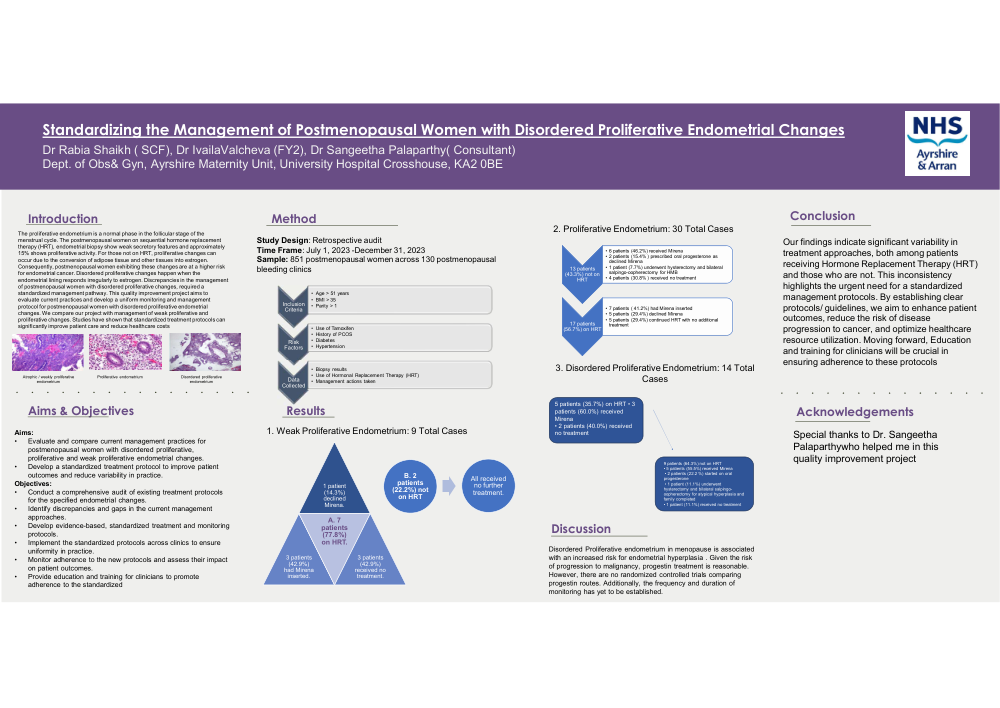
Introduction: The proliferative endometrium is a normal phase in the follicular stage of the menstrual cycle. The postmenopausal women on sequential hormone replacement therapy (HRT), endometrial biopsy show weak secretory features and approximately 15% shows proliferative activity. For those not on HRT, proliferative changes can occur due to the conversion of adipose tissue and other tissues into estrogen. Consequently, postmenopausal women exhibiting these changes are at a higher risk for endometrial cancer. Disordered proliferative changes happen when the endometrial lining responds irregularly to estrogen. Discrepancies in the management of postmenopausal women with disordered proliferative changes, required a standardized management pathway. This quality improvement project aims to evaluate current practices and develop a uniform monitoring and management protocol for postmenopausal women with disordered proliferative endometrial changes. We compare our project with management of weak proliferative and proliferative changes. Studies have shown that standardized treatment protocols can significantly improve patient care and reduce healthcare costs.
Aims: • Evaluate and compare current management practices for postmenopausal women with disordered proliferative, proliferative and weak proliferative endometrial changes. • Develop a standardized treatment protocol to improve patient outcomes and reduce variability in practice.
Objectives: • Conduct a comprehensive audit of existing treatment protocols for the specified endometrial changes. • Identify discrepancies and gaps in the current management approaches. • Develop evidence-based, standardized treatment and monitoring protocols. • Implement the standardized protocols across clinics to ensure uniformity in practice. • Monitor adherence to the new protocols and assess their impact on patient outcomes. • Provide education and training for clinicians to promote adherence to the standardize.
Design:
A retrospective audit was conducted to assess the management of postmenopausal women with weak proliferative, proliferative, and disordered proliferative endometrial changes. The study focused on comparing treatment protocols, specifically hormone replacement therapy (HRT), Mirena intrauterine system, oral progesterone, and hysterectomy. Evidence-based treatment guidelines were developed based on the audit findings to address inconsistencies in current practices.
Method:
The audit included 130 clinics and 851 postmenopausal women (aged 51+), with a BMI greater than 35 and parity between 1-2, conducted from July 1, 2023, to December 31, 2023. Risk factors such as Tamoxifen use, PCOS history, diabetes, and hypertension were evaluated. Biopsy results were analyzed to classify endometrial conditions, and data on hormonal treatments and management approaches were collected to assess treatment patterns.
Results:
Weak proliferative endometrium (9 patients):
- 22.2% not on HRT and received no treatment.
- 42.9% on HRT had a Mirena intrauterine system.
- 42.9% on HRT received no treatment.
- 14.3% on HRT declined Mirena
Proliferative endometrium (30 patients):
- 43.3% not on HRT, with 46.2% receiving Mirena and 15.4% started on oral progesterone, 7.7% underwent hysterectomy and bilateral salpingo-oophorectomy and 30.8% received no treatment.
- 56.7% on HRT : 41.2% had Mirena, 29.4% declined Mirena and 29.4% continued HRT only.
Disordered proliferative endometrium (14 patients):
- 35.7% on HRT, with 60% receiving Mirena and 40% receiving no treatment.
- 64.28% not on HRT, with 55.5% receiving Mirena, 22.2% started on oral progesterone, and 11.1% underwent hysterectomy and bilateral salpingo-oophorectomy.
Discussion: Disordered Proliferative endometrium in menopause is associated with an increased risk for endometrial hyperplasia . Given the risk of progression to malignancy, progestin treatment is reasonable. However, there are no randomized controlled trials comparing progestin routes. Additionally, the frequency and duration of monitoring has yet to be established.
Conclusion: Our findings indicate significant variability in treatment approaches, both among patients receiving Hormone Replacement Therapy (HRT) and those who are not. This inconsistency highlights the urgent need for a standardized management protocols. By establishing clear protocols/ guidelines, we aim to enhance patient outcomes, reduce the risk of disease progression to cancer, and optimize healthcare resource utilization. Moving forward, Education and training for clinicians will be crucial in ensuring adherence to these protocols.
Acknowledgements: Special thanks to Dr. Sangeetha Palaparthywhohelped me in this quality improvement project.