2,281 posters, 63 videos, 56 audios, 43 topics, 18 sessions, 6,174 authors, 2,323 institutions
ePostersLive by SciGen Technologies S.A. All rights reserved.
RCOG World Congress 2025
June 23 - 25, 2025 | ExCeL London, UK
EP.1746
AUDIT ON MENOPAUSE SERVICE PROVISION FOR THE MANAGEMENT OF PREMATURE OVARIAN INSUFFICIENCY
Poster Presenter
Authors
Affiliations
Part of Topic
Menopause
AN AUDIT ON THE MENOPAUSE SERVICE PROVISION FOR THE MANAGEMNET OF PREMATURE OVARIAN INSUFFICIENCY
INTRODUCTION
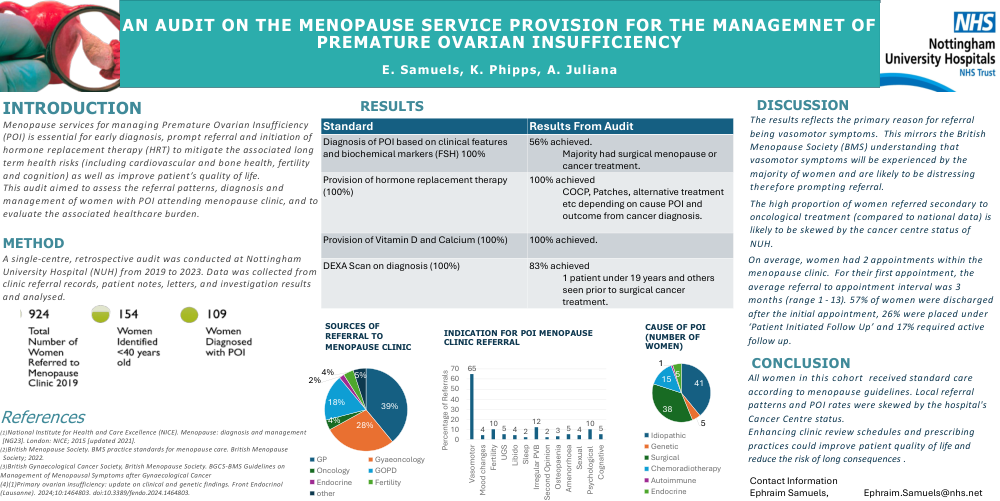
Menopause services for managing Premature OvarianInsufficiency (POI) is essential for early diagnosis, prompt referral and initiation of hormone replacement therapy(HRT) to mitigate the associated long term health risks (including cardiovascularand bone health, fertility andcognition) as well as improve patient’s quality of life.
This audit aimed to assess the referral patterns, diagnosis and management of women with POI attending menopause clinic, and to evaluate the associated healthcare burden.
METHOD
A single-centre, retrospective audit was conducted at Nottingham University Hospital(NUH) from 2019 to 2023. Data was collected from clinic referral records, patient notes,letters, and investigation results and analysed.
DISCUSSION
The results reflects the primary reason for referral being vasomotor symptoms. This mirrors the British Menopause Society (BMS) understanding that vasomotor symptoms will be experienced by the majority of women and are likely to be distressing therefore prompting referral.
The high proportion of women referred secondary to oncological treatment (compared to national data) is likely to be skewed by the cancer centre status of NUH.
On average, women had 2 appointments within the menopause clinic. For their first appointment, the average referral to appointment interval was 3 months (range 1 - 13). 57% of women were discharged after the initial appointment, 26% were placed under ‘Patient Initiated Follow Up’ and 17% required active follow up.
CONCLUSION
All women in this cohort received standard care according to menopause guidelines. Local referral patterns and POI rates were skewed by the hospital's Cancer Centre status.
Enhancing clinic review schedules and prescribing practices could improve patient quality of life and reduce the risk of long consequences.