2,281 posters, 63 videos, 56 audios, 43 topics, 18 sessions, 6,174 authors, 2,323 institutions
ePostersLive by SciGen Technologies S.A. All rights reserved.
RCOG World Congress 2025
June 23 - 25, 2025 | ExCeL London, UK
EP.1742
Comparing quality of life effects of menopause support for women with cancer
Poster Presenter
Part of Topic
Menopause
Comparing Quality Of Life Effects Of Menopause Support For Women With Cancer
Helen Ryan1, Teresa Treacy2, Aidin Roberts1, Yvonne O'Meara2, Donal Brennan1,2
1Mater Misericordiae University Hospital, Gynaecological Oncology, Dublin, Ireland; 2University College Dublin, School of Medicine, Dublin 4, Ireland
Background:
Women with cancer have different needs and treatment options available to them compared to women with a natural menopause. We assessed whether quality of life is improved by dedicated menopause care and whether benefit differs between different types of cancer.
Methodology:
Women with either gynaecological or breast cancer attending the Menopause and Cancer clinic in our tertiary referral gynaecological oncology department completed two online symptom questionnaires – the Menopause-specific Quality of Life (MenQOL) questionnaire and the Greene Climacteric Scale – prior to two visits occurring six weeks apart between April 2024 and December 2024. Paired sample t- tests were used to analyse changes between QOL and symptom scores.
Results:
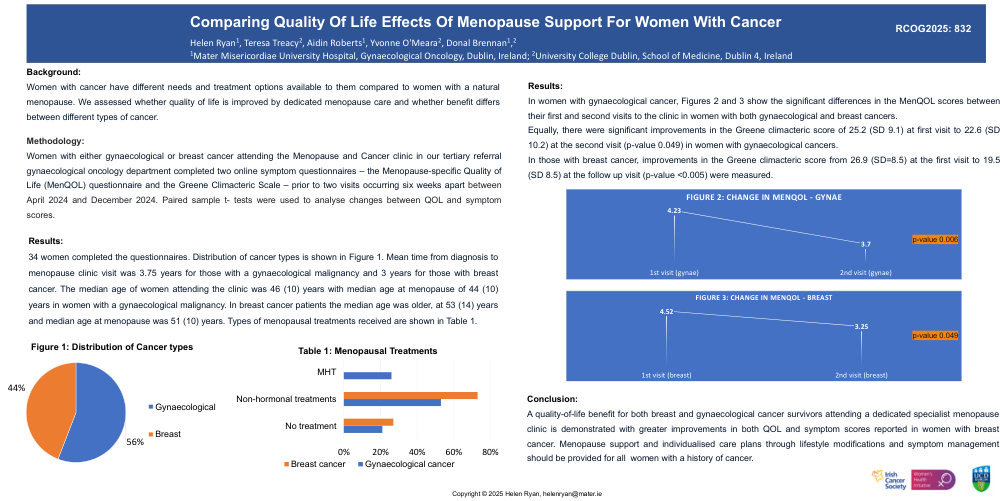
34 women completed the questionnaires. Distribution of cancer types is shown in Figure 1. Mean time from diagnosis to menopause clinic visit was 3.75 years for those with a gynaecological malignancy and 3 years for those with breast cancer. The median age of women attending the clinic was 46 (10) years with median age at menopause of 44 (10) years in women with a gynaecological malignancy. In breast cancer patients the median age was older, at 53 (14) years and median age at menopause was 51 (10) years. Types of menopausal treatments received are shown in Table 1.
Results:
In women with gynaecological cancer, Figures 2 and 3 show the significant differences in the MenQOL scores between their first and second visits to the clinic in women with both gynaecological and breast cancers.
Equally, there were significant improvements in the Greene climacteric score of 25.2 (SD 9.1) at first visit to 22.6 (SD 10.2) at the second visit (p-value 0.049) in women with gynaecological cancers.
In those with breast cancer, improvements in the Greene climacteric score from 26.9 (SD=8.5) at the first visit to 19.5 (SD 8.5) at the follow up visit (p-value <0.005) were measured.
Conclusion:
A quality-of-life benefit for both breast and gynaecological cancer survivors attending a dedicated specialist menopause clinic is demonstrated with greater improvements in both QOL and symptom scores reported in women with breast cancer. Menopause support and individualised care plans through lifestyle modifications and symptom management should be provided for all women with a history of cancer.