2,281 posters, 63 videos, 56 audios, 43 topics, 18 sessions, 6,174 authors, 2,323 institutions
ePostersLive by SciGen Technologies S.A. All rights reserved.
RCOG World Congress 2025
June 23 - 25, 2025 | ExCeL London, UK
EP.1429
Beyond the Usual: A Rare Postpartum Variant of Takotsubo Cardiomyopathy
Poster Presenter
Authors
Affiliations
QEQM Hospital, East Kent Hospitals University NHS Foundation rust, RIJAL ALMAA GENERAL HOSPITAL, QEQM Hospital, East Kent Hospitals University, NHS Foundation Trust, QUEEN ELIZABETH THE QUEEN MOTHER HOSPITAL, EAST KENT HOSPITALS, NHS FOUNDATION TRUST., QEQM Hospital, East Kent hospitals University NHS Foundation Trust
Part of Topic
Intrapartum care
Beyond the Usual: A Rare Postpartum Variant of Takotsubo Cardiomyopathy
Introduction
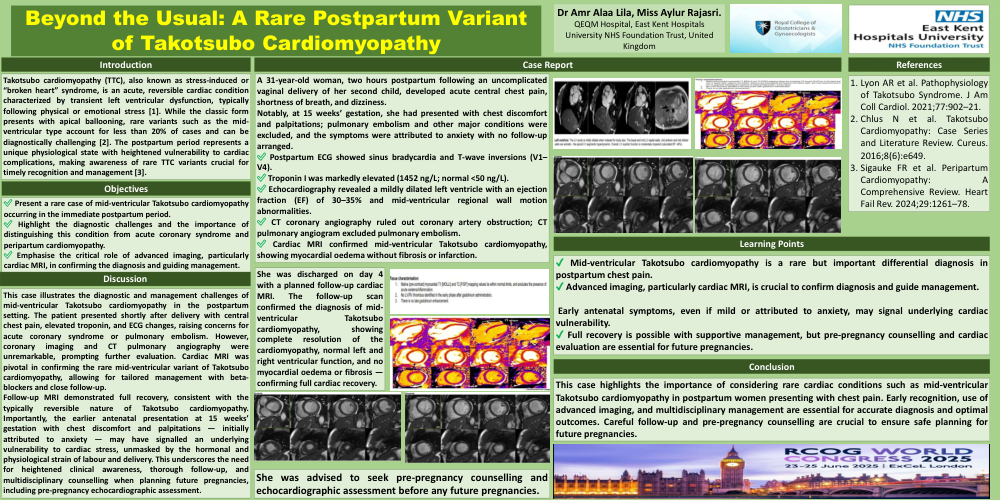
Takotsubo cardiomyopathy (TTC), also known as stress-induced or “broken heart” syndrome, is an acute, reversible cardiac condition characterized by transient left ventricular dysfunction, typically following physical or emotional stress [1]. While the classic form presents with apical ballooning, rare variants such as the midventricular type account for less than 20% of cases and can be diagnostically challenging [2]. The postpartum period represents a unique physiological state with heightened vulnerability to cardiac complications, making awareness of rare TTC variants crucial for timely recognition and management [3].
Discussion
This case illustrates the diagnostic and management challenges of mid-ventricular Takotsubo cardiomyopathy in the postpartum setting. The patient presented shortly after delivery with central chest pain, elevated troponin, and ECG changes, raising concerns for acute coronary syndrome or pulmonary embolism. However, coronary imaging and CT pulmonary angiography were unremarkable, prompting further evaluation. Cardiac MRI was pivotal in confirming the rare mid-ventricular variant of Takotsubo cardiomyopathy, allowing for tailored management with betablockers and close follow-up. Follow-up MRI demonstrated full recovery, consistent with the typically reversible nature of Takotsubo cardiomyopathy. Importantly, the earlier antenatal presentation at 15 weeks’ gestation with chest discomfort and palpitations — initially attributed to anxiety — may have signalled an underlying vulnerability to cardiac stress, unmasked by the hormonal and physiological strain of labour and delivery. This underscores the need for heightened clinical awareness, thorough follow-up, and multidisciplinary counselling when planning future pregnancies, including pre-pregnancy echocardiographic assessment