2,281 posters, 63 videos, 56 audios, 43 topics, 18 sessions, 6,174 authors, 2,323 institutions
ePostersLive by SciGen Technologies S.A. All rights reserved.
RCOG World Congress 2025
June 23 - 25, 2025 | ExCeL London, UK
EP.1398
Optimal Obstetric Management in Extreme Preterm Births: A Retrospective Cohort Study
Poster Presenter
Part of Topic
Intrapartum care
Optimal Obstetric Management in Extreme Preterm Births: A Retrospective Study
Daniel Tan, Imrana Butt, Mira Chainrai, Jacqueline Bamfo, Saadia Waheed
INTRODUCTION
Advancements in neonatal medical management over the past five years has
significantly increased the numbers of foetuses being considered for delivery.
Despite increasing knowledge in neonatal management post-birth, less is known
regarding optimal obstetric management for mothers who undergo preterm (22-
25+6 weeks) births.2 To further expand this knowledge base, we conducted a
literature search and retrospective study within Luton and Dunstable Hospital, UK
to identify key obstetric management and clinical practices that can improve
maternal and neonatal outcomes. These findings will guide future instances of
extreme preterm delivery.
METHODS
1. Literature search
Aim: To identify current guidelines in obstetric management of mothers with extreme preterm delivery
Sample size: 23/139 papers collected met inclusion criteria.
Main Conclusions:
i) Usefulness of antibiotics in preterm premature rupture of membranes (PPROM) cases3
ii) benefits of antenatal steroids, tocolytics and magnesium sulfate (MgSO4)3
iii) Suggested effectiveness of cervical clerage4 and amnioinfusion5. iv) divided opinions about delivery type3
2. Retrospective study
Aim: To analyse how different obstetric management methods performed at Luton and Dunstable Hospital, UK affect maternal or neonatal outcomes
Sample size: 93 patients (01/2020-01/2025), singleton pregnancies gestational age 22 weeks to 25+6 weeks
Statistics: Simple univariate and multivariate logistic regression models
RESULTS
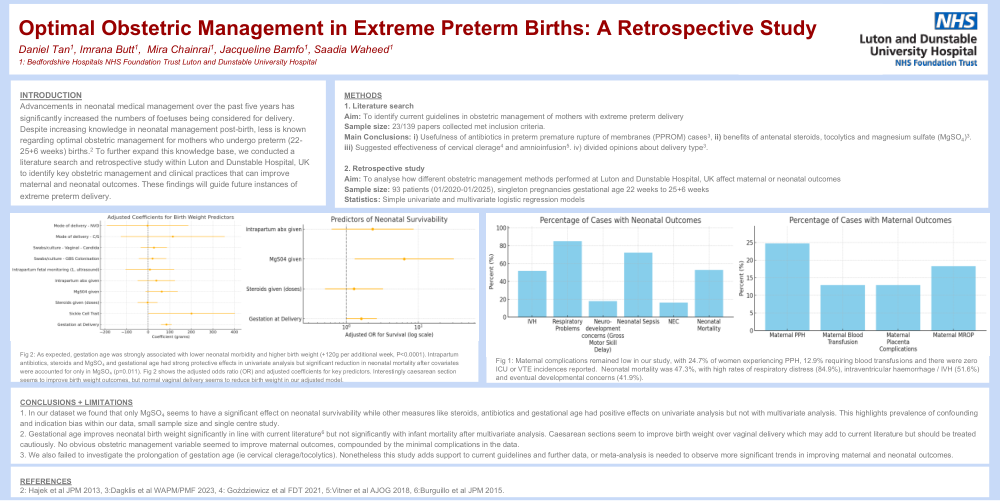
Fig 1: Maternal complications remained low in our study, with 24.7% of women experiencing PPH, 12.9% requiring blood transfusions and there were zero
ICU or VTE incidences reported. Neonatal mortality was 47.3%, with high rates of respiratory distress (84.9%), intraventricular haemorrhage / IVH (51.6%)
and eventual developmental concerns (41.9%).
As expected, gestation age was strongly associated with lower neonatal morbidity and higher birth weight (+120g per additional week, P<0.0001). Intrapartum
antibiotics, steroids and MgSO₄ and gestational age had strong protective effects in univariate analysis but significant reduction in neonatal mortality after covariates
were accounted for only in MgSO₄ (p=0.011). Fig 2 shows the adjusted odds ratio (OR) and adjusted coefficients for key predictors. Interestingly caesarean section
seems to improve birth weight outcomes, but normal vaginal delivery seems to reduce birth weight in our adjusted model.
CONCLUSIONS + LIMITATIONS
1. In our dataset we found that only MgSO₄ seems to have a significant effect on neonatal survivability while other measures like steroids, antibiotics and gestational age had positive effects on univariate analysis but not with multivariate analysis. This highlights prevalence of confounding
and indication bias within our data, small sample size and single centre study.
2. Gestational age improves neonatal birth weight significantly in line with current literature6 but not significantly with infant mortality after multivariate analysis. Caesarean sections seem to improve birth weight over vaginal delivery which may add to current literature but should be treated
cautiously. No obvious obstetric management variable seemed to improve maternal outcomes, compounded by the minimal complications in the data.
3. We also failed to investigate the prolongation of gestation age (ie cervical clerage/tocolytics). Nonetheless this study adds support to current guidelines and further data, or meta-analysis is needed to observe more significant trends in improving maternal and neonatal outcomes.