2,281 posters, 63 videos, 56 audios, 43 topics, 18 sessions, 6,174 authors, 2,323 institutions
ePostersLive by SciGen Technologies S.A. All rights reserved.
RCOG World Congress 2025
June 23 - 25, 2025 | ExCeL London, UK
EP.1374
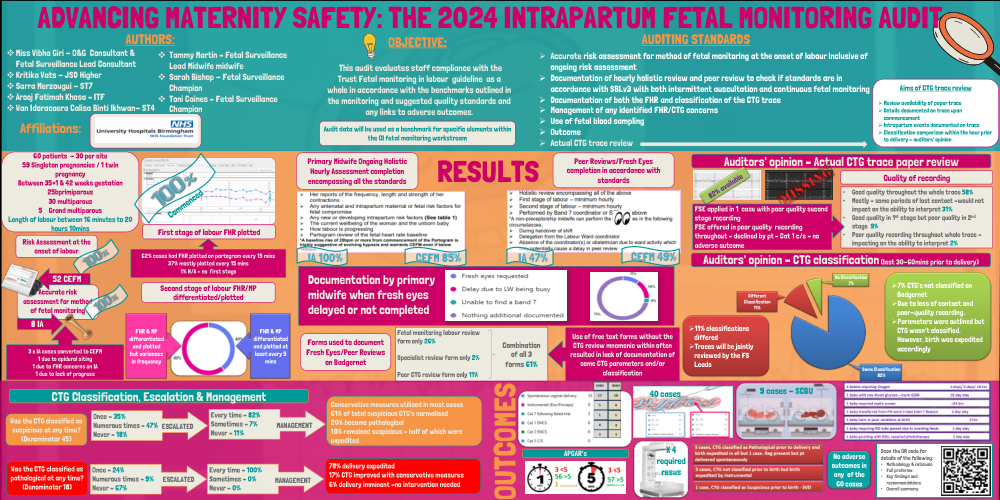
Advancing Maternity Safety: UHB Annual Intrapartum Fetal Monitoring Audit 2024
Poster Presenter
Authors
Kritika Vats, Wan Idoracaera Calisa Ikhwan, Arooj Fatimah Khosa, Vibha Giri, Sarah Bishop, Toni Caines, Tammy Martin
Affiliations
JSD Higher, UHB trust, ST5, UHB trust, Consultant Obstetrician / Fetal Surveillance Lead Consultant, UHB trust, Fetal Surveillance Champions, UHB trust, Fetal Surveillance Lead Midwife, UHB trust
Part of Topic
Intrapartum care
Objective: Monitoring fetal well-being during labour is a vital aspect of maternity care,
aimed at detecting fetal hypoxia early to ensure safe and timely delivery. This audit evaluates
compliance with the NICE guideline NG229 and Element 4 of Saving Babies’ Lives Version
3, emphasizing effective intrapartum fetal monitoring to improve outcomes and reduce
perinatal mortality.
Design: A retrospective audit was conducted on 60 randomly selected deliveries across two
sites of University Hospitals Birmingham (UHB)Trust (Good Hope Hospital/ Heartlands
Hospital) between September and November 2024.
Method: Data were collected from Badgernet records and CTG traces to assess the quality
and consistency of fetal monitoring.
This included the accuracy and timeliness of initial
intrapartum risk assessments, monitoring practices during the first and second stages of
labour, adherence to protocols for intermittent auscultation (IA) and continuous electronic
fetal monitoring (CEFM).
For IA, we reviewed whether midwives conducted hourly labour
assessments, complemented by bi-hourly CARES reviews addressing contractions, fetal heart
rate (FHR), labour progression and risk factors.
In CEFM cases, the audit evaluated whether CTGs were classified correctly and escalated
appropriately when classified as suspicious or pathological and whether interventions were
documented such as position changes, obstetric reviews, change of rate/discontinuation of
oxytocin infusion.
Escalation protocols including hourly “fresh eyes” reviews by either Band
7 midwives or obstetricians were assessed for their timely reviews and adherence to the
guidelines.
Additionally, the audit evaluated neonatal outcomes : Apgar scores, cord blood
gases, and adverse events like NICU admission or therapeutic cooling.
Results: We have attached a QR code to look at the results in detail along with the poster
Conclusions: This audit highlights the importance of consistent, evidence-based intrapartum
fetal monitoring to enhance maternity safety. Ensuring midwives and clinicians are proficient
in IA and CEFM and act decisively when risks arise is essential for reducing perinatal
morbidity and mortality. Regular audits are crucial to reinforce adherence to national
guidelines, address training needs and promote a culture of continuous improvement in
maternity care. The findings will inform strategies to standardize best practices ultimately
contributing to safer outcomes for mothers and babies.