2,281 posters, 63 videos, 56 audios, 43 topics, 18 sessions, 6,174 authors, 2,323 institutions
ePostersLive by SciGen Technologies S.A. All rights reserved.
RCOG World Congress 2025
June 23 - 25, 2025 | ExCeL London, UK
EP.1367
Maternal septic shock: epidemiology and clinical features
Poster Presenter
Authors
Affiliations
Department of Gynaecology and Obstetrics, Charles Nicolle Hospital, Department B- Charles Nicolle Hospital, Gynaecology and Obstetrics Department B, Charles Nicolle Hospital, Department Bof Obstetrics and Gynaecology, Charles Nicolle Hospital, Department of Obstetrics and Gynecology B, Charles Nicolle Hospital, Gynaecology and Obstetrics Department B of Charles Nicolle Hospital, Gynaecology and Obstetrics department B- Charles Nicolle Hospital, Charles Nicolle Hospital, Obstetrics and Gynaecology Service B, Department B of Gynaecology and Obstetrics- Charles Nicolle Hospital, Department B of Obstetrics and Gynecology, Charles Nicolle Hospital
Part of Topic
Intrapartum care
Maternal septic shock: epidemiology and clinical features
Objective
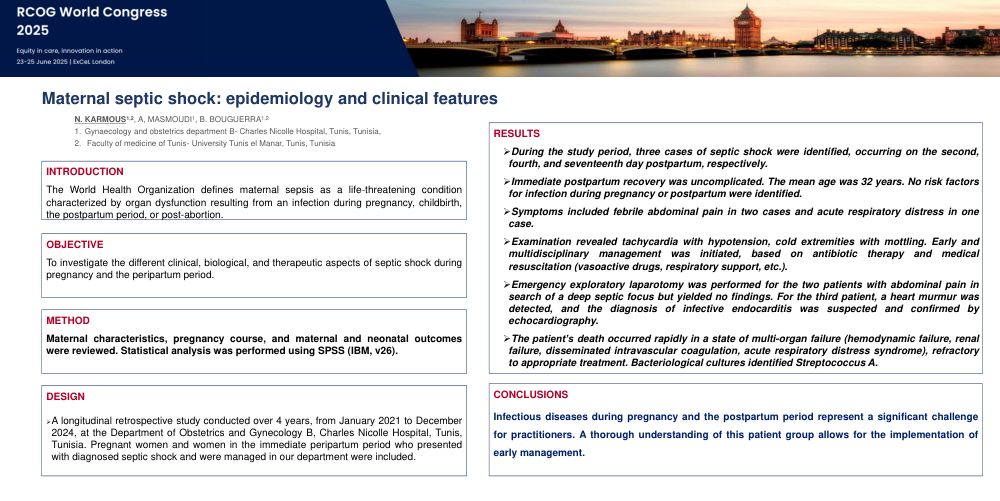
The World Health Organization defines maternal sepsis as a life-threatening condition characterized by organ dysfunction resulting from an infection during pregnancy, childbirth, the postpartum period, or post-abortion. The aim of our study was to investigate the different clinical, biological, and therapeutic aspects of septic shock during pregnancy and the peripartum period.
Design
A longitudinal retrospective study conducted over 4 years, from January 2021 to December 2024, at the Department of Obstetrics and Gynecology B, Charles Nicolle Hospital, Tunis, Tunisia. Pregnant women and women in the immediate peripartum period who presented with diagnosed septic shock and were managed in our department were included.
Method
Maternal characteristics, pregnancy course, and maternal and neonatal outcomes were reviewed. Statistical analysis was performed using SPSS (IBM, v26).
Results
During the study period, three cases of septic shock were identified, occurring on the second, fourth, and seventeenth day postpartum, respectively. Immediate postpartum recovery was uncomplicated. The mean age was 32 years. No risk factors for infection during pregnancy or postpartum were identified. Symptoms included febrile abdominal pain in two cases and acute respiratory distress in one case. Examination revealed tachycardia with hypotension, cold extremities with mottling. Early and multidisciplinary management was initiated, based on antibiotic therapy and medical resuscitation (vasoactive drugs, respiratory support, etc.). Emergency exploratory laparotomy was performed for the two patients with abdominal pain in search of a deep septic focus but yielded no findings. For the third patient, a heart murmur was detected, and the diagnosis of infective endocarditis was suspected and confirmed by echocardiography.
The patient’s death occurred rapidly in a state of multi-organ failure (hemodynamic failure, renal failure, disseminated intravascular coagulation, acute respiratory distress syndrome), refractory to appropriate treatment. Bacteriological cultures identified Streptococcus A.
Conclusions
Infectious diseases during pregnancy and the postpartum period represent a significant challenge for practitioners. A thorough understanding of this patient group allows for the implementation of early management.