2,281 posters, 63 videos, 56 audios, 43 topics, 18 sessions, 6,174 authors, 2,323 institutions
ePostersLive by SciGen Technologies S.A. All rights reserved.
RCOG World Congress 2025
June 23 - 25, 2025 | ExCeL London, UK
EP.1362
Assessing outcomes of epidural analgesia among women underwent vaginal delivery
Poster Presenter
Authors
Affiliations
King's College London Hospital Jeddah, International medical center
Part of Topic
Intrapartum care
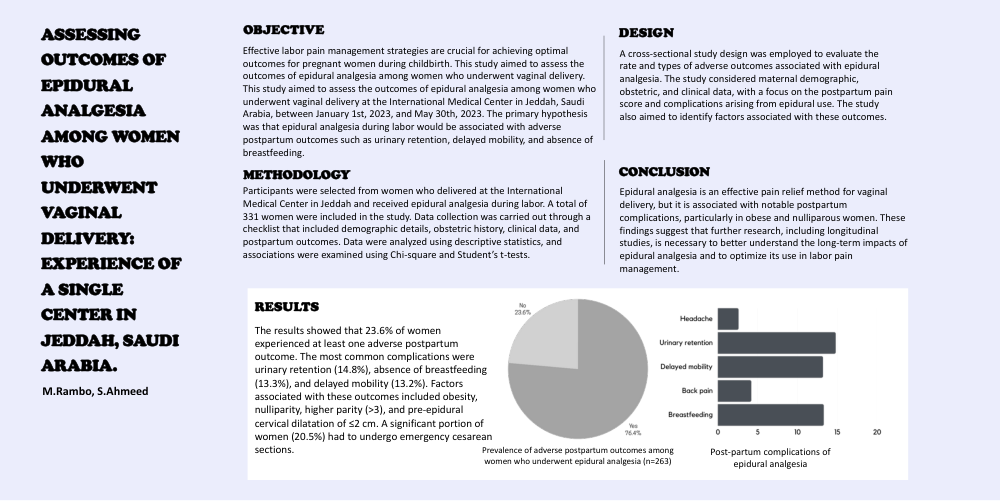
ASSESSING OUTCOMES OF EPIDURAL ANALGESIA AMONG WOMEN WHO UNDERWENT VAGINAL DELIVERY: EXPERIENCE OF A SINGLE CENTER IN JEDDAH, SAUDI ARABIA.
Objective:
Effective labor pain management strategies are crucial for achieving optimal outcomes for pregnant women during childbirth. This study aimed to assess the outcomes of epidural analgesia among women who underwent vaginal delivery. This study aimed to assess the outcomes of epidural analgesia among women who underwent vaginal delivery at the International Medical Center in Jeddah, Saudi Arabia, between January 1st, 2023, and May 30th, 2023. The primary hypothesis was that epidural analgesia during labor would be associated with adverse postpartum outcomes such as urinary retention, delayed mobility, and absence of breastfeeding.
Design: A cross-sectional study design was employed to evaluate the rate and types of adverse outcomes associated with epidural analgesia. The study considered maternal demographic, obstetric, and clinical data, with a focus on the postpartum pain score and complications arising from epidural use. The study also aimed to identify factors associated with these outcomes.
Method: Participants were selected from women who delivered at the International Medical Center in Jeddah and received epidural analgesia during labor. A total of 331 women were included in the study. Data collection was carried out through a checklist that included demographic details, obstetric history, clinical data, and postpartum outcomes. Data were analyzed using descriptive statistics, and associations were examined using Chi-square and Student’s t-tests.
Results: The results showed that 23.6% of women experienced at least one adverse postpartum outcome. The most common complications were urinary retention (14.8%), absence of breastfeeding (13.3%), and delayed mobility (13.2%). Factors associated with these outcomes included obesity, nulliparity, higher parity (>3), and pre-epidural cervical dilatation of ≤2 cm. A significant portion of women (20.5%) had to undergo emergency cesarean sections.
Conclusion: Epidural analgesia is an effective pain relief method for vaginal delivery, but it is associated with notable postpartum complications, particularly in obese and nulliparous women. These findings suggest that further research, including longitudinal studies, is necessary to better understand the long-term impacts of epidural analgesia and to optimize its use in labor pain management.