226 posters, 5 topics, 20 sessions, 599 authors, 292 institutions
ePostersLive by SciGen Technologies S.A. All rights reserved.
Obstetric Anaesthesia Annual Scientific Meeting 2026
14-15 May 2026 | Liverpool Convention Centre

7160403
Beyond the epidural: addressing psychological birth trauma in anaesthesia
Poster Presenter
Part of Topic
Service Evaluation
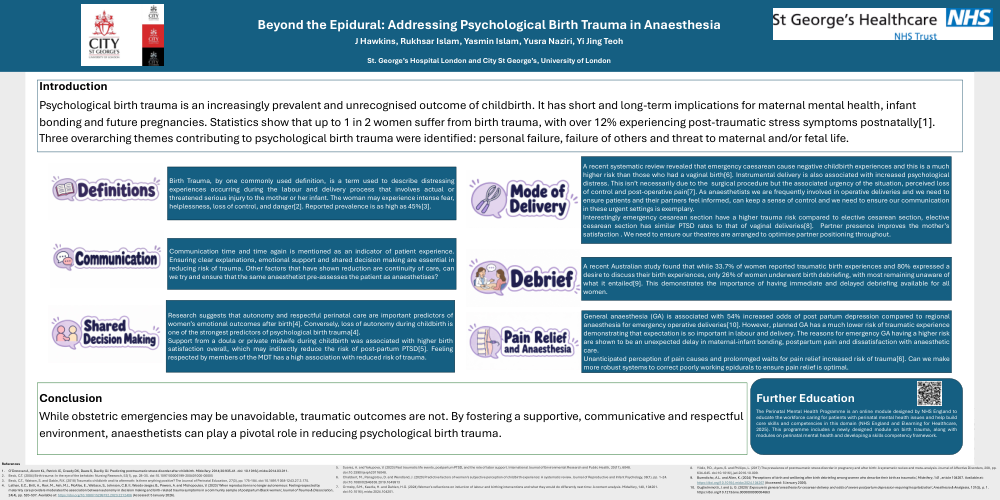
Psychological birth trauma arises from women’s subjective birth experiences, reflecting the interplay of numerous risk factors across the antenatal, intrapartum and postpartum periods. Current definitions of a successful birth focus on the absence of obstetric complications and the safety of mother and baby. It is crucial for anaesthetic practices to mitigate the long-term psychological impact of birth trauma, as with physical complications.
Key risk factors include emergency caesarean section, stillbirth, ethnic minority status and a history of personal trauma. Awareness of these risks is essential. To support women, anaesthetists must respect maternal requests for caesarean section and advocate for expanded access to planned operative delivery. Facilitating social support by allowing support persons during emergencies, such as emergency caesarean sections, can improve outcomes. For women requiring general anaesthesia, prioritising early post-operative recovery enabling skin-to-skin contact, ensuring adequate long-acting analgesia and partner involvement can improve outcomes.
Staff-patient interactions play a central role in minimising psychological harm. Maintaining a calm, communicative environment, particularly during emergencies, is critical. Optimising team communication is through in situ simulations can help.
Evidence suggests that loss of autonomy during birth is a major predictor of psychological trauma. Shared decision-making, respect and informed choices are essential components of perinatal care. The NHS England Perinatal Mental Health Programme e-learning helps multi-disciplinary team members build skills in understanding perinatal mental health.
Where psychological trauma does occur, collaborative efforts with birth reflection clinics and robust referral systems are essential in ensuring that women requiring support are identified quickly and appropriately managed.
While obstetric emergencies may be unavoidable, traumatic outcomes are not. By fostering a supportive, communicative and respectful environment, anaesthetists can play a pivotal role in reducing psychological birth trauma.