226 posters, 5 topics, 20 sessions, 599 authors, 292 institutions
ePostersLive by SciGen Technologies S.A. All rights reserved.
Obstetric Anaesthesia Annual Scientific Meeting 2026
14-15 May 2026 | Liverpool Convention Centre

7146307
Evaluation of utilisation and referral quality to an obstetric anaesthesia pre-assessment clinic.
Poster Presenter
Authors
Affiliations
Part of Topic
Service Evaluation
Introduction:
•Obstetric anaesthesia pre-assessment clinics (POACs) are essential for identifying and optimising maternity patients at increased anaesthetic risk, particularly those with obesity [1] or complex comorbidities [2].
•It was observed that the POAC was underutilised at our maternity unit.
•There were inconsistent referral practices, lack of documentation of referral indication, no structured triage process, inappropriate patients booked and patients with significant comorbidities missed.
•The clinic was scheduled twice per week with a maximum of six slots per clinic, however there were often fewer patients booked.
•Lastly, there were multiple ways of documenting the clinic outcome.
Methods:
•A retrospective service evaluation was conducted using EPIC electronic health records for all POAC referrals between January and June 2025 (6 months).
•Data were collated using Microsoft Forms and included referral source, referral documentation and indication, gestation at referral and attendance, clinic outcome, and documentation method. Clinic capacity and utilisation were analysed using scheduling data.
•The project was registered and approved locally as a service evaluation and did not require research ethics committee approval.
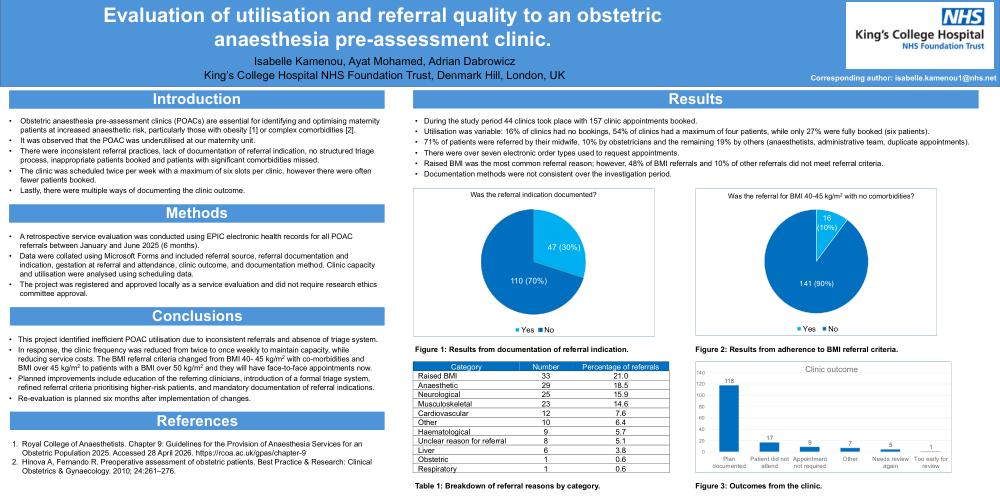
Results: See poster for full details.
•During the study period 44 clinics took place with 157 clinic appointments booked.
•Utilisation was variable: 16% of clinics had no bookings, 54% of clinics had a maximum of four patients, while only 27% were fully booked (six patients).
•71% of patients were referred by their midwife, 10% by obstetricians and the remaining 19% by others (anaesthetists, administrative team, duplicate appointments).
•There were over seven electronic order types used to request appointments.
•Raised BMI was the most common referral reason; however, 48% of BMI referrals and 10% of other referrals did not meet referral criteria.
•Documentation methods were not consistent over the investigation period.
Conclusions:
•This project identified inefficient POAC utilisation due to inconsistent referrals and absence of triage system.
•In response, the clinic frequency was reduced from twice to once weekly to maintain capacity, while reducing service costs. The BMI referral criteria changed from BMI 40- 45 kg/m2 with co-morbidities and BMI over 45 kg/m2 to patients with a BMI over 50 kg/m2 and they will have face-to-face appointments now.
•Planned improvements include education of the referring clinicians, introduction of a formal triage system, refined referral criteria prioritising higher-risk patients, and mandatory documentation of referral indications.
•Re-evaluation is planned six months after implementation of changes.
References:
1. Jenkins JG, Khan MM. Anaesthetic assessment and management of obese parturients. International Journal of Obstetric Anesthesia. 2012; 21:11–19.
2. Hinova A, Fernando R. Preoperative assessment of obstetric patients. Best Practice & Research: Clinical Obstetrics & Gynaecology. 2010; 24:261–276.