586 posters, 8 topics, 23 sessions, 1,077 authors, 622 institutions
ePostersLive by SciGen Technologies S.A. All rights reserved.
ISQua's 40th International Conference 2024
24th - 27th September 2024 | Istanbul, Türkiye

P417
Utilizing Quality Control Circles (QCC) to reduce the incidence of postoperative pain scores ≧4 points in patients undergoing laparoscopic liver or gastrointestinal tract surgery
Part of Topic
Patient Safety & Quality Improvement
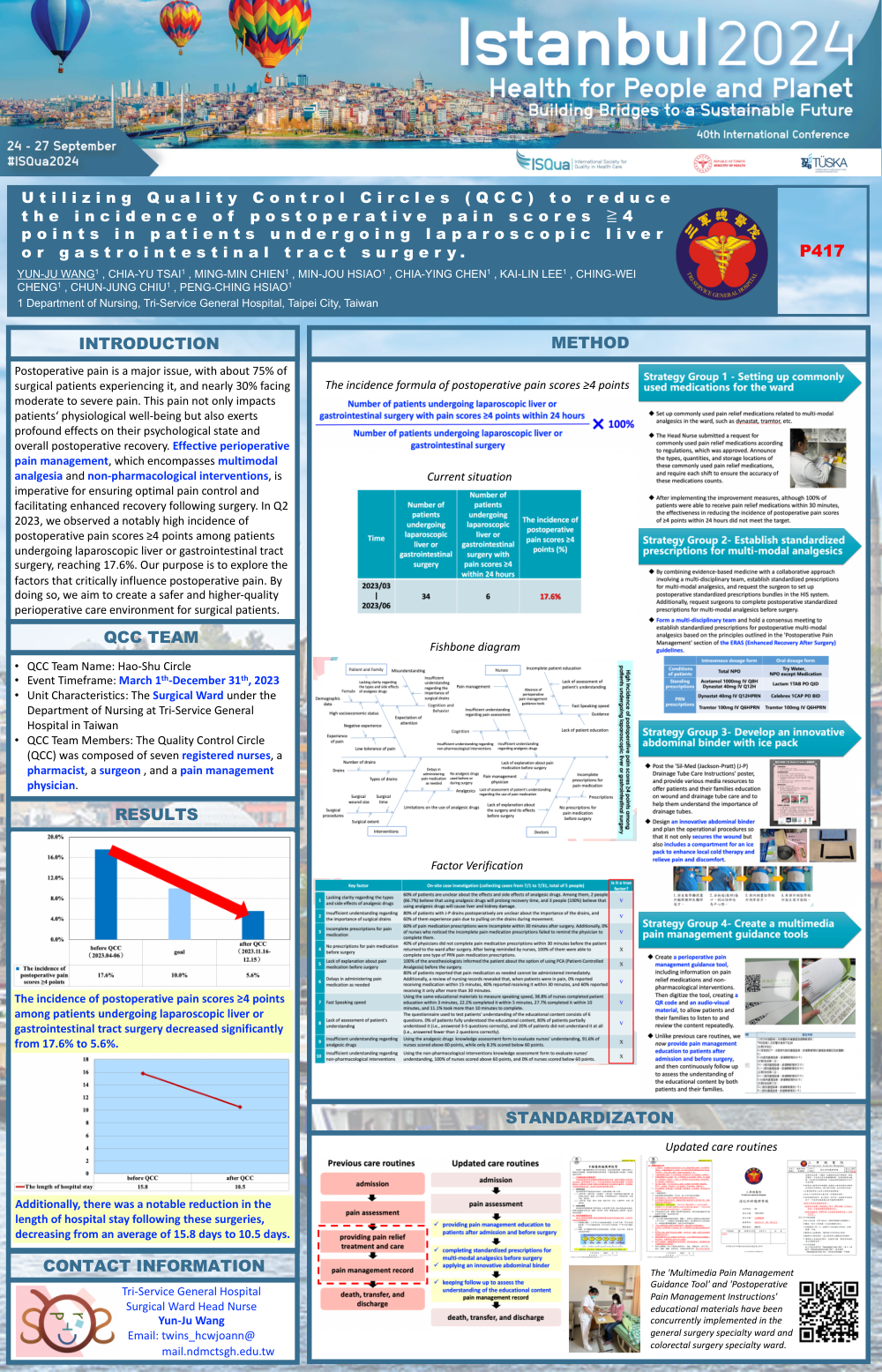
Introduction: Postoperative pain represents a significant concern in clinical practice. Numerous studies have indicated that approximately 75% of surgical patients encounter postoperative pain, with nearly 30% experiencing moderate to severe levels of discomfort. This pain not only impacts patients' physiological well-being but also exerts profound effects on their psychological state and overall postoperative recovery. Effective perioperative pain management, which encompasses multimodal analgesia and non-pharmacological interventions, is imperative for ensuring optimal pain control and facilitating enhanced recovery following surgery. In the second quarter of 2022, we observed a notably high incidence of postoperative pain scores ≥4 points among patients undergoing laparoscopic liver or gastrointestinal tract surgery, reaching 17.6%. Our purpose is to explore the factors that critically influence postoperative pain. By doing so, we aim to create a safer and higher-quality perioperative care environment for surgical patients.
Methods: On April 1, 2022, a Quality Control Circle comprising seven registered nurses, a pharmacist, and a pain management physician was established. Utilizing quality control tools, systematic diagrams, and flowcharts, the team systematically identified several factors contributing to the high incidence of postoperative pain scores ≥4 points. These factors included: 1) patients and their caregivers lacking clarity regarding the types and side effects of analgesic drugs, 2) insufficient understanding among patients and caregivers regarding the importance and proper care procedures of surgical drains, 3) incomplete prescriptions for pain medication, 4) delays in administering pain medication as needed, and 5) absence of perioperative pain management guidance tools. Proposed solutions encompassed the development of multimedia perioperative pain management guidance tools, innovative design of an abdominal binder incorporating an ice pack, establishment of standardized postoperative prescriptions for administering multimodal analgesic drugs, and implementation of protocols for storing and managing common analgesics within the ward.
Results: The incidence of postoperative pain scores ≥4 points among patients undergoing laparoscopic liver or gastrointestinal tract surgery decreased significantly from 17.6% to 5.6%. Additionally, there was a notable reduction in the length of hospital stay following these surgeries, decreasing from an average of 15.8 days to 10.5 days.
Conclusion: The optimization of perioperative pain management strategies, including the implementation of an innovative abdominal binder, standardized prescriptions for multimodal analgesic drugs, and the utilization of quality control tools, has demonstrated significant improvements in postoperative recovery and overall care quality. These interventions have been successfully integrated into our hospital's practices and will be considered for participation in the National QCC Award Certification Competition.