586 posters, 8 topics, 23 sessions, 1,077 authors, 622 institutions
ePostersLive by SciGen Technologies S.A. All rights reserved.
ISQua's 40th International Conference 2024
24th - 27th September 2024 | Istanbul, Türkiye

P674
How does short- and long-term PM2.5 exposure affect depression? A cohort study from 2014-2018 China Labor-force Dynamics Survey
Poster Presenter
Authors
Affiliations
Part of Topic
Navigating Climate Change and Sustainability in Healthcare System
How does short- and long-term PM2.5 exposure affect depression? A cohort study from 2014-2018 China Labor-force Dynamics Survey
Introduction
•Depression has become a severe public health problem in China and worldwide
•the adverse mental health effects of air pollution (especially PM2.5) are of increasing concern
•epidemiological results on the relationship between PM2.5 exposure and depression remain inconsistent
•empirical evidence for the co-governance of depression and air pollution is limited
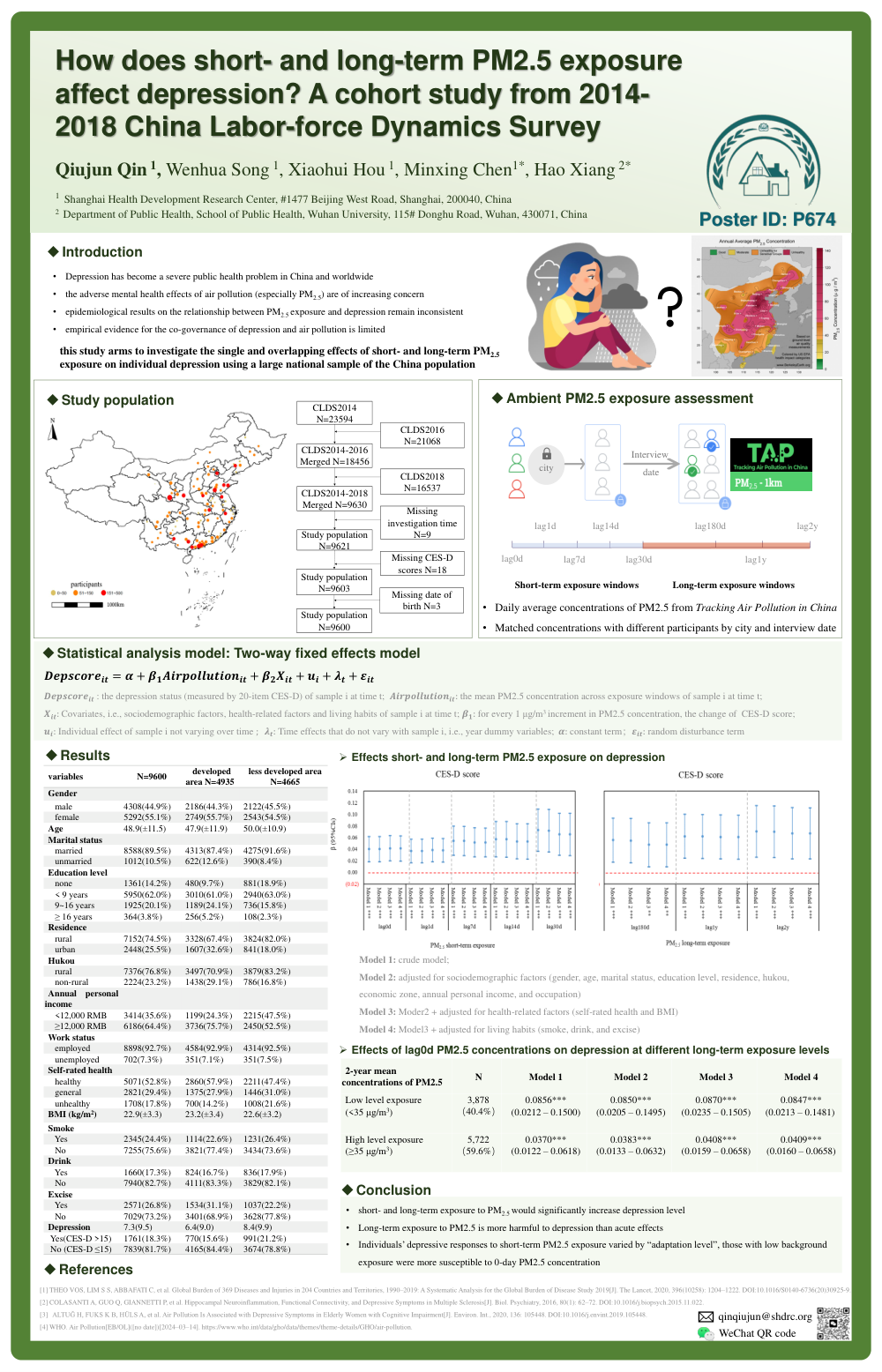
this study arms to investigate the single and overlapping effects of short- and long-term PM2.5 exposure on individual depression using a large national sample of the China population.
Method
•Study population: the China Labor Dynamics Survey (CLDS) from 2014 to 2018, depression status was measured by the 20-item CES-D
•PM2.5 exposure assessment: Average PM2.5 concentrations of short-term exposure windows (0-, 1-, 7-, 14- and 30-day) and long-term exposure windows (180-day, 1- and 2-year) were estimated under the Tracking Air Pollution in China (TAP) framework
•Statistical analysis model: Two-way fixed effects model
Conclusion
•short- and long-term exposure to PM2.5 would significantly increase depression level
•Long-term exposure to PM2.5 is more harmful to depression than acute effects
•Individuals’ depressive responses to short-term PM2.5 exposure varied by “adaptation level”, those with low background exposure were more susceptible to 0-day PM2.5 concentration