501 posters, 2 videos, 1 audios, 8 topics, 37 sessions, 395 authors, 307 institutions
ePostersLive by SciGen Technologies S.A. All rights reserved.
23rd Annual Pain Medicine Meeting 2024
November 21-23, 2024 | Caesars Palace, Las Vegas, Nevada

6176
SUBSTANCE USE PREVALENCE IN THE CHRONIC PAIN OUTPATIENT CLINIC SETTING
Poster Presenter
Authors
Affiliations
Part of Topic
Scientific Abstracts > Chronic Pain
Substance Use Prevalence in the Chronic Pain Outpatient Clinic Setting
Introduction
●Substance use disorder is a growing crisis
●In 2020, 69,000 Americans died from opioid overdoses
●Chronic pain patients are at higher risk of developing substance use disorders, motivating an investigation of substance use prevalence in this population
Methods
●This study was based at our academic center’s outpatient clinic in NYC from July 1st, 2022 to February 29th, 2024
●Every new patient’s saliva or urine was routinely tested for substance use at this clinic
●Drug screen results and demographics for 200 new patients were recorded. As drug screens included sensitive information, all data was deidentified to ensure confidentiality
Results
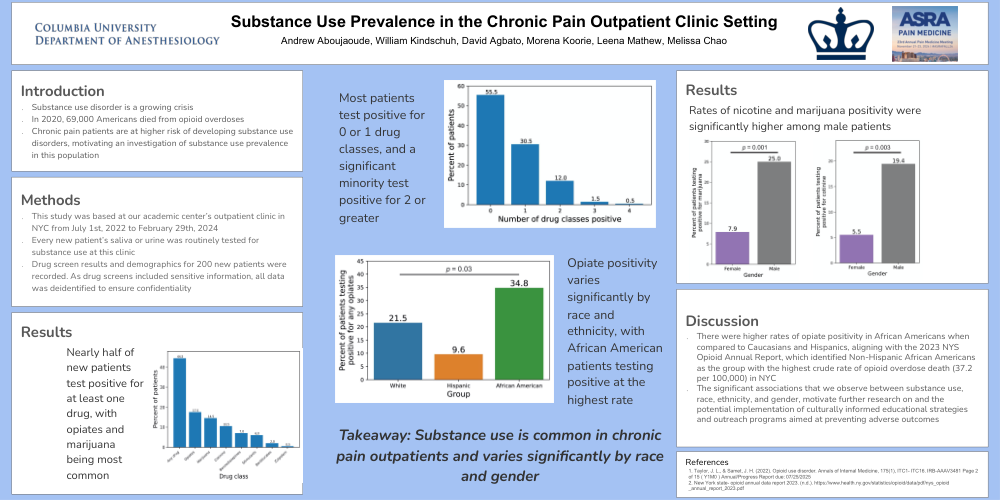
Nearly half of new patients test positive for at least one drug, with opiates and marijuana being most common
Most patients test positive for 0 or 1 drug classes, and a significant minority test positive for 2 or greater
Opiate positivity varies significantly by race and ethnicity, with African American patients testing positive at the highest rate
Takeaway: Substance use is common in chronic pain outpatients and varies significantly by race and gender
Rates of nicotine and marijuana positivity were significantly higher among male patients
Discussion
●There were higher rates of opiate positivity in African Americans when compared to Caucasians and Hispanics, aligning with the 2023 NYS Opioid Annual Report, which identified Non-Hispanic African Americans as the group with the highest crude rate of opioid overdose death (37.2 per 100,000) in NYC
●The significant associations that we observe between substance use, race, ethnicity, and gender, motivate further research on and the potential implementation of culturally informed educational strategies and outreach programs aimed at preventing adverse outcomes