501 posters, 2 videos, 1 audios, 8 topics, 37 sessions, 395 authors, 307 institutions
ePostersLive by SciGen Technologies S.A. All rights reserved.
23rd Annual Pain Medicine Meeting 2024
November 21-23, 2024 | Caesars Palace, Las Vegas, Nevada

5791
FACTORS ASSOCIATED WITH PATIENT NO-SHOW RATES IN AN ACADEMIC PAIN MANAGEMENT PRACTICE
Poster Presenter
Authors
Affiliations
Part of Topic
Scientific Abstracts > Chronic Pain
Factors Associated with Patient No-Show Rates in an Academic Pain Management Practice
Aaron Burshtein, MD, Paul Shekane, MD
Introduction
Chronic pain is a debilitating, multifactorial condition. Improving the lives of individuals suffering from pain is a public health imperative. Increasing access to care is a way to address the public health need to treat chronic pain, particularly for patients of lower socioeconomic status. The purpose of this study was to examine patient characteristics of those who did not show up for their scheduled first pain medicine appointment in order to identify factors that may improve access to care.
Material and Methods
This was a retrospective analysis of 810 patients from a single-center academic pain management clinic between January 1st, 2022 and December 31st, 2023. All patients scheduled for a first pain management clinic appointment were included in the analysis. The study was approved by the Institutional Review Board.
Results
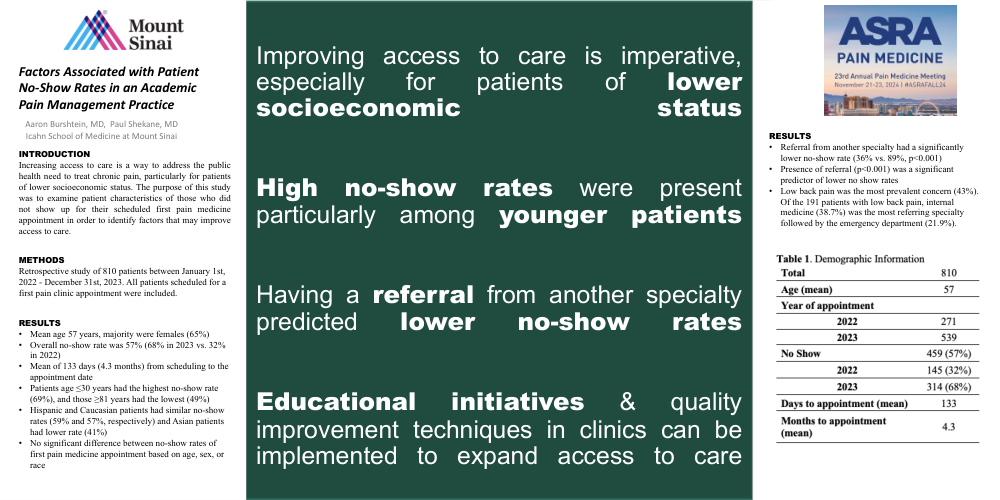
Mean age was 57 years and majority were females (65%). Overall no-show rate was 57% (68% in 2023 vs. 32% in 2022) [Table 1]. Mean of 133 days (4.3 months) from scheduling to the appointment date. Patients age ≤30 years had the highest no-show rate (69%), and those ≥81 years had the lowest (49%). Hispanic and Caucasian patients had similar no-show rates (59% and 57%, respectively) and Asian patients had lower rate (41%). No significant difference between no-show rates of first pain medicine appointment based on age, sex, or race. Referral from another specialty had a significantly lower no-show rate (36% vs. 89%, p<0.001). Presence of referral (p<0.001) was a significant predictor of lower no show rates. 442 patients had a primary pain concern recorded and low back pain was the most prevalent concern (43%). Of the 191 patients with low back pain, internal medicine (38.7%) was the most referring specialty followed by the emergency department (21.9%).
Discussion
As the incidence of chronic pain remains high, improving access to care is imperative, especially for patients of lower socioeconomic status. High no-show rates were present particularly among younger patients. Having a referral from another specialty was an independent predictor of lower no-show rates. By having knowledge of no-show rates and factors that influence longer wait times to first appointment, educational initiatives can be implemented as well as quality improvement techniques within clinics, thereby expanding patient access to care.