501 posters, 2 videos, 1 audios, 8 topics, 37 sessions, 395 authors, 307 institutions
ePostersLive by SciGen Technologies S.A. All rights reserved.
23rd Annual Pain Medicine Meeting 2024
November 21-23, 2024 | Caesars Palace, Las Vegas, Nevada

6053
A ROLE FOR REGIONAL ANESTHESIA FOR VASO-OCCLUSIVE PAIN CRISES IN SICKLE CELL DISEASE
Poster Presenter
Authors
Affiliations
Part of Topic
Scientific Abstracts > Regional Anesthesia
A Role for Regional Anesthesia for Vaso-occlusive Pain Crises in Sickle Cell Disease
Kira Kopacz, M.D.
Division of Physical Medicine and Rehabilitation; Mayo Clinic; Rochester, MN
BACKGROUND
Sickle cell disease is the most prevalent inherited blood disorder, primarily affecting individuals of African descent. Those living with sickle cell disease often have recurrent pain crises known as a vaso-occlusive crisis (VOC). VOC can be caused by inflammation, ischemic tissue damage, infection, and hypoxia with subsequent reperfusion injuries. These crises increase morbidity and mortality and have a profound impact on quality of life. Standard of care for sickle cell disease management recommend early and personalized analgesia for VOC including opioids, non-steroidal anti-inflammatory drugs (NSAIDs), low-dose ketamine infusions, and regional anesthesia. The most prevalent analgesia for VOC consistently remains systemic opioids.
METHODS
A search of PubMed and Google Scholar was conducted using the phrases: sickle cell disease, sickle cell pain, pain crisis, vaso-occlusive crisis, regional anesthesia, and peripheral nerve block.
RESULTS
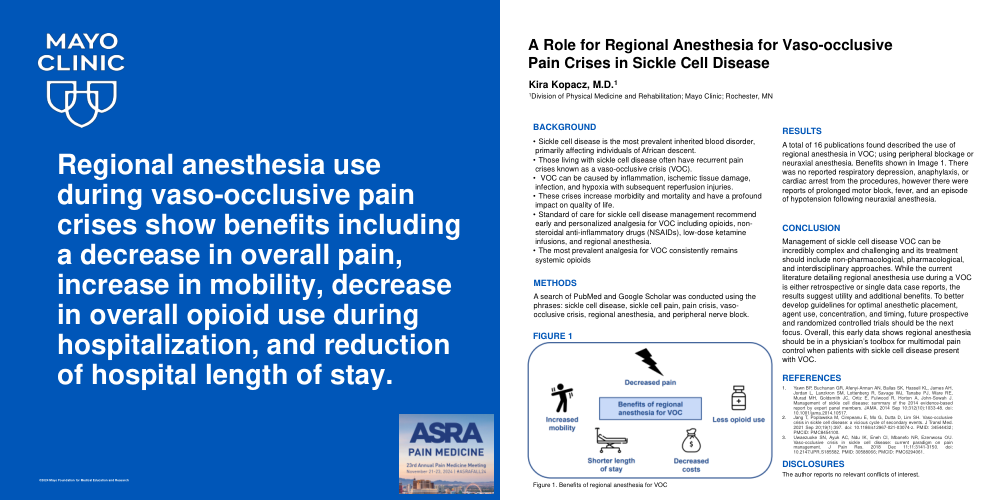
A total of 16 publications found described the use of regional anesthesia in VOC; using peripheral blockage or neuraxial anesthesia. Benefits included decrease in overall pain, increase in mobility, decrease in overall opioid use during hospitalization, and reduction of hospital length of stay. There was no reported respiratory depression, anaphylaxis, or cardiac arrest from the procedures, however there were reports of prolonged motor block, fever, and an episode of hypotension following neuraxial anesthesia.
CONCLUSION
Management of sickle cell disease VOC can be incredibly complex and challenging and its treatment should include non-pharmacological, pharmacological, and interdisciplinary approaches. While the current literature detailing regional anesthesia use during a VOC is either retrospective or single data case reports, the results suggest utility and additional benefits. To better develop guidelines for optimal anesthetic placement, agent use, concentration, and timing, future prospective and randomized controlled trials should be the next focus. Overall, this early data shows regional anesthesia should be in a physician’s toolbox for multimodal pain control when patients with sickle cell disease present with VOC.