501 posters, 2 videos, 1 audios, 8 topics, 37 sessions, 395 authors, 307 institutions
ePostersLive by SciGen Technologies S.A. All rights reserved.
23rd Annual Pain Medicine Meeting 2024
November 21-23, 2024 | Caesars Palace, Las Vegas, Nevada

6072
AN INTEGRATED INTEGRATIVE MEDICINE CLINIC: A QUALITATIVE ANALYSIS
Poster Presenter
Authors
Affiliations
Part of Topic
Scientific Abstracts > Chronic Pain
An Integrated Integrative Medicine Clinic: A Qualitative Analysis
Helen Zhao MS, Davishia Henderson, MS, Sarah Bouquin MS, Jenny Davis MS, Luke Sanchez MS, Judy Tucker MS, Lizbeth Luna-Wimberly MS, Sara Doorley MD, Nadia Marsh MD
BACKGROUND: Chronic pain impacts the quality of life for underserved populations, with limited access to comprehensive care. Integrative medicine (IM), combining conventional and alternative therapies, offers a holistic approach to pain management. This study explores the experiences of chronic pain patients at a university-based integrative medicine clinic in New Mexico, focusing on the potential of IM to improve overall well-being.
METHODS: This qualitative study used five focus groups with 13 chronic pain patients at an integrative medicine clinic. Semi-structured interviews explored their experiences with treatments like Meridian Massage, aromatherapy, and guided visualization. The interviews were recorded, transcribed, and analyzed for common themes. The study was IRB-approved (IRB#23-155).
NEXT STEPS: Integrative medicine shows promise in managing chronic pain holistically, with patients favoring non-drug treatments. Empathy and patient-centered care are key to success. Expanding access to integrative medicine and training more practitioners are crucial steps toward improving care for underserved populations.
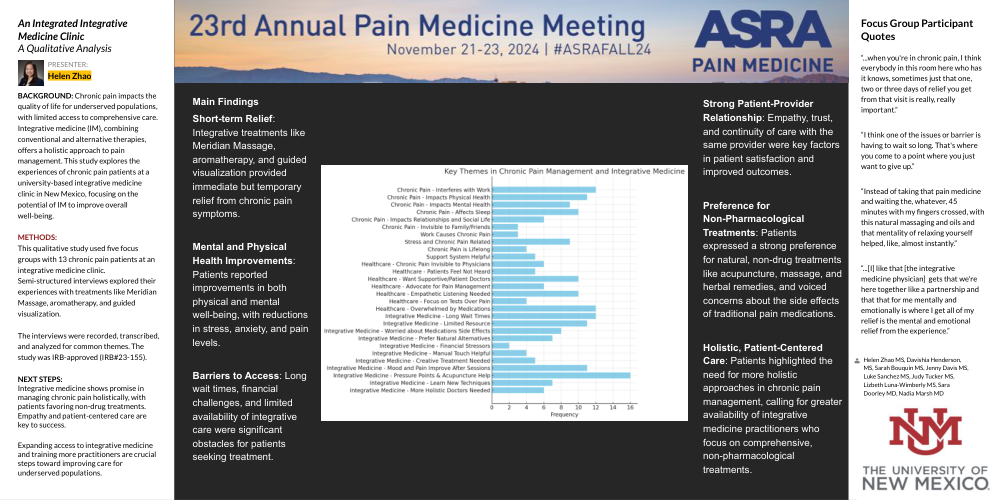
Main Findings:
Short-term Relief: Integrative treatments like Meridian Massage, aromatherapy, and guided visualization provided immediate but temporary relief from chronic pain symptoms.
Mental and Physical Health Improvements: Patients reported improvements in both physical and mental well-being, with reductions in stress, anxiety, and pain levels.
Barriers to Access: Long wait times, financial challenges, and limited availability of integrative care were significant obstacles for patients seeking treatment.
Strong Patient-Provider Relationship: Empathy, trust, and continuity of care with the same provider were key factors in patient satisfaction and improved outcomes.
Preference for Non-Pharmacological Treatments: Patients expressed a strong preference for natural, non-drug treatments like acupuncture, massage, and herbal remedies, and voiced concerns about the side effects of traditional pain medications.
Holistic, Patient-Centered Care: Patients highlighted the need for more holistic approaches in chronic pain management, calling for greater availability of integrative medicine practitioners who focus on comprehensive, non-pharmacological treatments.
Focus Group Participant Quotes
“...when you're in chronic pain, I think everybody in this room here who has it knows, sometimes just that one, two or three days of relief you get from that visit is really, really important.”
“I think one of the issues or barriers is having to wait so long. That's where you come to a point where you just want to give up.”
“Instead of taking that pain medicine and waiting the, whatever, 45 minutes with my fingers crossed, with this natural massaging and oils and that mentality of relaxing yourself helped, like, almost instantly.”
“...[I] like that [the integrative medicine physician] gets that we're here together like a partnership and that that for me mentally and emotionally is where I get all of my relief is the mental and emotional relief from the experience.”