501 posters, 2 videos, 1 audios, 8 topics, 37 sessions, 395 authors, 307 institutions
ePostersLive by SciGen Technologies S.A. All rights reserved.
23rd Annual Pain Medicine Meeting 2024
November 21-23, 2024 | Caesars Palace, Las Vegas, Nevada

5869
WASTE AUDIT IN THE PAIN PROCEDURE SUITES TO EVALUATE CURRENT PRACTICES AND POTENTIAL IMPROVEMENTS IN SUSTAINABILITY
Poster Presenter
Authors
Affiliations
Part of Topic
Scientific Abstracts > Chronic Pain
Introduction:
Despite its mission to protect and promote health, the healthcare sector paradoxically plays a significant role in exacerbating the climate crisis, which in turn has harmful repercussions on health. The healthcare sector accounts for 4.4% of global net greenhouse gas emissions, with the U.S. being the largest contributor, responsible for 7.6% of the global healthcare climate footprint [7]. The manufacturing, disposal, and transportation of pharmaceuticals, medical devices, equipment, and instruments contributes to 71% of total healthcare GHG emissions [7]. Hospitals produce more than 29 pounds of waste per bed per day, amounting to 5 million tons of waste annually [2]. Given the substantial amount of waste produced and its significant contribution to the healthcare climate footprint, changes need to be made to reduce the consumption of waste. Waste audits have been used to identify potential ways for improvement in clinical settings such as operating rooms [1, 6], outpatient medical offices [6], and interventional radiology suites [4]. However, pain medicine, with its unique set of high-turnover procedures, and frequent use of disposable medical kits, represents a significantly unexplored area of healthcare waste. The purpose of this study is to complete a waste audit to measure the amounts and types of waste produced in pain medicine, and identify potential areas for intervention.
Methods:
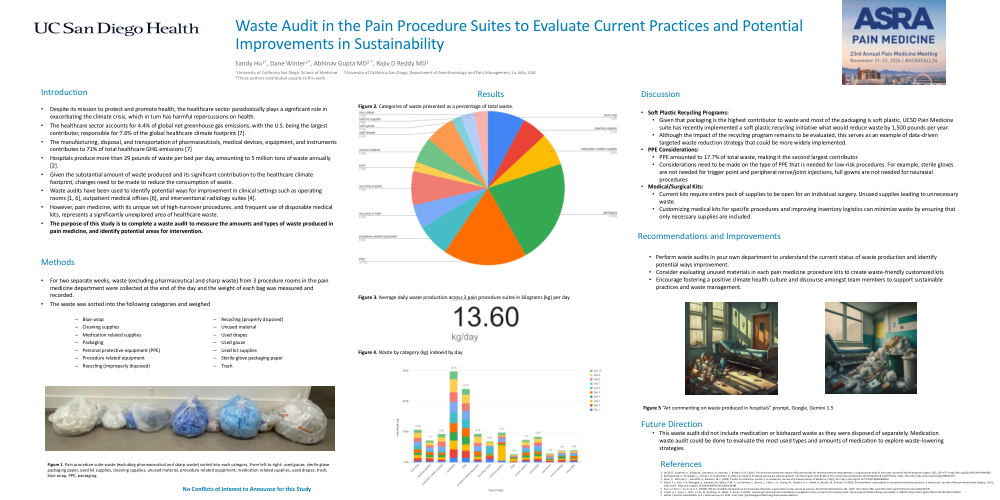
For two separate weeks, waste (excluding pharmaceutical and sharp waste) from 3 procedure rooms in the pain medicine department were collected at the end of the day and the weight of each bag was measured and recorded. The waste was sorted into the following categories and weighed:
-Blue wrap
-Cleaning supplies
-Medication related supplies
-Packaging
-Personal protective equipment (PPE)
-Procedure related equipment
-Recycling (improperly disposed)
-Recycling (properly disposed)
-Unused material
-Used drapes
-Used gauze
-Used kit supplies
-Sterile glove packaging paper
-Trash
Discussion
Recommendations and Improvements
Future Direction