425 posters, 1 videos, 9 audios, 8 topics, 53 sessions, 340 authors, 286 institutions
ePostersLive by SciGen Technologies S.A. All rights reserved.
22nd Annual Pain Medicine Meeting 2023
November 10 - 11, 2023 | New Orleans Marriott | New Orleans, Louisiana, USA

4742
A SUCCESSFUL TREATMENT OF COMPLEX REGIONAL PAIN SYNDROME TYPE 2
Poster Presenter
Authors
Affiliations
Part of Topic
Medically Challenging Cases
Introduction:
Complex regional pain syndrome (CRPS) is a relatively uncommon condition that can, unfortunately, result in severe, chronic pain. Minimal research exists on the management of CRPS and there are no specific consensus guidelines for treatment.1,2,3,4 Given these uncertainties, CRPS patients are often seen and managed by multiple different specialties, and with multiple different pain modalities, none of which have been proven to be successful in treating this syndrome.
Case:
A 59-year-old male with a history of class 2 obesity, depression, diabetes mellitus, hypertension, and intractable migraine with aura. The patient was the victim of a motor vehicle collision in 2017, resulting in a C4 and clavicular fractures, as well as C7-8 root avulsion resulting in severe right arm paralysis and pain leading him to be referred to pain management. Initial physical examination revealed right shoulder range of motion limited secondary to pain, strength 0/5 diffusely in the right upper extremity and absent biceps and brachioradialis reflexes on the right. Workup including a repeat MR brachial plexus and EMG showed findings most suggestive of a polyradiculopathy below the C4 level with superimposed right brachial plexopathy.
For treatment of this pain the patient attempted several different modes of physical therapy including aqua therapy and was tried on multiple different medications for his pain including Gabapentin, Cymbalta, Fentanyl patchs and Effexor with little relief of pain. Other interventions such as a right stellate ganglion block were attempted without relief of the patient’s pain. Due to the lack of success with the ganglion block the patient refused further injections/procedures in attempts to alleviate his pain, including the recommendation of a peripheral nerve stimulator.
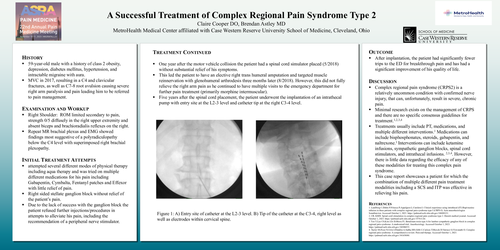
One year after the motor vehicle collision the patient had a spinal cord simulator placed (5/2018) without substantial relief of his symptoms. This led the patient to have an elective right trans humeral amputation and targeted muscle reinnervation with glenohumeral arthrodesis three months later (8/2018). However, this did not fully relieve the right arm pain as he continued to have multiple visits to the emergency department for further pain treatment (primarily morphine intermuscular). Five years after the spinal cord placement, the patient underwent the implantation of an intrathecal pump with entry site at the L2-3 level and catheter tip at the right C3-4 level. After which the patient has had significantly fewer trips to the emergency department for breakthrough pain and has had a significant improvement of his quality of life. In this case the combination of spinal cord simulator and the intrathecal pump with Prialt was successful for treating complex regional pain syndrome type 2.
Discussion:
Complex regional pain syndrome (CRPS2) is a chronic pain condition in which there is a confirmed nerve injury. While there is no specific pathogenesis the syndrome has been linked to neuropathic inflammation, genetics, and past medical histories of depression and post-traumatic stress disorder. Treatments usually include PT, medications, and multiple different interventions.1 Medications can include bisphosphonates, steroids, gabapentin, and naltrexone.1 Interventions can include ketamine infusions, sympathetic ganglion blocks, spinal cord stimulators, and intrathecal infusions. 2,3,4. However, there is little data regarding the efficacy of any of these modalities for treating this complex pain syndrome. This case report showcases a patient for which the combination of multiple different pain treatment modalities was effective in relieving his pain.